Iran Ghost Fleet Moved Billions in Oil to China
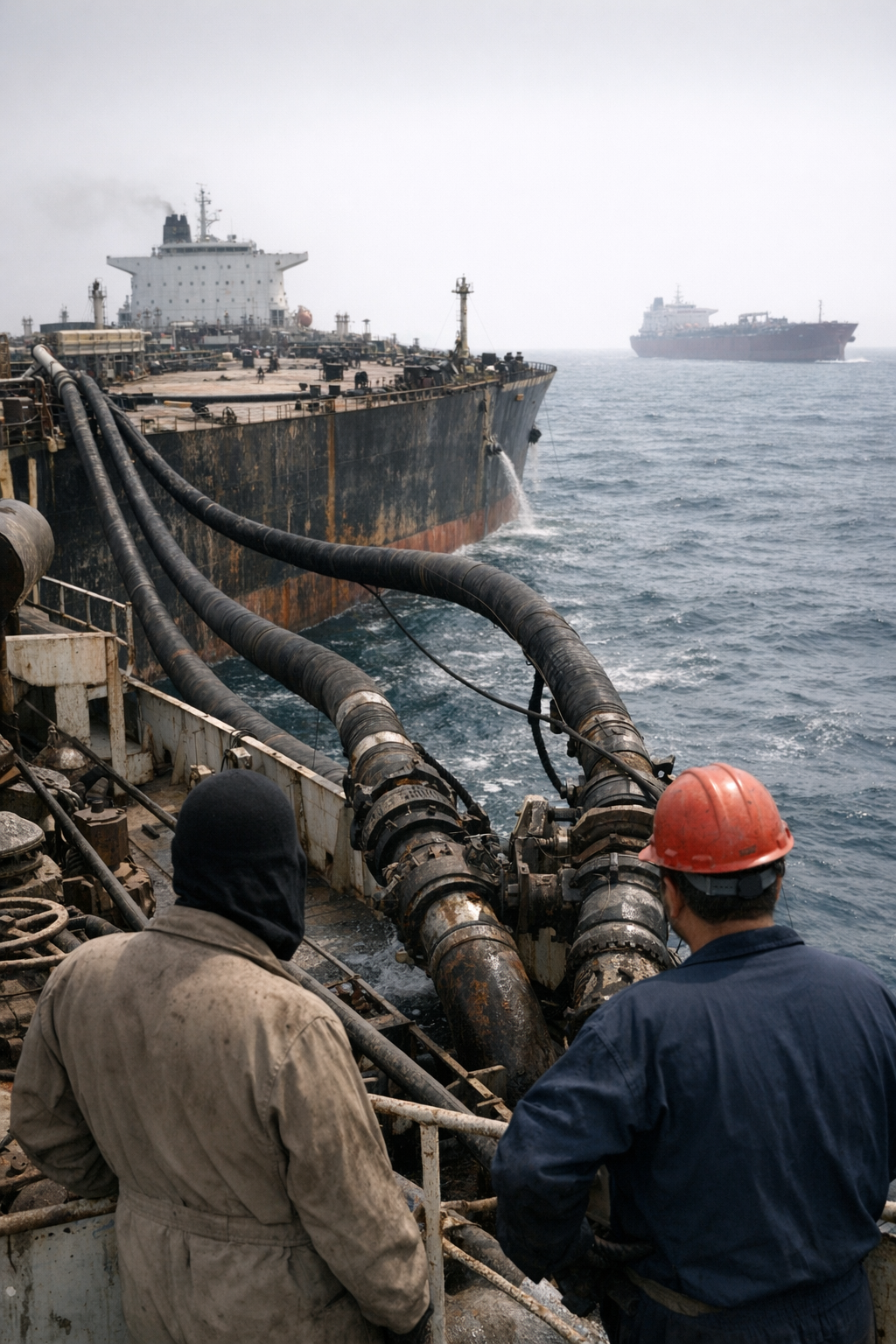
A report published by the Washington Free Beacon, titled “Iranian ‘Ghost Fleet’ Ferried $5 Billion in Oil Primarily to China Before U.S. Blockade,” highlights the scale and persistence of Tehran’s covert oil صادرات operations prior to recent enforcement efforts by the United States.
According to the article, Iran relied on a network of aging, often unregistered or deceptively flagged tankers—commonly referred to as a “ghost fleet”—to move billions of dollars’ worth of crude oil to international buyers, with China identified as the primary destination. These vessels typically employed tactics designed to evade detection, such as disabling transponders, conducting ship-to-ship transfers, and manipulating identification data.
The report suggests that the clandestine fleet enabled Iran to sustain a significant revenue stream despite longstanding U.S. sanctions aimed at curbing its oil exports. The estimated $5 billion in shipments underscores both the effectiveness of these evasion strategies and the challenges facing international enforcement mechanisms.
U.S. authorities have in recent months intensified efforts to disrupt these networks, including expanded monitoring and targeted sanctions on shipping entities believed to facilitate illicit trade. The moves are part of a broader strategy to limit Tehran’s access to hard currency and constrain its regional activities.
Analysts note that the reliance on a shadow fleet is not unique to Iran, but the scale described in the Free Beacon report illustrates how adaptable sanctioned states have become in exploiting gaps in maritime oversight. They also caution that enforcement actions, while disruptive, may push such operations further underground rather than eliminate them entirely.
The report ultimately points to an ongoing contest between sanctions regimes and increasingly sophisticated evasion methods, with global energy markets, maritime governance, and geopolitical competition all intertwined in the outcome.