NATO Warns of Rising Security Risks in Eastern Europe
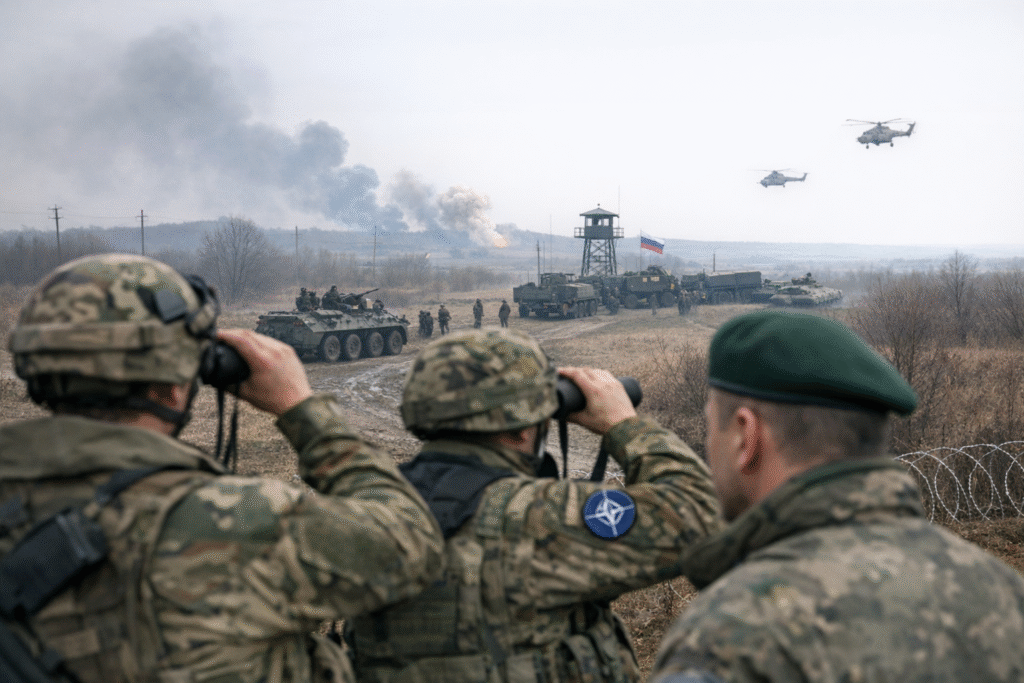
NATO Secretary General Jens Stoltenberg warned of continued security risks in Eastern Europe as Russia’s military posture near Ukraine and Belarus’s actions along NATO’s borders intensified, underscoring concerns about regional stability and alliance cohesion.
Speaking amid growing alarm among allied governments, Stoltenberg reiterated that Russia’s troop concentrations near Ukraine were “unjustified and unexplained,” prompting NATO to call for transparency and de-escalation. He stressed that the alliance remained vigilant but sought to avoid conflict, emphasizing the importance of dialogue while maintaining collective defense commitments.
The remarks, reported in the NATO website article titled “NATO Secretary General discusses Russia’s military build-up near Ukraine, Belarus’ hybrid campaign against Allies,” reflected a dual concern: both the potential for a conventional military crisis involving Ukraine and what NATO characterizes as hybrid pressure tactics emanating from Belarus. The latter includes the orchestrated movement of migrants toward the borders of Poland, Lithuania, and Latvia, which NATO officials have described as an attempt to destabilize neighboring states.
Stoltenberg highlighted NATO’s unity in responding to these challenges, noting that allied foreign ministers were coordinating closely to address both military and non-military threats. He pointed to increased NATO presence in eastern member states as a defensive measure designed to deter aggression rather than provoke confrontation.
At the same time, the Secretary General reiterated the alliance’s support for Ukraine’s sovereignty and territorial integrity, while clarifying that NATO seeks a constructive relationship with Russia. He underscored that any future dialogue must be grounded in respect for international law and existing agreements.
The situation has unfolded against a backdrop of heightened geopolitical tension, with Western governments warning that further escalation could trigger significant consequences. NATO’s stance, as reflected in Stoltenberg’s comments, aims to balance deterrence with diplomatic engagement, even as distrust between Russia and Western institutions deepens.
As developments continue, NATO leaders appear focused on maintaining a unified front while leaving open channels for negotiation, signaling that the alliance views the current moment as both a test of resolve and an opportunity for renewed diplomatic efforts.