NATO Warns of Growing Europe-Asia Security Link
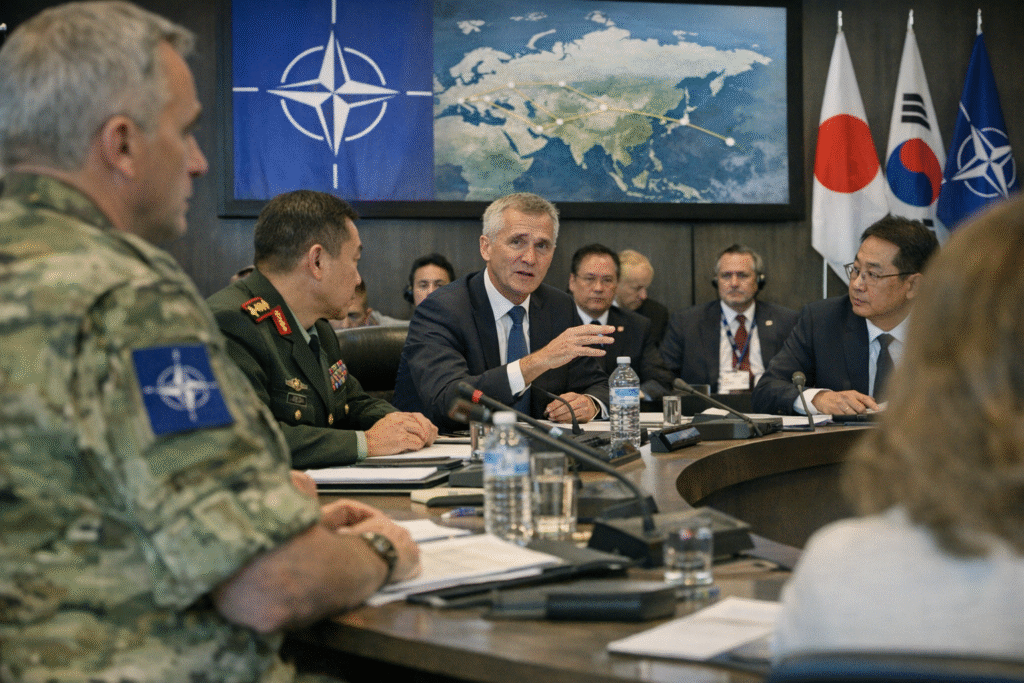
NATO Secretary General Jens Stoltenberg used a visit to Keio University in Tokyo to underscore what he described as a deepening strategic relationship between the Alliance and Japan, warning that security challenges in Europe and Asia are increasingly interconnected. His remarks were published in an article titled “Secretary General at Keio University: NATO-Japan partnership is growing stronger,” on NATO’s official website.
Addressing students and faculty, Stoltenberg argued that the war in Ukraine has reinforced the global nature of modern security threats, linking Russia’s aggression to broader geopolitical dynamics in the Indo-Pacific. He pointed to China’s expanding military capabilities and its closer ties with Moscow as factors contributing to a more complex and uncertain security environment.
Stoltenberg emphasized that NATO’s role is evolving in response to these pressures, not by expanding geographically into Asia, but by strengthening partnerships with like-minded countries such as Japan, South Korea, Australia, and New Zealand. He framed these relationships as essential for defending the rules-based international order, particularly as authoritarian powers challenge established norms.
Japan, he said, has become one of NATO’s most significant partners, citing increased cooperation in areas such as cyber defense, maritime security, and emerging technologies. Stoltenberg welcomed Japan’s decision to boost defense spending and adopt a more proactive security posture, describing it as a reflection of the country’s growing awareness of regional and global threats.
The NATO chief also stressed the importance of resilience, particularly in protecting critical infrastructure and supply chains. Lessons drawn from the war in Ukraine, he noted, demonstrate how vulnerabilities in energy, communications, and logistics can be exploited during conflicts. He urged closer coordination between NATO and Japan to address these risks.
While reiterating that NATO remains a transatlantic alliance focused on collective defense in Europe, Stoltenberg made clear that cooperation with partners in Asia is now an integral component of its broader strategic outlook. He described this approach as necessary to deter aggression and maintain stability across regions that are increasingly linked.
The remarks at Keio University reflected a consistent theme in NATO’s recent messaging: that security cannot be compartmentalized by geography. As Stoltenberg concluded, developments in one region now carry significant implications for others, reinforcing the need for stronger partnerships between Europe and the Indo-Pacific.