House Panel Advances FY27 Defense Bill with Expanded Military Right-to-Repair Measures
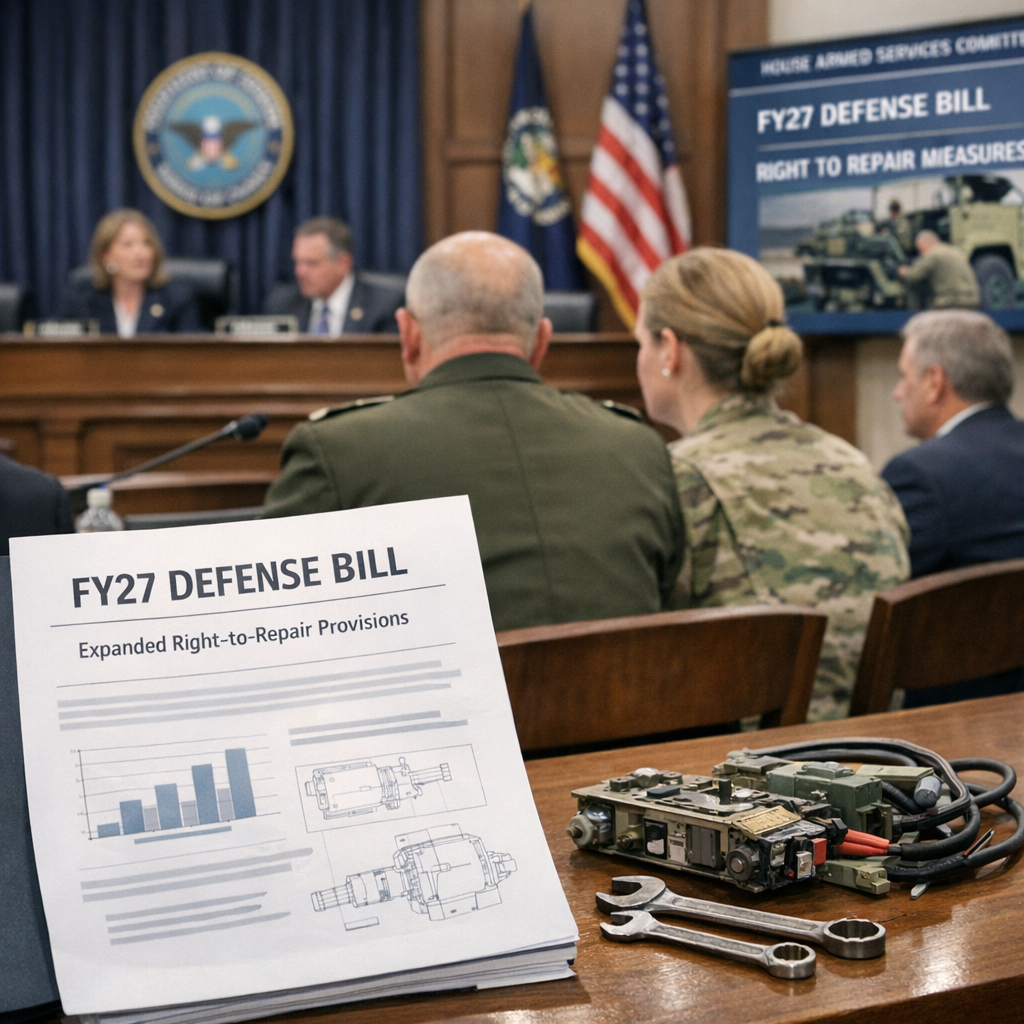
The House Armed Services Committee has advanced its version of the fiscal year 2027 defense policy bill, incorporating new provisions aimed at expanding the military’s “right to repair,” according to a report by Breaking Defense titled “HASC adopts FY27 defense policy bill, adds right-to-repair language.”
The inclusion of right-to-repair language reflects growing concern within Congress over the Pentagon’s dependence on contractors for maintenance and repair of critical systems. Lawmakers have increasingly argued that restrictions imposed by original equipment manufacturers limit the military’s ability to conduct timely repairs, potentially affecting readiness and increasing long-term costs, an issue also highlighted in a Government Accountability Office report on defense sustainment challenges.
As reported by Breaking Defense, the committee’s bill seeks to address these concerns by promoting greater access to technical data, diagnostic tools, and intellectual property necessary for maintenance. The provisions are part of a broader legislative effort to ensure that service branches can independently sustain equipment without being locked into vendor-controlled support arrangements, aligning with ongoing Congressional Research Service analysis on Department of Defense right-to-repair efforts.
Supporters of the measure argue that the current system has created inefficiencies, with some military units forced to wait for contractor support even for relatively routine repairs. By contrast, expanded repair rights could allow in-house personnel to address issues more quickly, particularly in operational environments where contractor access is limited or impractical.
The issue has gained bipartisan traction in recent years, driven in part by high-profile examples of delays and cost overruns linked to proprietary restrictions. Advocates within Congress have framed the right to repair as both a readiness issue and a matter of fiscal responsibility, echoing concerns raised in the Federal Trade Commission’s “Nixing the Fix” report on repair limitations.
However, the push has also drawn concern from defense contractors, who argue that broader data-sharing requirements could jeopardize intellectual property and reduce incentives for innovation. Industry representatives have warned that weakening proprietary protections might have unintended consequences for the defense industrial base, including reduced investment in advanced technologies, a concern often discussed in defense industry analyses of intellectual property disputes.
The committee’s bill seeks to strike a balance by mandating greater transparency and access while preserving certain protections for sensitive or classified technologies. Details of how these provisions would be implemented remain subject to further legislative negotiation as the bill moves through Congress, as is typical in the federal legislative process for major authorization bills.
The adoption of the House Armed Services Committee’s version of the National Defense Authorization Act marks an early stage in what is typically a lengthy legislative process. Differences between House and Senate versions will need to be reconciled before a final bill can be sent to the president.
Still, as highlighted in Breaking Defense’s coverage, the inclusion of right-to-repair provisions signals a continued shift in congressional oversight of defense procurement and sustainment practices. If enacted, the measures could mark a significant change in how the Pentagon manages maintenance and repair across its vast inventory of equipment, with implications for both operational readiness and industry relationships.