Hegseth Orders Six-Month Review of US Troops in Europe Amid NATO Burden-Sharing Disputes
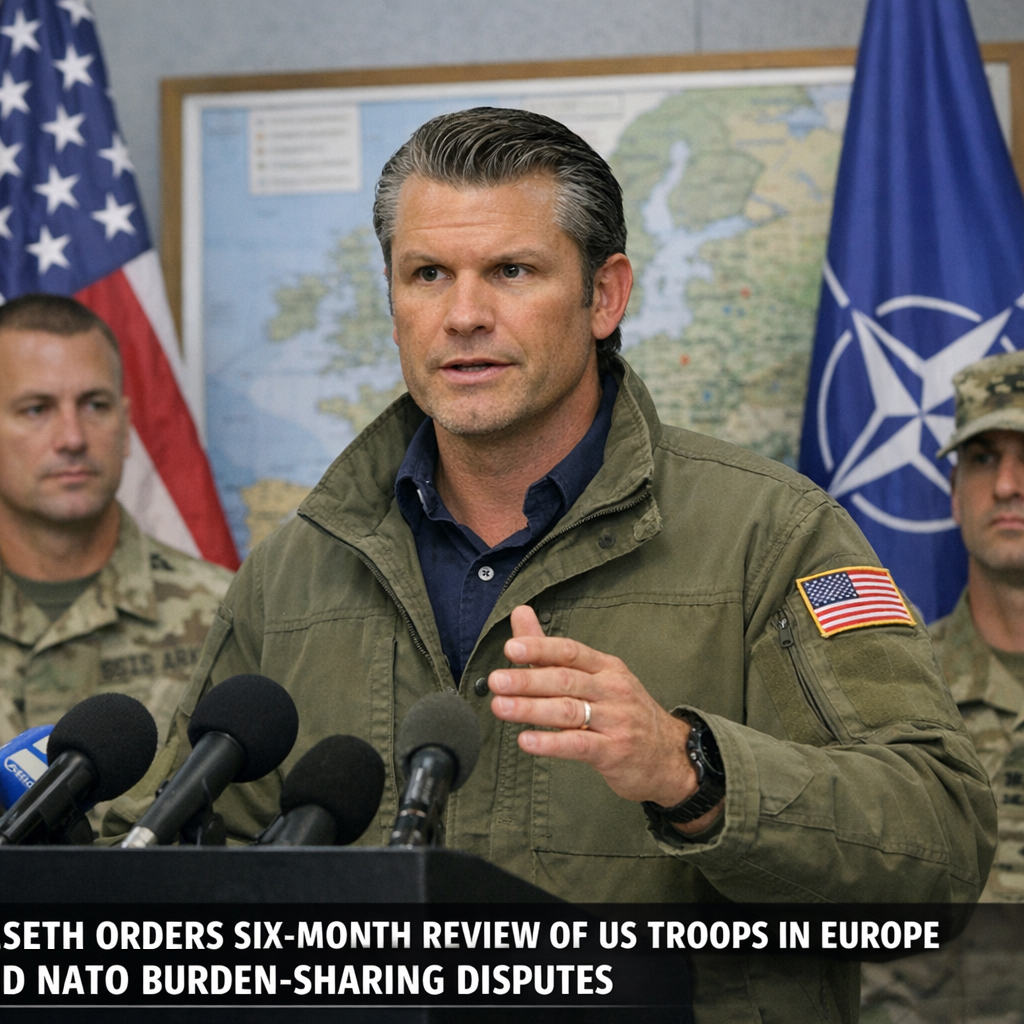
The Fox News article titled “Hegseth announces 6-month review of American forces in Europe, blasts NATO allies putting troops at risk” reports that Defense Secretary Pete Hegseth has ordered a comprehensive review of U.S. military deployments across Europe, citing concerns about operational readiness and burden-sharing within the NATO alliance.
According to Fox News, Hegseth’s directive initiates a six-month assessment aimed at evaluating force posture, logistical sustainability, and the alignment of current deployments with evolving strategic priorities. The review is expected to examine whether American forces stationed across the continent are positioned effectively to respond to emerging threats, particularly in light of ongoing tensions involving Russia and broader security concerns along NATO’s eastern flank, an issue frequently analyzed by organizations like the Center for Strategic and International Studies.
In announcing the review, Hegseth expressed sharp criticism of several NATO allies, arguing that insufficient defense spending and uneven contributions to collective security have increased risks for U.S. personnel. He suggested that the current arrangement places disproportionate responsibility on American forces while some European partners fall short of agreed-upon commitments. His remarks reflect a longstanding debate within U.S. defense policy circles over burden-sharing and alliance cohesion, a topic widely examined by the RAND Corporation.
The Fox News report indicates that Hegseth framed the review not as a withdrawal plan but as a recalibration effort. He emphasized the need to ensure that U.S. deployments are both strategically justified and adequately supported by host nations. The U.S. Department of Defense is expected to analyze troop levels, infrastructure readiness, and the degree of allied participation in joint operations.
European officials have not uniformly responded to the announcement, but the issue of defense spending has been a persistent point of tension within NATO. While several member states have increased military budgets in recent years, disparities remain. The alliance’s guideline of allocating at least 2 percent of gross domestic product to defense has been met unevenly across member countries, as outlined in NATO’s official defense expenditure reports available at NATO Defense Expenditure Data.
The review comes at a moment when NATO is seeking to maintain unity amid heightened geopolitical pressures. Russia’s continued assertiveness and the broader security environment in Eastern Europe have underscored the importance of coordinated defense planning, a situation frequently covered by international outlets such as Reuters Europe. At the same time, domestic political debates within the United States have increasingly scrutinized the costs and strategic rationale of maintaining a large forward-deployed presence overseas.
Fox News notes that Hegseth’s comments signal a potentially more transactional approach to alliance management, one that prioritizes measurable contributions and tangible outcomes. Defense analysts suggest that the outcome of the six-month review could influence future basing decisions, troop rotations, and funding allocations tied to European operations.
While the Pentagon has not yet detailed specific metrics or timelines beyond the six-month framework, the initiative underscores a broader reassessment of U.S. military commitments abroad. Whether the review leads to significant changes or serves primarily as a diagnostic exercise will likely depend on both internal findings and diplomatic engagement with NATO partners in the months ahead.