NATO Strengthens Global Partnerships Through Brussels-Based Staff Officer Programme
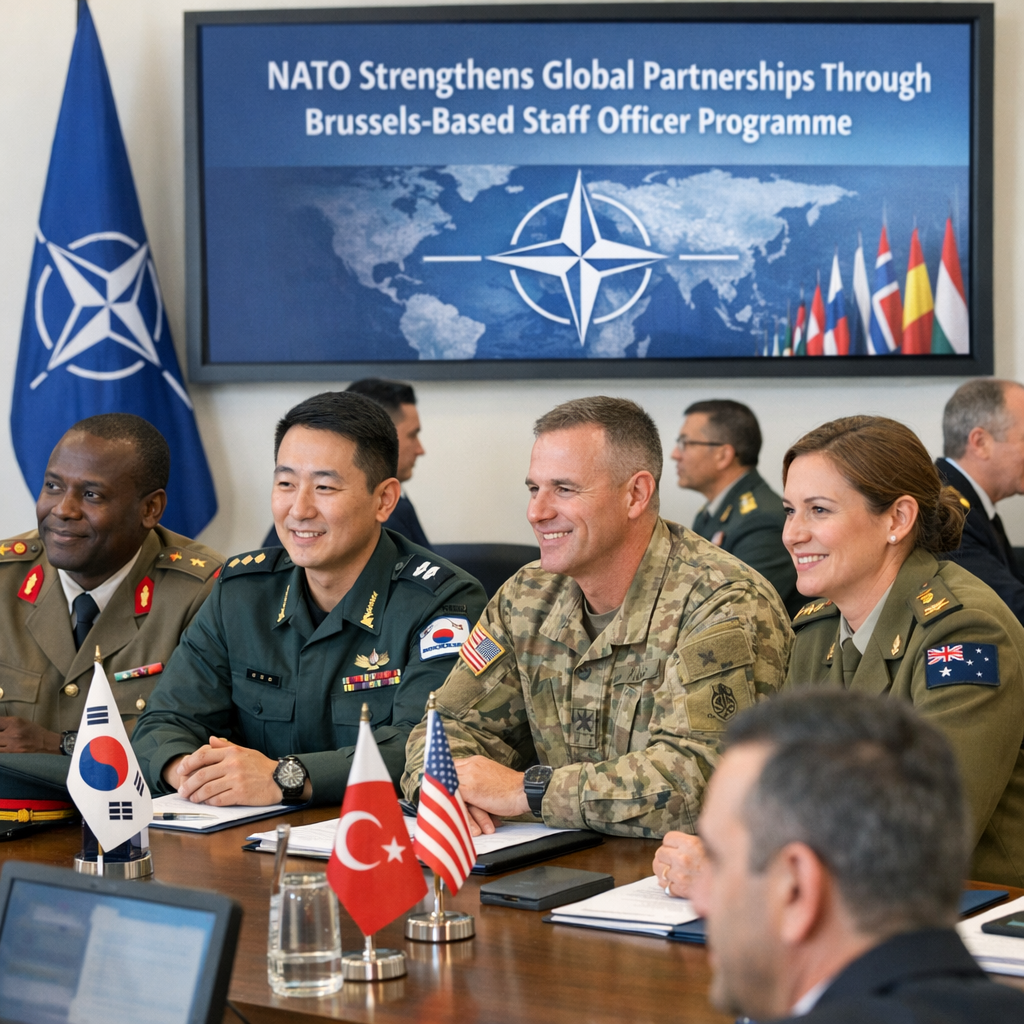
NATO headquarters in Brussels this week hosted its bi-annual familiarization programme for partner staff officers, an initiative aimed at strengthening cooperation between the Alliance and its global partner network. The programme, detailed in an article titled “NATO HQ hosts the bi-annual familiarization programme for NATO partner staff officers” published on NATO’s official website, brought together military officers from partner countries for a series of briefings, discussions, and institutional visits designed to deepen mutual understanding of NATO’s structures and priorities.
The initiative reflects NATO’s continuing effort to reinforce interoperability and political cohesion with non-member states that contribute to its missions and share its security interests. Participants were given direct exposure to NATO’s decision-making processes, its command structure, and the day-to-day functioning of the Alliance’s headquarters. By situating partner officers within this environment, NATO aims to build working relationships that can translate into more effective collaboration during joint operations and crisis response scenarios.
According to NATO officials, the programme is not merely educational but strategic. Partner officers engage with civilian and military staff across multiple divisions, gaining insight into current security challenges, including collective defense, crisis management, and cooperative security frameworks. The exchange of perspectives is intended to ensure that partner countries remain aligned with NATO standards and planning procedures, particularly as the Alliance adapts to evolving geopolitical tensions.
The familiarization programme also serves as a platform for informal dialogue. In addition to structured briefings, participants have opportunities to network with counterparts from NATO member states, an aspect that officials emphasize as critical for trust-building. These interpersonal connections are often cited as a key benefit, enabling smoother coordination in multinational operations where clarity of communication and shared expectations are essential.
NATO has long relied on partnerships to extend its strategic reach, with countries from Europe, Asia, and beyond contributing to missions in regions such as Afghanistan and the Balkans. Programmes like this one highlight the Alliance’s recognition that operational effectiveness depends not only on formal agreements but also on sustained institutional and professional familiarity.
As global security dynamics grow more complex, NATO appears intent on investing in these relationship-building mechanisms. The recurring nature of the familiarization programme underscores its perceived value within the Alliance’s broader partnership strategy, suggesting that NATO views such initiatives as foundational to maintaining a cohesive, responsive network of allies and partners.