Joe Kent’s Iran Shift Raises GOP Policy Questions
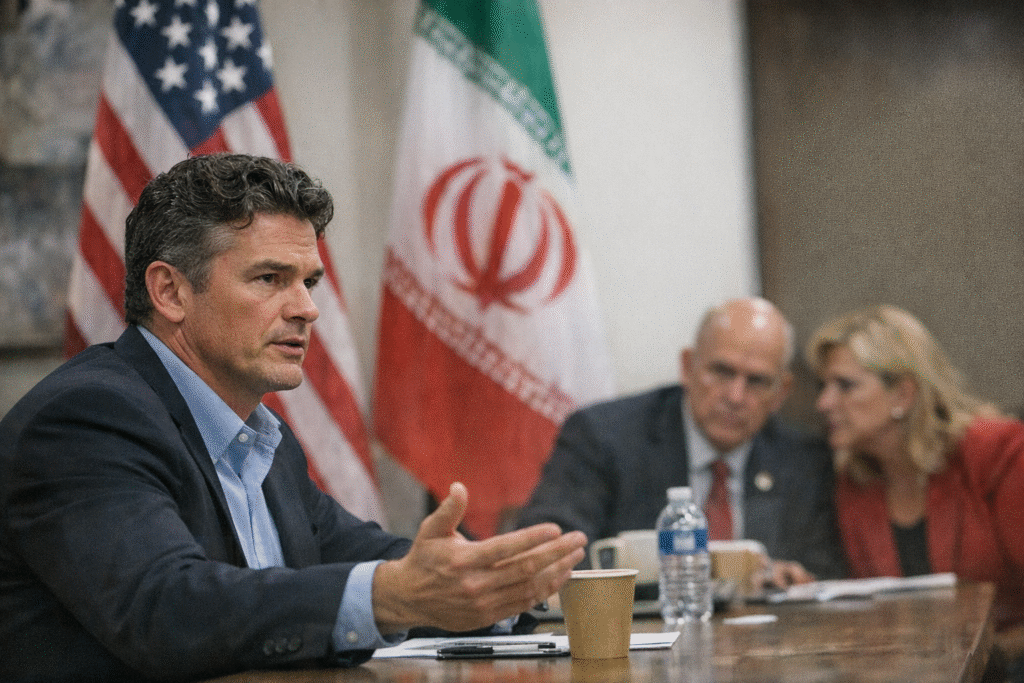
A recent article published by the Daily Wire, titled “Joe Kent Built His Reputation on Iran Warnings. What Changed,” examines an apparent shift in tone from the former congressional candidate and military veteran on U.S. policy toward Iran, raising broader questions about political positioning and foreign policy consistency.
Joe Kent, a former Green Beret and Republican candidate in Washington state, gained prominence in conservative circles partly through his hawkish warnings about Iran’s regional ambitions and the threat posed by its nuclear program. He frequently aligned himself with a hardline approach, echoing concerns that Tehran’s activities demanded firm deterrence and, in some cases, willingness to escalate pressure.
According to the Daily Wire’s reporting, Kent’s more recent comments suggest a recalibration. While not abandoning concerns about Iran entirely, his rhetoric appears to place greater emphasis on restraint, skepticism of foreign intervention, and prioritizing domestic issues. This evolution reflects a broader shift visible among segments of the Republican electorate, where skepticism of prolonged overseas entanglements has become more pronounced.
The article situates Kent’s change within the context of a Republican Party that is increasingly divided between traditional national security hawks and a growing faction advocating for a more restrained foreign policy. Figures aligned with the latter camp often argue that past U.S. interventions in the Middle East have yielded limited strategic benefits while imposing significant costs.
Critics of Kent’s revised posture, as noted in the Daily Wire piece, question whether the shift represents a substantive reassessment of policy or a strategic adjustment to align with changing political currents. Supporters, however, argue that evolving circumstances — including shifting geopolitical dynamics and domestic priorities — warrant a reassessment of earlier positions.
The discussion surrounding Kent underscores a larger debate about how U.S. policymakers should address adversarial states like Iran. While the threat posed by Tehran’s nuclear ambitions and regional activities remains a point of bipartisan concern, there is less agreement on the appropriate mix of diplomacy, economic pressure, and military deterrence.
The Daily Wire article highlights how individual political figures can both shape and be shaped by these debates, illustrating the fluid nature of foreign policy discourse in a polarized political environment. As the U.S. continues to navigate its role on the global stage, shifts like Kent’s are likely to remain closely scrutinized for what they signal about the future direction of American strategy.