WSJ Panel Weighs Economy, Courts, and Gridlock
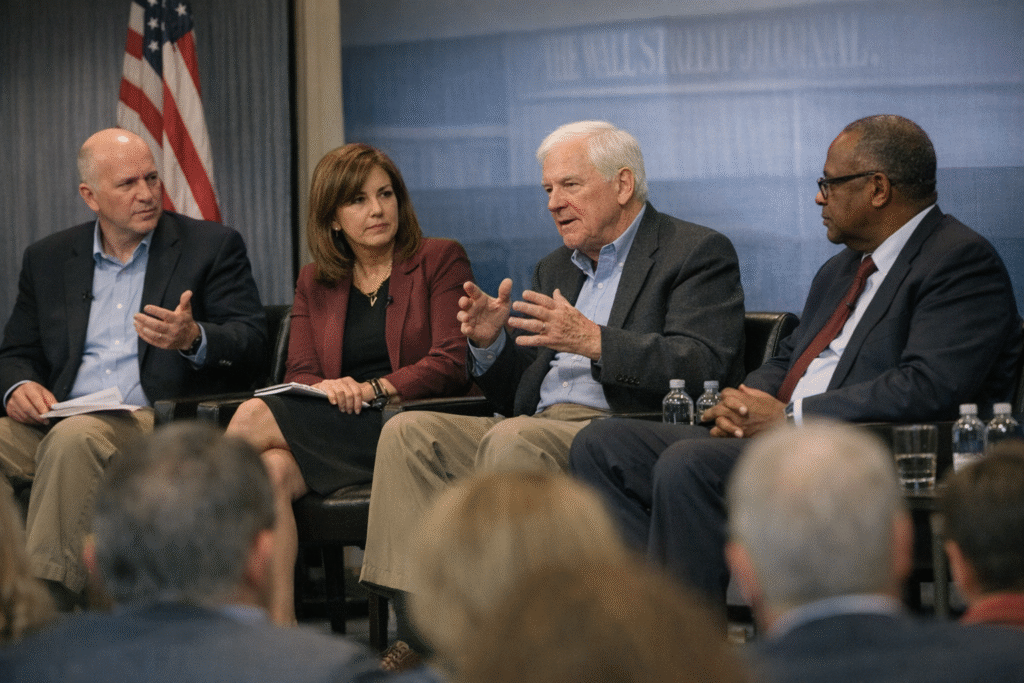
In a recent installment of “WSJ Opinion: Hits and Misses of the Week,” published by The Wall Street Journal, the editorial panel surveyed a cross-section of political and economic developments, offering a mix of endorsement and criticism that reflects the publication’s conservative editorial perspective.
Among the developments characterized as “hits,” the panel pointed to signs of resilience in key segments of the U.S. economy, particularly in labor market stability and consumer demand. The discussion highlighted data suggesting that, despite persistent inflationary pressures and elevated interest rates, economic activity remains more robust than many forecasts had anticipated. The commentators framed this resilience as evidence of underlying strength in private-sector fundamentals, while also questioning whether current monetary policy will eventually overcorrect.
The panel also praised recent judicial and regulatory developments perceived as strengthening limits on federal authority. In particular, the conversation underscored ongoing legal debates over administrative power and the role of courts in constraining executive agencies. The segment suggested that these trends reflect a broader shift toward reasserting institutional checks and balances, a theme that has been increasingly prominent in recent jurisprudence.
On the “misses” side of the ledger, the panel criticized continuing political polarization in Washington, arguing that legislative gridlock has impaired the government’s ability to address long-term fiscal challenges. The discussion emphasized concerns over federal spending and deficits, framing them as structural risks that remain insufficiently addressed by either party. The panel expressed skepticism that current budget negotiations will yield meaningful reform, pointing instead to a pattern of short-term compromises.
The episode also took aim at aspects of current energy and environmental policy, contending that regulatory uncertainty and mixed policy signals may be discouraging investment. The editorial viewpoint suggested that inconsistencies in federal and state approaches have complicated planning for both traditional and renewable energy sectors, potentially affecting supply stability and pricing.
Foreign policy developments were another focal point, with the panel offering a critical assessment of recent diplomatic strategies in several global hotspots. While acknowledging the complexity of geopolitical tensions, the discussion raised questions about coherence and long-term objectives in U.S. engagement abroad. The segment suggested that clearer articulation of strategic priorities would help reinforce alliances and deter adversaries.
Throughout “WSJ Opinion: Hits and Misses of the Week,” the panel maintained a consistent emphasis on policy outcomes and institutional performance, evaluating events through the lens of economic impact, governance, and constitutional balance. As with similar editorial roundups, the episode blends analysis with advocacy, aiming to shape debate while reflecting broader ideological commitments within the publication’s opinion pages.