Washington Raises Alarm Over Prediction Markets Risk
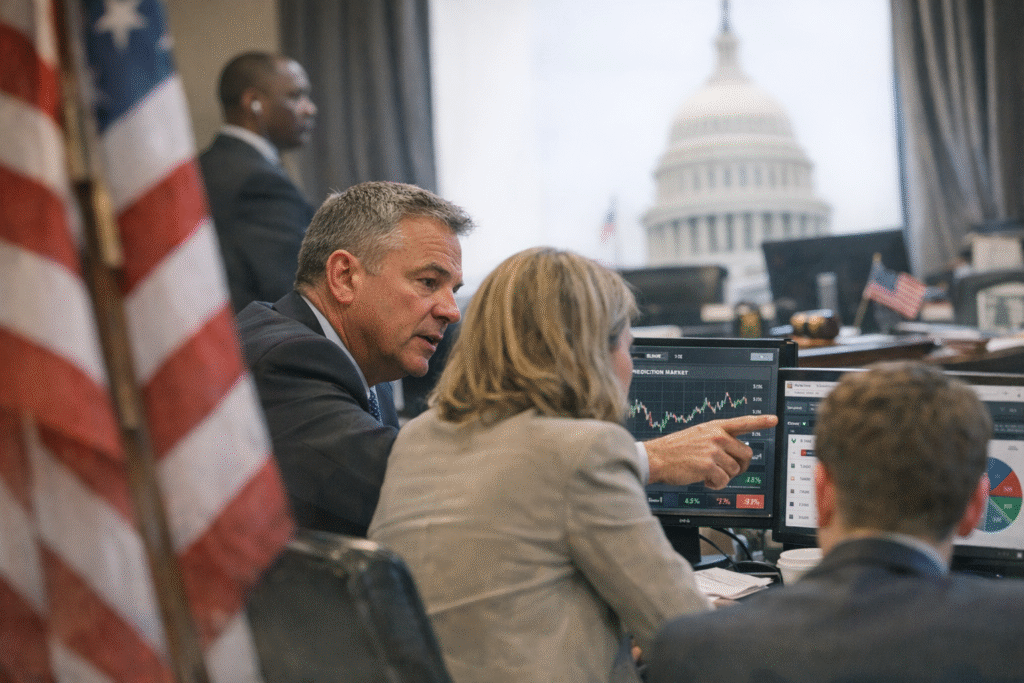
Growing concern is emerging in Washington over the national security implications of loosely regulated online prediction markets, as policymakers and experts warn that these platforms may expose sensitive information and incentivize harmful behavior.
A recent report by Military Times, titled “Unregulated prediction market may endanger US national security, experts and lawmakers warn,” highlights how these markets—where users wager on the likelihood of future events—are drawing scrutiny for their potential to undermine operational security and public trust. While prediction markets have long been studied for their ability to aggregate information and forecast outcomes, critics say their rapid expansion into gray regulatory areas has outpaced existing safeguards.
At the heart of the concern is the possibility that individuals with access to privileged or classified information could exploit these platforms for financial gain, effectively monetizing insider knowledge. Even without malicious intent, the mere perception that sensitive events—such as military operations, geopolitical crises, or leadership decisions—are being treated as tradable commodities raises ethical and strategic questions.
Lawmakers cited in the Military Times report argue that adversaries could also use these platforms to gauge U.S. vulnerabilities or spread disinformation. By placing bets or influencing odds, foreign actors might attempt to shape narratives, test reactions, or even manipulate public perception in ways that complicate decision-making at the highest levels of government.
Experts further warn that prediction markets tied to military or intelligence developments could create perverse incentives. For example, actors might benefit financially from instability, conflict escalation, or even targeted harm, blurring the line between passive forecasting and active encouragement of adverse events.
Despite these risks, regulation remains fragmented. Some platforms operate offshore or in legal gray zones, complicating enforcement and oversight. U.S. regulators have historically taken a cautious approach to prediction markets, often treating them as forms of gambling or financial instruments, but the speed and scale of digital platforms are challenging those frameworks.
The Military Times article notes that calls for clearer rules are gaining traction on Capitol Hill, with some lawmakers pushing for stricter oversight or outright bans on markets tied to sensitive national security topics. Others advocate for a more nuanced approach that preserves the analytical value of prediction markets while imposing guardrails to prevent misuse.
As debates continue, the issue underscores a broader tension between technological innovation and national security. Prediction markets may offer insights into collective expectations, but without robust safeguards, officials warn they could also open new avenues for exploitation in an increasingly complex threat environment.