Saildrone Expands Into ASW With New USV
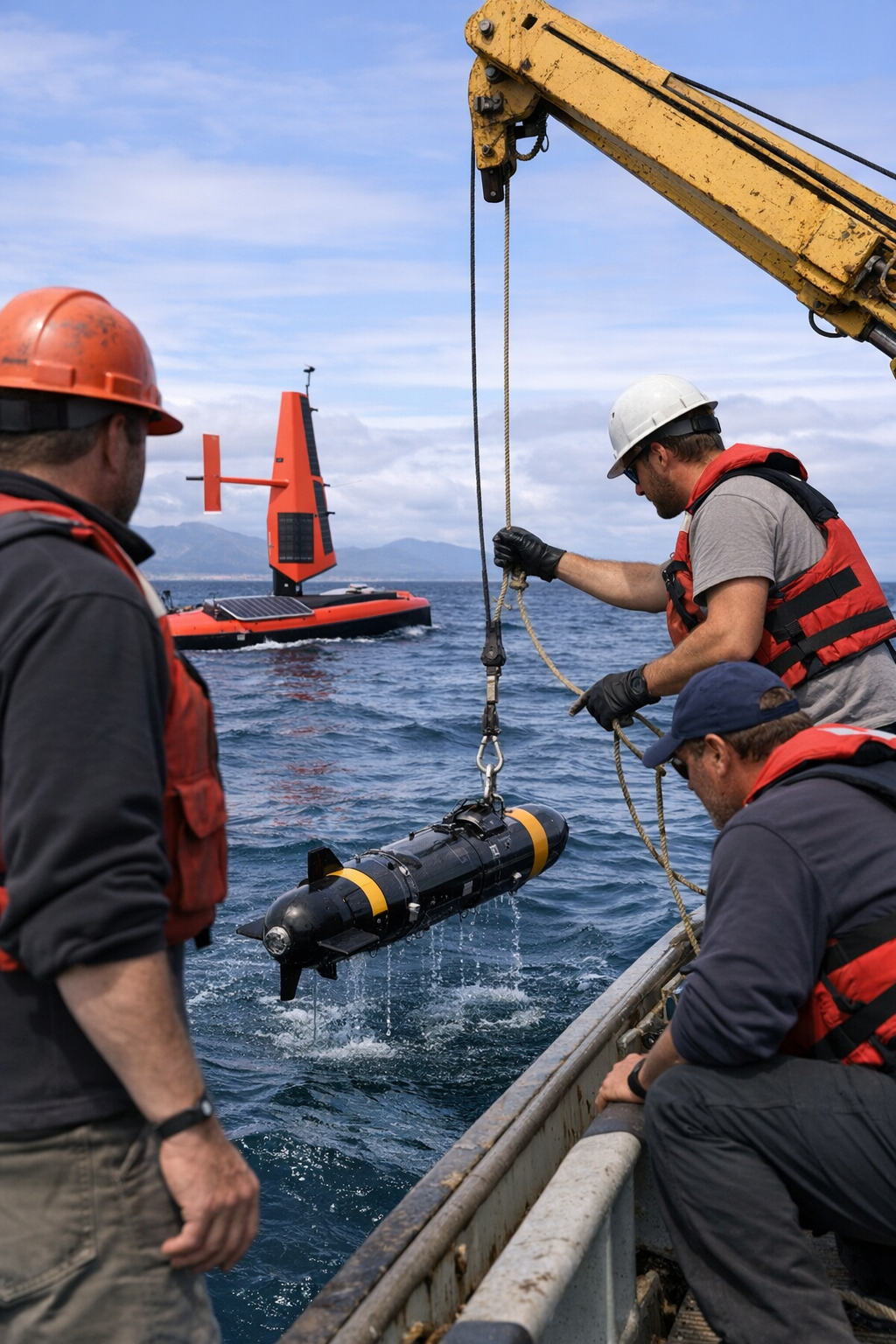
Saildrone has unveiled a new medium-class unmanned surface vessel (USV) designed to support anti-submarine warfare (ASW) and intelligence, surveillance, and reconnaissance (ISR) missions, marking a significant expansion of the company’s role in naval operations, according to reporting by Breaking Defense in its article “Saildrone unveils new medium unmanned surface vessel for anti-sub warfare, ISR.”
The platform, positioned between smaller long-endurance drones and larger crewed vessels, reflects growing demand from navies for persistent, lower-cost systems capable of operating across contested maritime environments. Saildrone has built its reputation on wind- and solar-powered autonomous vessels primarily used for ocean data collection and maritime domain awareness. This new system signals a shift toward more direct integration into military mission sets, particularly those traditionally requiring crewed assets.
The vessel is designed to deploy a range of sensors tailored for undersea and surface surveillance, including acoustic systems suitable for tracking submarines. By leveraging autonomous navigation and extended endurance, the USV aims to provide continuous coverage in areas that would otherwise require multiple ships or aircraft rotations. The approach aligns with broader defense trends emphasizing distributed maritime operations and the use of unmanned systems to augment fleet capacity.
According to the Breaking Defense report, the new vessel is expected to operate both independently and as part of a larger networked force, sharing data with other platforms across domains. This reflects increasing emphasis on integrated sensing and data fusion in naval warfare, where timely intelligence can shape both deterrence and operational outcomes. The ability to remain at sea for prolonged periods without the logistical burden of crew support could make such systems particularly valuable in regions where sustained presence is critical.
The move into ASW also underscores the intensifying focus on submarine threats, as naval competition expands in key theaters. Submarines have long been difficult to detect and track, and traditional ASW operations are resource-intensive. An unmanned platform capable of persistent acoustic monitoring offers a potential cost-effective complement to existing capabilities, though its effectiveness will depend on sensor performance, data integration, and resilience in contested environments.
Saildrone’s entry into this space places it among a growing cohort of companies developing medium and large USVs for defense applications. Governments, particularly the United States Navy, have signaled increasing interest in such systems as part of future force structures. However, questions remain about survivability, command-and-control frameworks, and rules of engagement for autonomous platforms operating in proximity to adversary forces.
As detailed by Breaking Defense, Saildrone’s latest announcement represents not just a new product, but an evolution in how unmanned maritime systems are being positioned within naval strategy. The success of such platforms will likely depend on their ability to integrate seamlessly with existing assets while delivering reliable performance in complex operational scenarios.