Pahalgam and the Politics of Memory in Kashmir
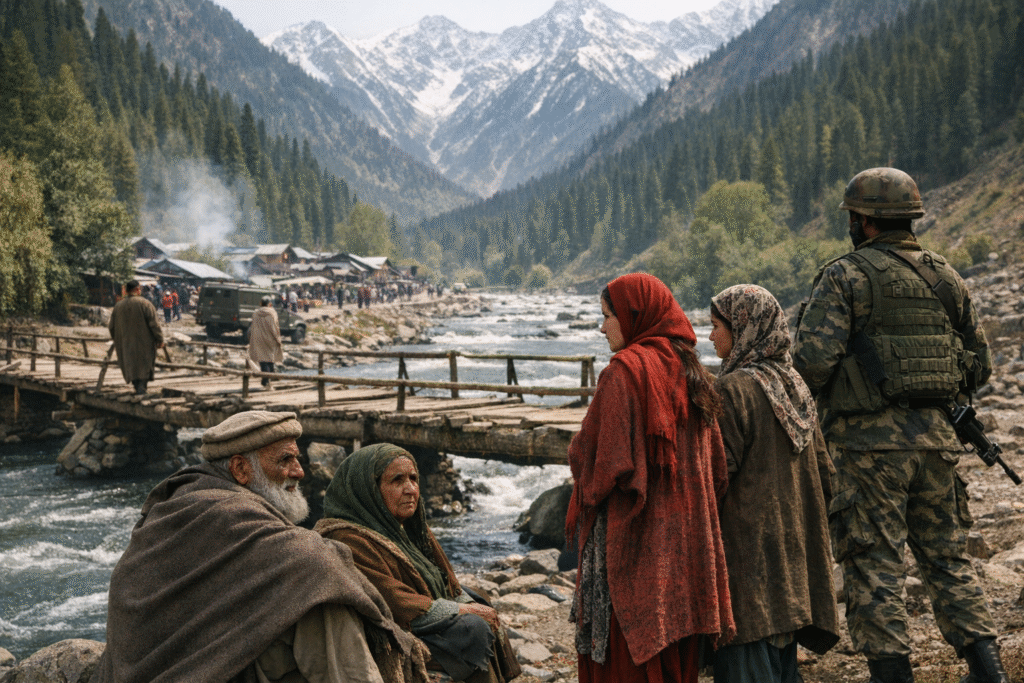
In a recent essay titled “Remembering Pahalgam: The Attack That …,” published on the Spencer Guard Substack, the author revisits one of the most consequential episodes of violence in Jammu and Kashmir, reflecting on its enduring political and social repercussions. The piece frames the Pahalgam attack not only as a tragedy marked by the loss of civilian lives, but as a turning point in how militancy in the region has been perceived, narrated, and instrumentalized over time.
The attack, which targeted civilians in a popular tourist area, unfolded against the backdrop of a long-running insurgency that has shaped daily life in Kashmir for decades. By focusing on the human toll and the political aftermath, the Spencer Guard article underscores how incidents of large-scale violence reverberate far beyond their immediate context. In particular, it suggests that Pahalgam became a reference point in subsequent debates about security, governance, and the competing narratives advanced by India, Pakistan, and various Kashmiri groups.
A key thrust of the original piece is its examination of how memory is constructed and mobilized. It argues that commemorations of such attacks are rarely neutral acts of remembrance; instead, they often serve contemporary political purposes, influencing public opinion and policy discourse. In revisiting Pahalgam years later, the author highlights how selective emphasis and omission can reshape collective understanding of what occurred and why.
The article also places the attack within a broader pattern of violence targeting civilians, particularly during periods of heightened tension. It points to the vulnerability of non-combatants in conflict zones, where symbolic targets—tourists, religious pilgrims, or minority communities—are often chosen for their ability to generate maximum attention and fear. In this framing, Pahalgam is not an isolated event but part of a continuum that has defined the region’s modern history.
Importantly, the Spencer Guard essay adopts a reflective, at times critical tone toward official narratives, urging readers to look beyond immediate attributions of blame. It raises questions about the adequacy of past investigations, the politicization of security responses, and the extent to which accountability has been pursued or deferred. This approach aligns with a broader trend in conflict journalism that seeks to complicate binary interpretations and foreground unresolved ambiguities.
The legacy of the Pahalgam attack, as described in the piece, continues to shape discourse today. It influences how subsequent incidents are interpreted, how risks are communicated to the public, and how policymakers justify certain actions. The persistence of such events in public memory speaks to the difficulty of closure in protracted conflicts, where each episode of violence becomes woven into a larger, unfinished narrative.
By revisiting Pahalgam through a contemporary lens, the Spencer Guard article contributes to an ongoing conversation about memory, accountability, and the politics of violence in Kashmir. Its central argument—that how events are remembered can be as significant as the events themselves—serves as a reminder of the enduring power of narrative in shaping both policy and perception.