Hegseth Army Feud Highlights Civil Military Strain
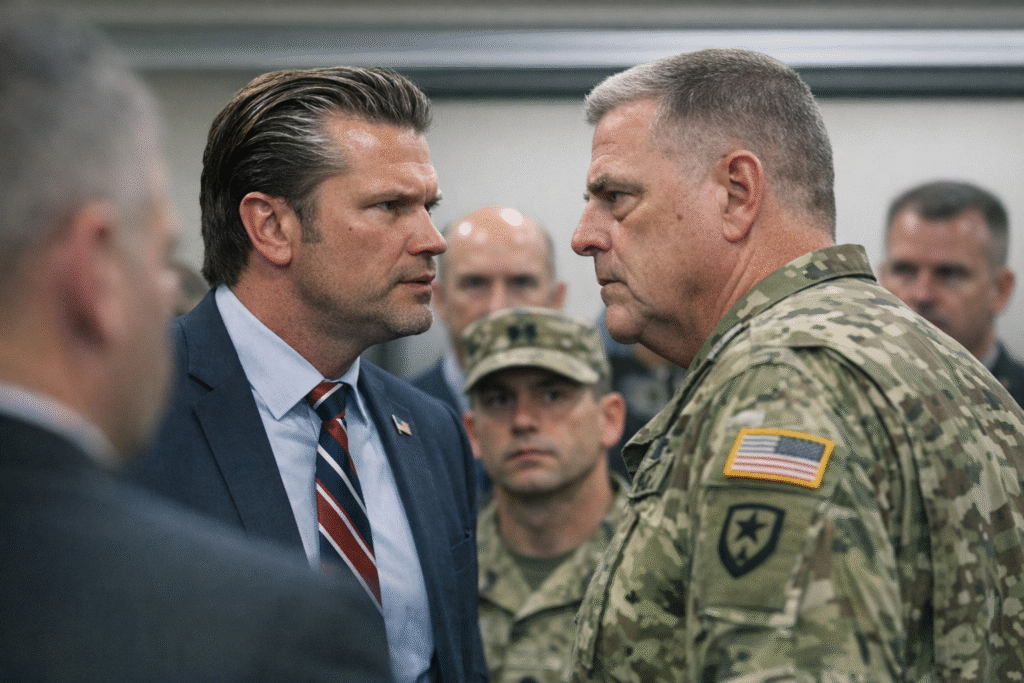
Tensions between prominent conservative media figure Pete Hegseth and the U.S. Army’s top civilian leadership have moved from private disagreement into public view, underscoring broader strains between political commentary and military governance. According to the Wall Street Journal article titled “Hegseth’s Feud With Army Secretary Spills Into Public View,” the dispute highlights how clashes over military culture, policy priorities, and public messaging are increasingly playing out in national media rather than remaining confined to internal channels.
The article describes a deepening conflict between Hegseth, a longtime advocate for a more traditionalist vision of the armed forces, and the Army secretary, who has defended current institutional policies and leadership decisions. Their disagreement reflects wider debates within defense circles about diversity initiatives, recruitment challenges, and the role of political influence in shaping the military’s public image. What might once have been handled through quiet discussions has instead unfolded through interviews, public statements, and media appearances.
At the core of the dispute are competing narratives about the direction of the Army. Hegseth has been critical of what he and like-minded observers view as a drift away from combat readiness toward social or political priorities. Army leadership, by contrast, has pushed back against that characterization, arguing that modernization efforts and personnel policies are essential to maintaining a capable and inclusive force in a changing security environment.
The public nature of the feud raises questions about civil-military relations and the boundaries between commentary and command authority. Defense analysts cited in the Wall Street Journal’s reporting suggest that while debate over military policy is not new, the increasingly visible and personalized nature of such disputes risks eroding trust in institutional leadership. It also places additional pressure on military officials to respond to critiques in real time, often in highly politicized settings.
The episode comes at a moment when the U.S. military is navigating recruitment shortfalls, evolving operational demands, and heightened political scrutiny. As the Wall Street Journal notes, disputes like this can amplify divisions while complicating efforts to present a unified message to both service members and the public.
Ultimately, the clash illustrates how the intersection of media influence and defense policy is reshaping the dynamics of military discourse. Whether the disagreement leads to substantive policy shifts or remains a rhetorical battle, its public visibility signals a broader transformation in how military leadership, critics, and the public engage with one another.