Seized Iranian Ship Linked to China Trade Network
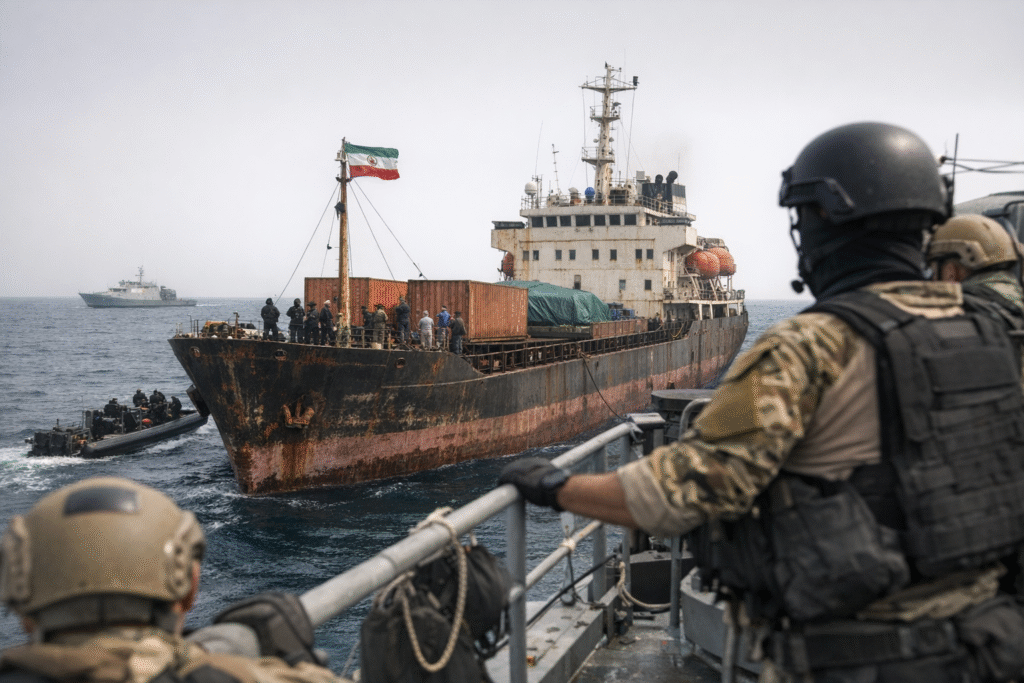
A vessel at the center of recent maritime tensions in the Middle East has drawn renewed scrutiny after investigators linked it to a broader shipping network with established ties to China, according to reporting by The Wall Street Journal.
In its article “Seized Iranian-Flagged Ship Was Part of Fleet That Frequented China,” the publication details how the ship, seized amid escalating regional security concerns, appears to be part of a loosely connected fleet that has regularly operated along trade routes between Iran and Chinese ports. Shipping data, vessel tracking records, and corporate ownership structures cited in the report suggest that the ship’s activities were not isolated but rather embedded in a wider commercial and logistical pattern.
The vessel’s seizure has amplified questions about how global shipping networks intersect with geopolitical tensions, particularly in regions such as the Persian Gulf, where commercial maritime traffic often overlaps with strategic rivalries. Analysts cited in the report indicate that ships operating under Iranian flags or ownership frequently rely on complex routing, reflagging, and intermediary companies to sustain trade amid sanctions and monitoring.
The Journal’s reporting points to evidence that this fleet routinely called at Chinese ports, underscoring Beijing’s role as a key destination for energy shipments linked to Iran. While such trade relationships are not new, the exposure of specific vessels involved highlights the opaque nature of maritime logistics tied to sanctioned economies.
The case also reflects broader enforcement challenges. Maritime authorities and intelligence agencies have struggled to track ships that deploy tactics such as transponder manipulation, shell ownership, and cargo transfers at sea. These practices complicate efforts to determine the origin and destination of shipments, as well as compliance with international regulations.
Officials have not publicly detailed all the circumstances surrounding the seizure, but the incident comes amid heightened vigilance over shipping lanes in the region. It also adds to ongoing scrutiny of how global supply chains adapt to sanctions regimes and geopolitical constraints.
By linking the seized ship to a wider network tied to Chinese trade routes, the reporting underscores how commercial shipping can both shape and reflect shifting political and economic alliances.