Trump Set to Use Qatari-Donated Jet as Interim Air Force One Amid Security and Ethics Concerns
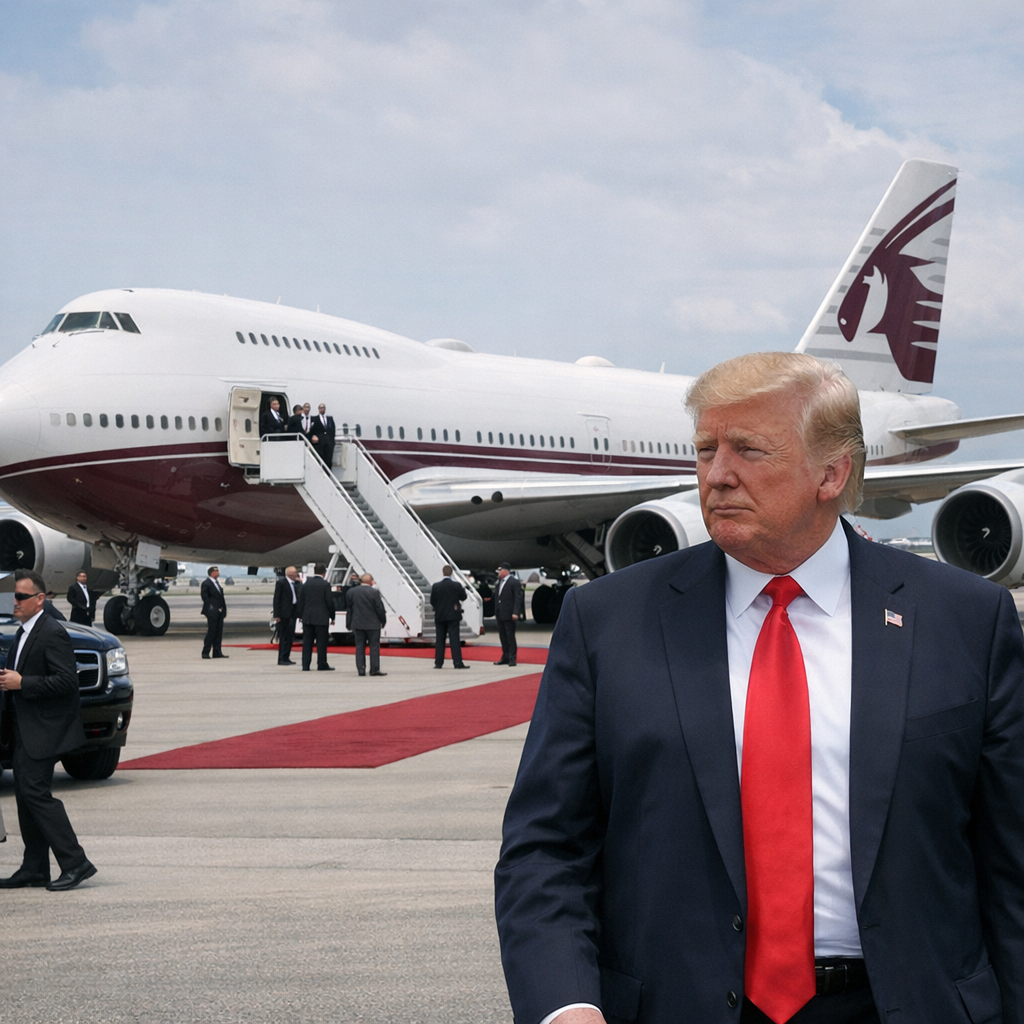
A report published by Military Times, titled “In a first, Trump will travel aboard Qatari-donated Air Force One,” details an unprecedented development in U.S. presidential travel that is raising legal, ethical and security questions among current and former defense officials.
According to the Military Times account, former President Donald Trump is set to use a Boeing 747 aircraft donated by the government of Qatar as a temporary presidential transport platform. The arrangement would mark the first time a U.S. president relies on a foreign-donated aircraft for official travel, diverging from longstanding norms that emphasize domestically owned and controlled presidential airlift.
The aircraft in question is reportedly being transferred for use while the U.S. Air Force continues work on long-delayed replacements for the current fleet of VC-25A planes, widely known as Air Force One when the president is aboard. Those replacement aircraft, based on the Boeing 747-8 platform, have faced years of cost overruns, technical setbacks and schedule delays, pushing their expected delivery further into the future than initially planned.
Military Times reports that Trump has voiced frustration with the timeline of the program and has supported acquiring an interim solution. The Qatari aircraft, described as a luxury-configured jet previously used by the Gulf nation’s leadership, is expected to undergo modifications to meet at least some U.S. military communications and security standards.
Even so, experts cited in the report warn that converting a foreign-owned aircraft into a secure presidential platform presents significant challenges. Air Force One is not simply a mode of transport but a highly specialized command and control hub, equipped with hardened communications, missile defense systems and protections against electronic surveillance. Retrofitting such capabilities onto an aircraft not originally designed for that role could take considerable time and resources, potentially undermining the goal of a quick interim solution.
Beyond technical concerns, the arrangement is also drawing scrutiny from ethics and national security analysts. Accepting a donated aircraft from a foreign government—particularly one with complex geopolitical relationships—raises questions about influence, transparency and compliance with U.S. laws governing gifts from foreign states, including considerations related to the Emoluments Clause. While such transfers can be structured to meet legal requirements, critics argue that the optics alone may complicate diplomatic perceptions and domestic political debate.
Supporters of the move, as described in the Military Times coverage, argue that it reflects a pragmatic response to procurement delays that have frustrated multiple administrations. They contend that ensuring reliable presidential mobility is paramount and that appropriate safeguards can mitigate risks associated with the aircraft’s origin.
Pentagon officials have not publicly detailed the full scope of modifications or the timeline for integrating the aircraft into service. It also remains unclear whether the plane would receive a formal VC-25 designation or serve in a more limited or transitional capacity.
What is clear is that the decision represents a departure from decades of precedent in how the United States equips and maintains one of its most symbolically and operationally significant assets. As the Military Times article indicates, the development is likely to intensify scrutiny of both the Air Force’s acquisition processes and the broader question of how best to ensure secure, reliable presidential transport in an era of rising costs and evolving threats.