Rising Tempo and Tensions Shape Strategic Competition in the Western Pacific
The latest developments in the Indo-Pacific underscore a steadily intensifying strategic competition, as outlined in “USNI News Western Pacific Pulse – June 12, 2026”, published by the U.S. Naval Institute’s news service. The report captures a region marked by persistent military signaling, deepening alliances, and growing operational tempo among major naval powers.
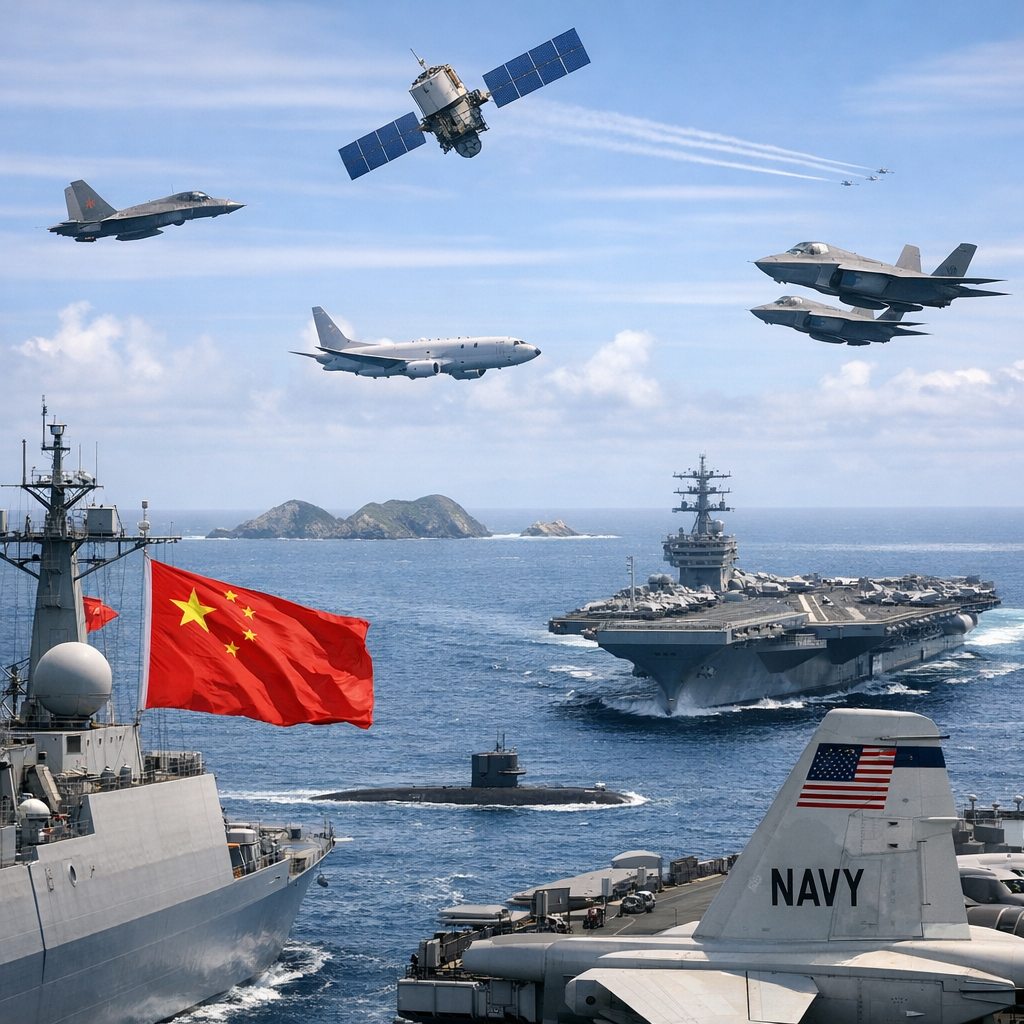
According to USNI News, Chinese naval and air activity continues to shape the regional security environment, particularly around Taiwan and across the broader Western Pacific. Recent movements by the People’s Liberation Army Navy and Air Force, including patrols and exercises near contested areas, reflect a pattern of sustained pressure designed to assert territorial claims while testing the responsiveness of regional actors, as also reported by Reuters coverage of Asia-Pacific security developments. These operations, while not unprecedented, are occurring with greater frequency and coordination, raising concerns among neighboring states. Additional analysis of maritime disputes and military activity in the region can be found through the CSIS Asia Maritime Transparency Initiative.
At the same time, the United States and its allies have maintained a visible presence in the region, emphasizing freedom of navigation and deterrence. U.S. Navy deployments, often conducted in conjunction with partners such as Japan and Australia, are intended to counterbalance Chinese activities and reassure allies of Washington’s long-term commitment, consistent with broader U.S. naval operations outlined by the U.S. Navy and regional coordination efforts under U.S. Indo-Pacific Command. The USNI report highlights ongoing joint exercises and port visits as key tools in reinforcing interoperability and signaling unity.
Japan’s role remains particularly significant. Tokyo has continued to expand its defense posture, both through increased military spending and the gradual evolution of its operational doctrine. Maritime Self-Defense Force units have been active in multinational exercises, reflecting Japan’s growing willingness to take on a more assertive security role within the constraints of its constitution. The USNI coverage points to Japan’s focus on defending its southwestern islands and monitoring Chinese activity in adjacent waters as central priorities, themes also reflected in Japan’s official defense policy documents such as the Japanese Ministry of Defense White Paper.
Elsewhere in the region, Southeast Asian nations are navigating a delicate balance. While many countries rely on economic ties with China, they are simultaneously seeking closer security cooperation with the United States and other partners. The USNI report notes incremental steps by several states to enhance maritime domain awareness and coastal defense capabilities, often supported by external assistance, including initiatives described by the U.S. State Department’s maritime security programs.
The broader picture that emerges from “USNI News Western Pacific Pulse – June 12, 2026” is one of sustained strategic competition without direct confrontation. Military activities have grown more visible and frequent, but they remain calibrated to avoid escalation into open conflict. This dynamic places a premium on communication, crisis management, and the maintenance of credible deterrence.
As regional militaries continue to modernize and operate in closer proximity, the risk of miscalculation persists. The report suggests that while no single flashpoint currently dominates, the cumulative effect of ongoing operations, exercises, and deployments is a more crowded and complex security environment. In this context, the actions of major powers—and their ability to manage competition responsibly—will be critical in shaping the trajectory of the Western Pacific in the months ahead.