Poll Shows Partisan Split on Iran Power
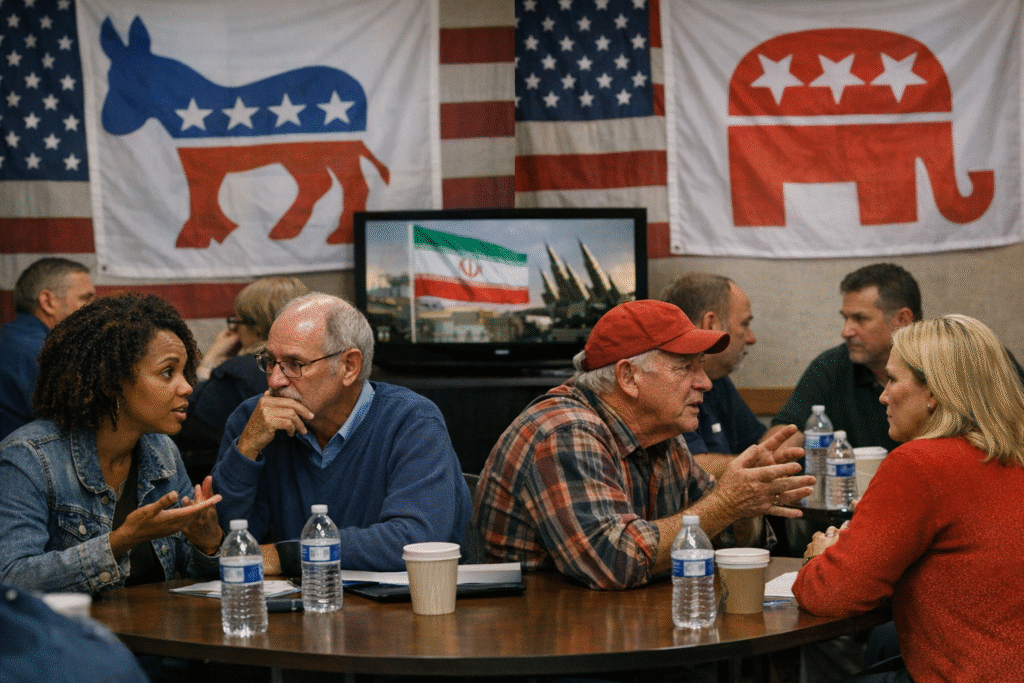
A recent report highlighting American attitudes toward Iran has underscored stark partisan differences in how the public perceives the country’s global standing, particularly in the context of ongoing regional tensions. According to an article titled “Only One Group Of Americans Think Iran Is Winning,” published by the Daily Wire, polling data suggests that views on Iran’s relative strength and success are sharply divided along political lines, with one demographic group standing out as notably more likely to believe Tehran is gaining the upper hand.
The Daily Wire article draws on survey findings indicating that most Americans do not see Iran as “winning” in its geopolitical contest with the United States and its allies. However, the report notes that respondents identifying with a particular political affiliation were significantly more inclined than others to say that Iran is currently succeeding in its strategic objectives. This divergence, the article suggests, reflects broader differences in how Americans interpret U.S. foreign policy effectiveness, regional instability, and the long-term consequences of diplomatic versus confrontational approaches.
Perceptions of Iran’s position have been shaped by several recent developments, including tensions over nuclear enrichment, proxy conflicts in the Middle East, and shifting alliances in the region. While some analysts argue that Iran has expanded its influence through non-state actors and regional partnerships, others contend that economic sanctions and internal pressures have constrained Tehran’s capacity to project power sustainably.
The Daily Wire piece frames the polling results within a larger political narrative, suggesting that differing assessments of Iran’s trajectory may be tied to domestic debates over U.S. leadership and strategy abroad. For some Americans, viewing Iran as ascendant may reflect skepticism about current or recent policy decisions, while others see such a characterization as overstated or inconsistent with broader indicators of power.
Public opinion on foreign adversaries has long been fluid, often influenced by current events, media coverage, and partisan framing. Experts caution that perceptions of whether a country is “winning” can be inherently subjective, shaped as much by political identity as by measurable outcomes such as economic resilience, military capability, or diplomatic reach.
Ultimately, the findings referenced in the Daily Wire article highlight not only differing views on Iran itself but also the extent to which foreign policy issues remain deeply intertwined with domestic political divisions in the United States.