Pentagon Weighs Prolonged Ground War in Iran
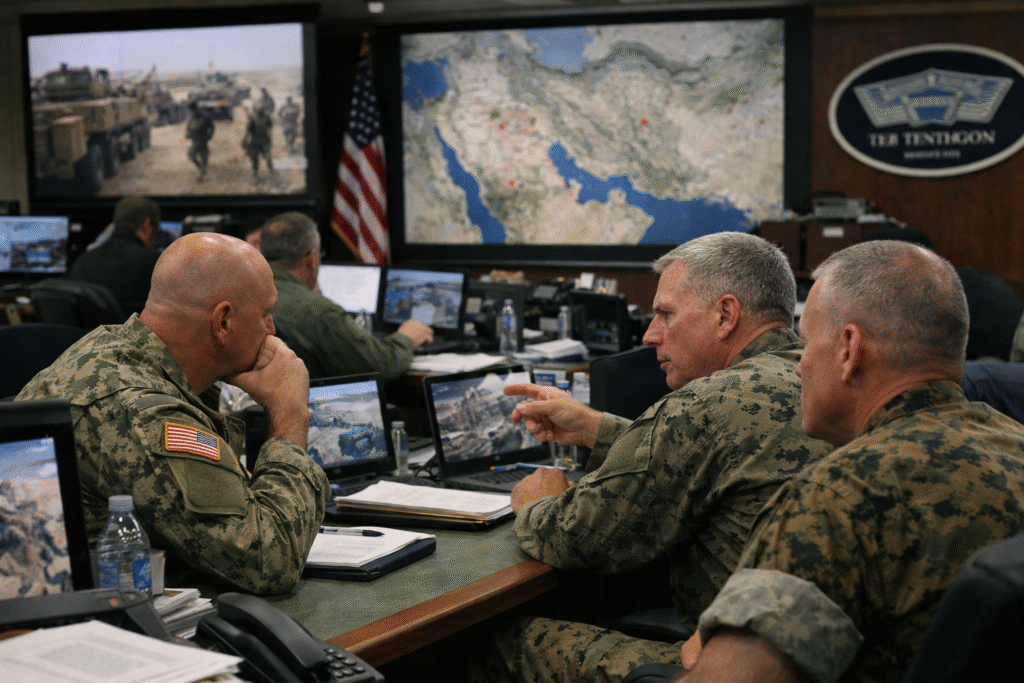
U.S. defense officials are reportedly preparing for the possibility of an extended ground campaign in Iran, according to a recent Military Times report titled “Pentagon reportedly preparing for weeks of ground operations in Iran.” The report, citing unnamed officials familiar with planning discussions, suggests that contingency preparations have shifted beyond short-duration strikes toward scenarios involving sustained troop deployments.
While no final decision has been announced, the planning reflects growing concern within the Pentagon that any military confrontation with Iran could escalate rapidly and require a more prolonged and complex engagement than initially anticipated. Officials are said to be evaluating logistical requirements, troop rotations, and potential operational objectives in the event that limited strikes fail to achieve strategic goals.
The prospect of weeks-long ground operations marks a significant departure from the U.S. military’s recent emphasis on minimizing large-scale troop commitments in the Middle East. Over the past decade, successive administrations have sought to avoid extended ground wars in the region, favoring airpower, special operations forces, and partnerships with local allies. The reported planning suggests that, in Iran’s case, military leaders believe such approaches alone may be insufficient under certain scenarios.
Analysts note that Iran’s geography, military capacity, and network of allied militias across the region would complicate any ground campaign. Urban terrain, mountainous borders, and the احتمال of asymmetric warfare could contribute to a protracted conflict with uncertain outcomes. The need to secure supply lines and protect U.S. forces from missile and drone attacks would likely add further challenges.
The report also underscores the broader strategic risks of escalation. A ground operation in Iran could draw in regional actors, threaten global energy markets, and strain U.S. alliances. It could also test domestic political support for military engagement at a time when public appetite for large-scale conflicts remains limited.
Pentagon officials have not publicly confirmed the specifics outlined in the Military Times report. However, defense planners routinely develop a range of operational scenarios, particularly amid heightened tensions. Such preparations do not necessarily indicate imminent action but instead reflect standard military practice in anticipating multiple contingencies.
Even so, the reported shift toward planning for extended ground operations signals that U.S. military leaders are grappling with the possibility that a conflict with Iran, if it occurs, may not be brief or contained.