Army Restores Skis to 10th Mountain Insignia
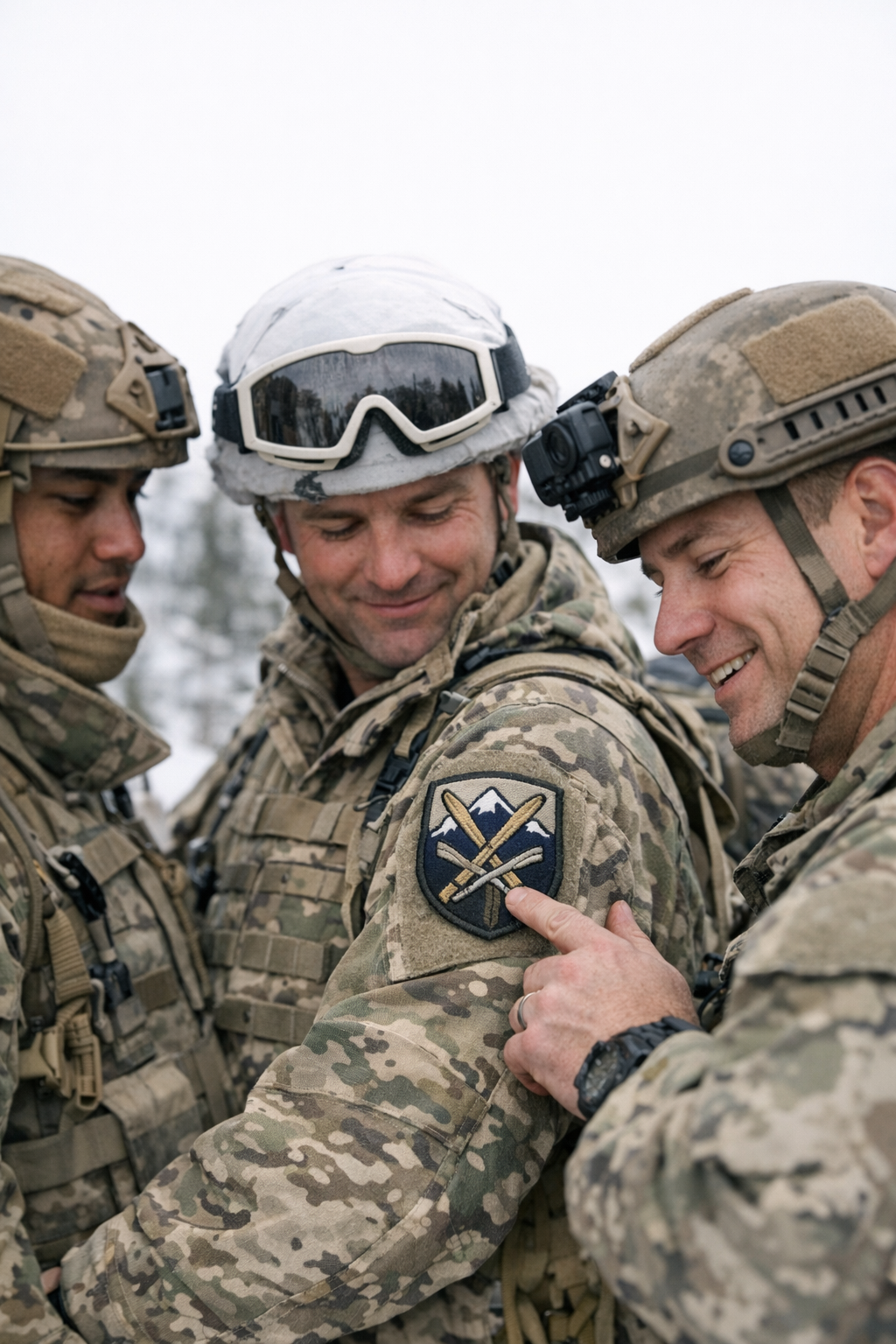
The U.S. Army has approved a notable change to the insignia of its storied 10th Mountain Division, restoring a historical symbol that many veterans and historians have long argued reflects the unit’s original identity. As first reported in “Crossed skis return to the Army’s 10th Mountain Division insignia” by Military Times, the division will once again incorporate crossed skis into its shoulder sleeve insignia, marking a symbolic return to its World War II-era roots.
The decision represents more than a cosmetic adjustment. For decades, the 10th Mountain Division has been recognized as one of the Army’s premier light infantry units, with extensive deployments in Iraq and Afghanistan. Yet its origins trace back to specialized alpine warfare training, when soldiers prepared to fight in harsh mountain environments in Europe. The crossed skis insignia, originally associated with that mission, had been removed in a redesign that emphasized the division’s current operational focus rather than its historical lineage.
According to reporting by Military Times, the move to restore the skis follows years of advocacy from veterans, historians, and current service members who viewed the original symbol as a core part of the division’s identity. Supporters argued that the emblem connects today’s soldiers to the unique training, sacrifice, and battlefield achievements of their predecessors, particularly during the Italian campaign in World War II, where the division played a significant role.
The updated insignia does not fundamentally alter the division’s mission, but it underscores the Army’s broader effort to preserve heritage while adapting to modern operational demands. Units across the service have periodically revisited insignia and traditions in recent years, balancing contemporary relevance with historical continuity. In this case, the restoration signals an institutional recognition that symbols can carry enduring meaning even as roles evolve.
For current members of the 10th Mountain Division, the change is likely to resonate on both practical and cultural levels. While few, if any, will train extensively for alpine warfare in the same way as their World War II counterparts, the insignia reinforces a legacy of resilience in extreme conditions. It also serves as a reminder of the division’s origins as a specialized force built for challenging terrain and unconventional environments.
The Army has not indicated that the insignia change will be accompanied by any shift in training doctrine or deployment strategy. Instead, the adjustment appears intended to strengthen esprit de corps by reaffirming ties to the past. In a force where unit identity can play a significant role in cohesion and morale, such symbolic decisions carry weight beyond their visual impact.
The reintroduction of the crossed skis also reflects an enduring tension within military organizations: how to honor tradition without becoming constrained by it. By restoring the emblem while maintaining the division’s present-day mission, the Army is attempting to strike that balance. Whether the change will influence how soldiers perceive their unit or how the public understands its history remains to be seen, but it marks a clear acknowledgment that even small symbols can carry lasting institutional significance.