Japan Expands Reach With Tomahawk-Equipped Destroyer
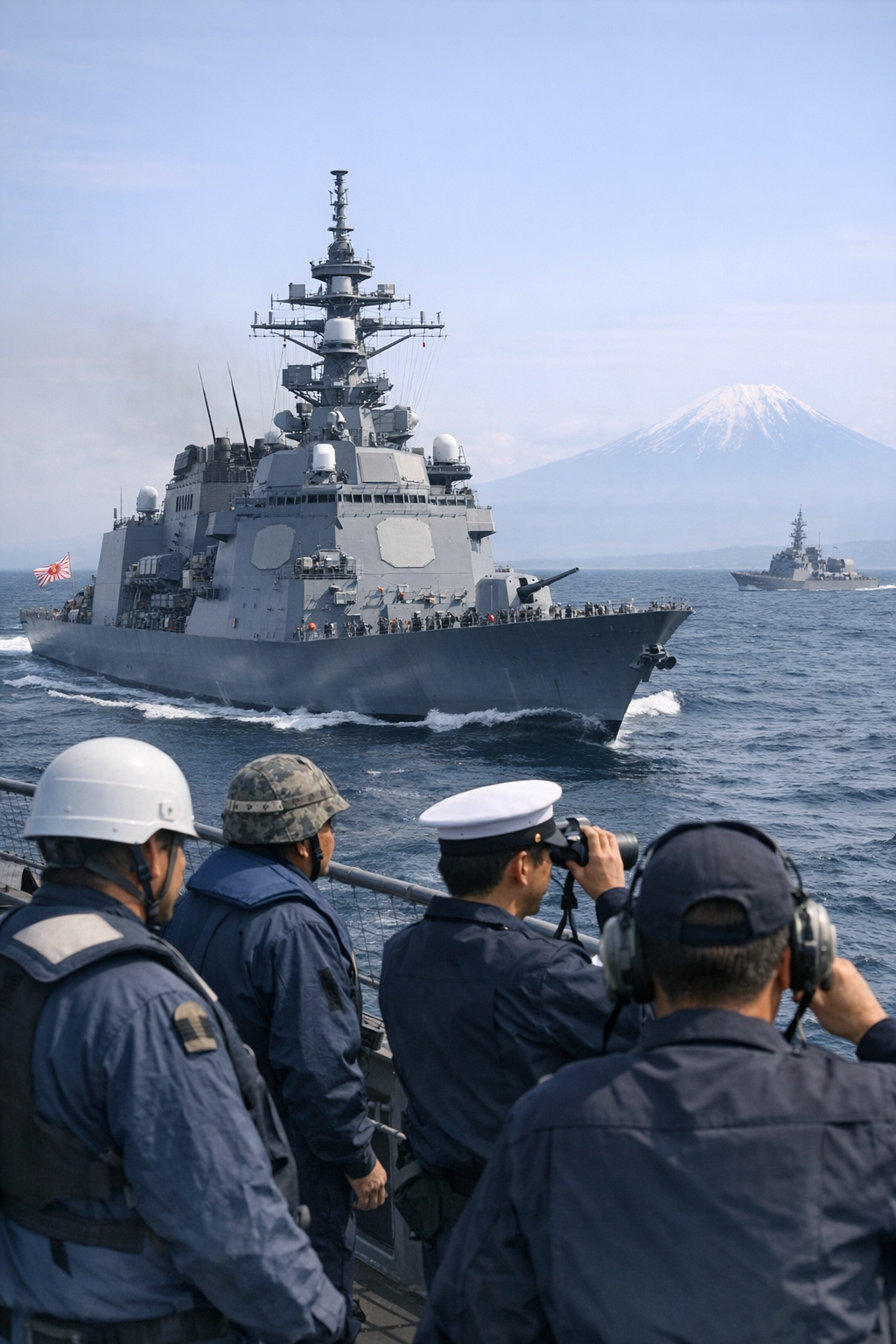
Japan has taken a significant step in expanding its long-range strike capabilities, with a key naval asset now able to deploy U.S.-made Tomahawk cruise missiles, signaling a shift in the country’s defense posture amid rising regional tensions.
According to the Defense News report “Japanese destroyer can now fire Tomahawk missiles, extending nation’s combat punch,” the Japan Maritime Self-Defense Force has completed modifications to enable at least one of its Aegis-equipped destroyers to launch the long-range missiles. The development is part of Tokyo’s broader push to strengthen deterrence by acquiring what it describes as counterstrike capabilities, a move that marks a departure from its traditionally restrained military doctrine.
The integration of Tomahawk missiles, which can strike targets at distances exceeding 1,000 miles, significantly extends Japan’s ability to project power beyond its immediate vicinity. While Japan has long maintained advanced defensive systems, including ballistic missile defense, the addition of these cruise missiles introduces a new operational dimension: the capacity to hit adversary launch sites or command infrastructure if necessary.
Defense planners in Tokyo have framed the capability as essential in the face of evolving security challenges, particularly North Korea’s missile program and China’s growing military presence in the East China Sea and beyond. The government has increasingly emphasized the need for a more robust deterrent, arguing that purely defensive systems may be insufficient against modern threats.
The newly upgraded destroyer is expected to operate within the framework of Japan’s existing alliance with the United States. Interoperability with U.S. forces remains a central feature of Japan’s defense strategy, and the adoption of a U.S.-developed weapon system reflects continued deepening of that partnership. The Tomahawk purchase itself was approved as part of a broader effort to accelerate Japan’s military modernization timeline.
At the same time, the move is likely to draw scrutiny both domestically and internationally. Within Japan, debates continue over the constitutional and political implications of acquiring strike capabilities, given the country’s post-World War II pacifist framework. Critics argue that such systems could blur the line between defensive and offensive military roles, while supporters contend that they are necessary for credible deterrence in a deteriorating security environment.
Regionally, the deployment could contribute to heightened tensions, particularly with China, which has consistently opposed Japan’s military normalization. Beijing has warned against steps that it perceives as destabilizing, and the introduction of long-range strike options may be viewed as part of a broader strategic shift in East Asia.
The Defense News article highlights that the destroyer’s upgrade is likely just an initial phase, with additional platforms expected to receive similar modifications in the coming years. Tokyo’s defense buildup, supported by increased spending and new procurement plans, suggests that the integration of long-range precision strike capabilities will remain a central feature of its evolving military strategy.
As Japan continues to recalibrate its defense posture, the ability to deploy Tomahawk missiles underscores a broader transformation: from a force primarily configured for homeland defense to one capable of contributing more actively to regional deterrence and security.