Israeli Strike Reportedly Kills IRGC Intel Chief
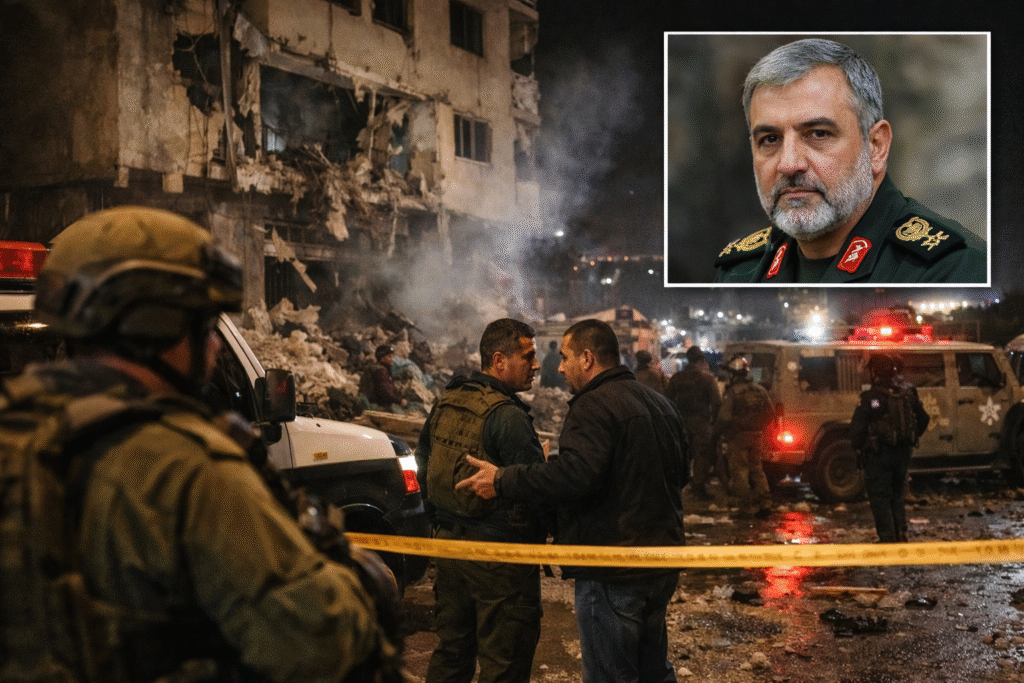
An Israeli strike has reportedly killed the head of intelligence for Iran’s Islamic Revolutionary Guard Corps (IRGC), marking a significant escalation in the long-running shadow conflict between the two regional adversaries. The development, first detailed in the article “Israeli Strike Kills IRGC’s Head of Intelligence in Latest Blow to Iranian Regime’s Leadership” published by the Washington Free Beacon, underscores the growing intensity and precision of Israeli operations targeting senior Iranian military figures.
According to the report, the strike forms part of a broader campaign aimed at weakening Iran’s military command structure, particularly within the IRGC, a powerful entity that plays a central role in Tehran’s regional strategy and internal security apparatus. The killing of a senior intelligence official represents not only a tactical success but also a symbolic blow to the organization’s operational capacity and prestige.
Israeli officials have not consistently confirmed individual operations, adhering to a longstanding policy of ambiguity. However, Israel has repeatedly signaled its intent to disrupt Iranian military entrenchment across the Middle East, including efforts to curb weapons transfers and intelligence coordination involving proxy groups. The reported strike fits within this pattern of targeted actions designed to degrade Iran’s strategic reach.
Iranian authorities have yet to provide full details publicly, but past incidents suggest that such losses are often followed by vows of retaliation. The IRGC, in particular, has been central to Iran’s asymmetrical response strategies, which have included cyber operations, regional proxy attacks, and other indirect measures.
The death of a senior intelligence figure could have implications beyond immediate operational disruption. Intelligence leadership is critical for coordinating both defensive countermeasures and offensive planning, especially in a geopolitical environment marked by covert activity and rapidly shifting alliances. A loss at that level may complicate internal coordination and decision-making within the IRGC in the near term.
At the same time, analysts caution that Iran has demonstrated resilience in replenishing its leadership ranks following past targeted killings. While such strikes may delay or degrade certain capabilities, they rarely eliminate them entirely. The broader impact will likely depend on how Iran recalibrates its intelligence operations and whether it opts for escalation or restraint in response.
The Washington Free Beacon’s report situates this development within a series of recent setbacks for Iran’s leadership, suggesting a sustained effort to apply pressure on key nodes of the regime’s security infrastructure. As tensions remain high across multiple fronts, the incident highlights the persistent volatility of the region and the risks of further escalation between state and non-state actors aligned with both sides.