Senators Urge Block on Chinese EV Factories
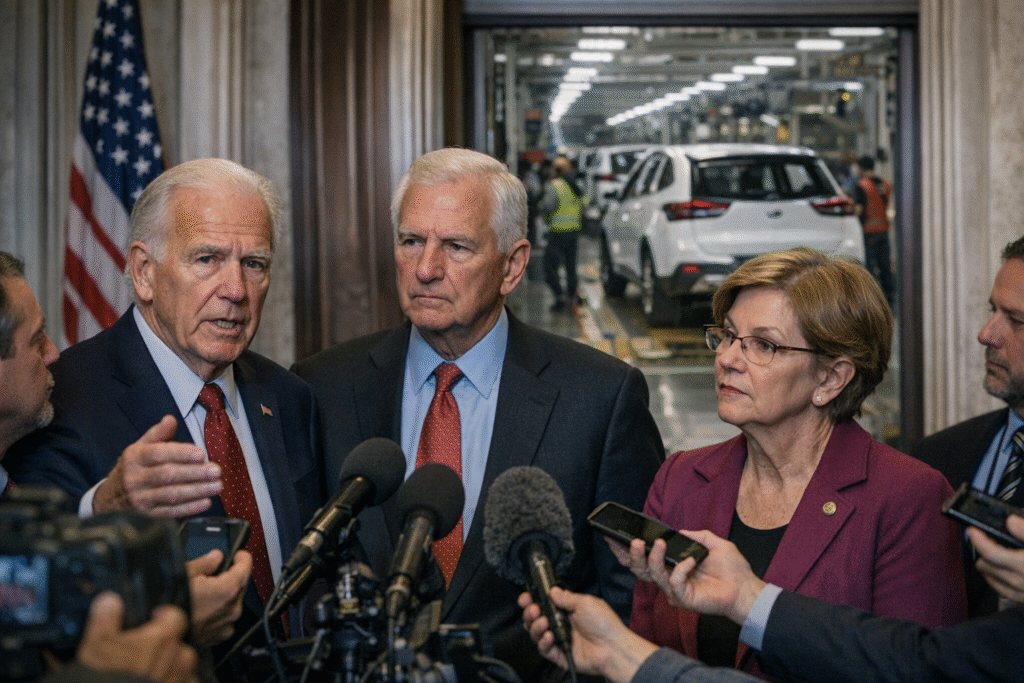
A group of Democratic senators has urged former President Donald Trump to take a hardline stance against Chinese automakers seeking to expand manufacturing operations in the United States, reflecting growing bipartisan anxiety over national security, industrial policy, and global competition in the electric vehicle sector.
According to the Wall Street Journal article “Democratic Senators Call on Trump to Block Chinese Automakers From Manufacturing in U.S.,” the lawmakers framed their appeal in terms of both economic and security risks. They warned that allowing Chinese automotive firms—particularly those with close ties to Beijing—to establish production facilities on American soil could expose sensitive technologies and supply chains to potential exploitation.
The senators’ concerns center on the rapid global ascent of Chinese electric vehicle manufacturers, which have gained a competitive edge through state subsidies, control over battery supply chains, and aggressive pricing strategies. As these companies explore international expansion, including potential manufacturing investments in North America, some U.S. policymakers fear that domestic automakers could be undercut while critical infrastructure becomes more vulnerable to foreign influence.
In their communication, the lawmakers reportedly argued that existing trade and investment review mechanisms may not be sufficient to address the evolving nature of the threat. They called for a more explicit policy to block or restrict Chinese automotive firms from establishing manufacturing bases in the United States, particularly in sectors linked to advanced technology and data collection.
The issue highlights a rare point of alignment across party lines on China policy. While the appeal was directed at Trump, whose administration took a confrontational approach to Beijing on trade and technology, concerns about Chinese industrial expansion have persisted under subsequent administrations. Lawmakers from both parties have increasingly backed tighter investment screening, tariffs, and domestic subsidies aimed at strengthening the U.S. manufacturing base.
At stake is not only the future of the American auto industry but also broader strategic competition over next-generation transportation technologies. Electric vehicles are deeply intertwined with battery production, software integration, and data systems, raising questions about cybersecurity and the potential for foreign access to sensitive information.
Industry analysts note that restricting Chinese automakers could have mixed economic consequences. While such measures might protect domestic producers and encourage local investment, they could also limit competition and slow the pace of innovation or affordability in the electric vehicle market. Consumers, in turn, may face fewer choices and higher prices in the near term.
The debate also underscores tensions within U.S. trade policy. Efforts to promote domestic manufacturing—through subsidies and incentives—are now intersecting with more defensive measures aimed at limiting foreign participation. Policymakers must balance the desire for economic openness with increasing calls for strategic decoupling in critical industries.
As discussions continue, the question of how far the United States should go in restricting Chinese investment in manufacturing remains unresolved. What is clear is that competition in the automotive sector has become a focal point in the broader geopolitical contest between Washington and Beijing, with implications that extend well beyond the factory floor.