Israel Reports Discovery of Extensive Hezbollah Tunnel Network Beneath Southern Lebanon Village
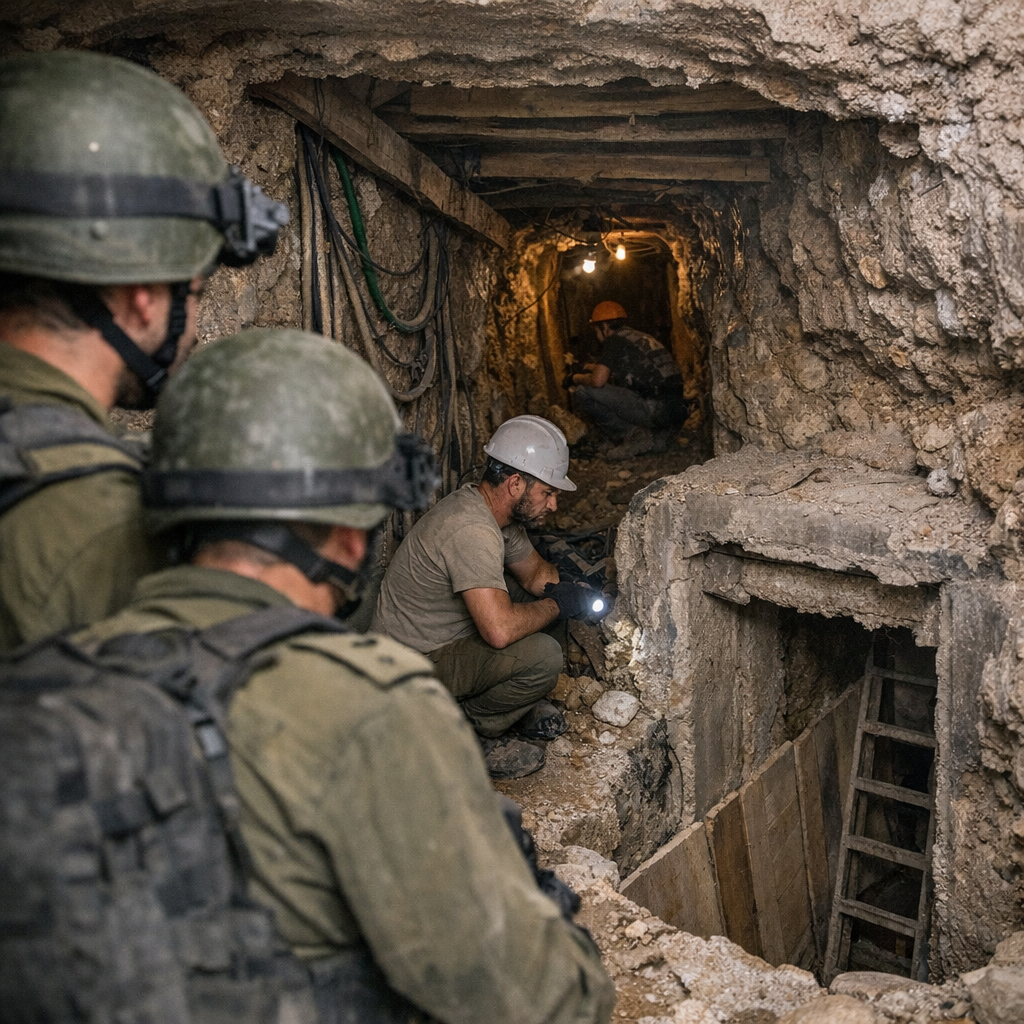
Israel’s military says it has uncovered an extensive underground tunnel network in southern Lebanon that it alleges was built and operated by Hezbollah, highlighting what it describes as the group’s continued efforts to expand its cross-border attack capabilities despite years of Israeli countermeasures.
According to an article published by i24NEWS titled “IDF uncovers major Hezbollah tunnel complex beneath southern Lebanese village,” the Israel Defense Forces (IDF) reported that the subterranean infrastructure was located beneath a civilian area in southern Lebanon (see the i24NEWS report). The military characterized the network as a significant engineering project designed to facilitate covert movement of fighters and potentially support infiltration operations into Israeli territory.
Israeli officials said the tunnels included reinforced passages, branching routes, and concealed access points embedded within what they described as a densely populated village environment. The IDF alleged that Hezbollah’s use of civilian areas for military infrastructure reflects a broader strategy aimed at both concealment and deterrence, complicating potential Israeli responses. Hezbollah, a Lebanese militant and political organization, has long been a central actor in regional tensions (see Encyclopaedia Britannica’s overview of Hezbollah).
The discovery is part of Israel’s ongoing campaign to detect and neutralize underground threats along its northern border. In past years, the IDF has conducted operations specifically targeting cross-border tunnels, including Operation Northern Shield, which exposed several such routes (see IDF: Operation Northern Shield and coverage from BBC News on tunnel destruction efforts). Israeli officials assert that such infrastructure represents a critical component of Hezbollah’s operational planning in the event of a broader conflict.
Military officials indicated that intelligence leading to the discovery combined technological surveillance with ground operations. While precise details of the methods used were not disclosed, Israeli authorities have invested heavily in underground detection capabilities following earlier tunnel discoveries.
Hezbollah has not publicly commented on the specific claims outlined in the i24NEWS report. The group has historically denied certain Israeli allegations regarding its activities, while also openly acknowledging its broader military preparedness against Israel.
The reported find comes amid sustained tensions along the Israel-Lebanon frontier, where periodic exchanges of fire and heightened rhetoric have raised concerns among international observers about the risk of escalation. International forces such as the United Nations Interim Force in Lebanon monitor the situation in the region (see UNIFIL official site). Israeli leaders have repeatedly warned that Hezbollah’s entrenchment near civilian areas in Lebanon could have severe consequences in any future conflict.
Lebanese officials have in the past rejected Israeli accusations that Hezbollah embeds military assets within civilian infrastructure, arguing that Israel frequently uses such claims to justify military actions. Independent verification of underground sites in contested areas is often difficult, and reporting on such discoveries tends to rely heavily on military sources.
Even so, the latest announcement reflects the continuing strategic importance both sides place on subterranean warfare, a domain that has become increasingly prominent in the region’s security landscape. Analysts note that the detection and exposure of such networks serve not only a tactical purpose but also a signaling function, reinforcing Israel’s readiness while attempting to deter further development of similar infrastructure.
The situation remains fluid, with the potential for further disclosures or counterclaims as both Israel and Hezbollah navigate a volatile and deeply entrenched confrontation along their shared border.