How Science and Design Shape Safer Concert Crowds
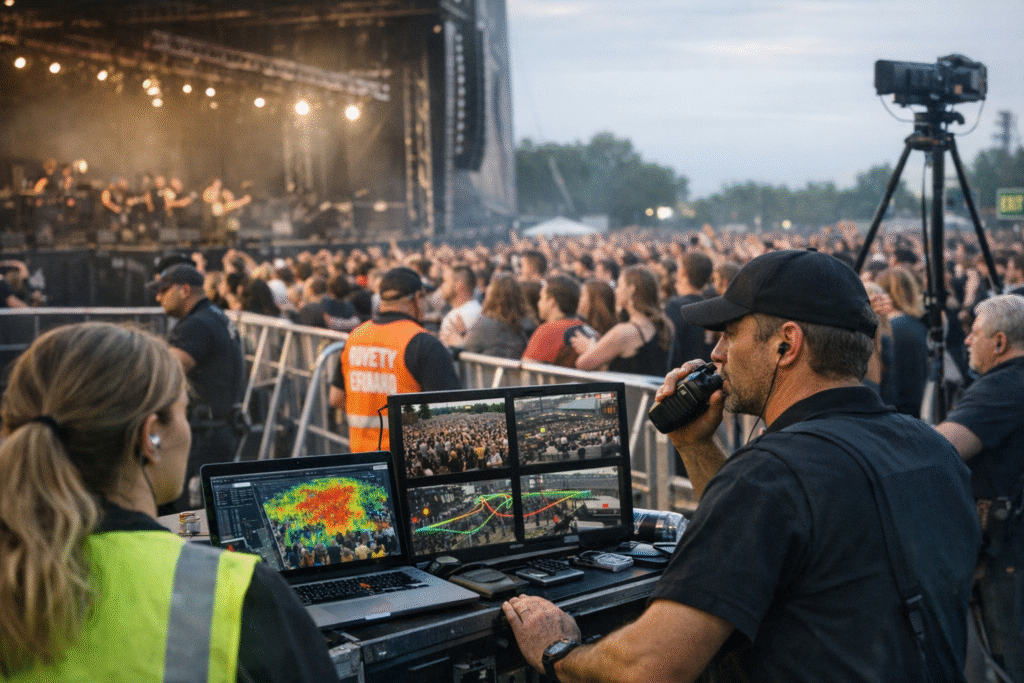
A recent Wall Street Journal video feature, “Experts Reveal Hidden Strategies to Control a Concert Crowd of Millions,” sheds light on the intricate planning and behavioral science behind managing vast live audiences safely. Drawing on insights from crowd scientists, event organizers and security professionals, the piece outlines how the success of large-scale concerts depends less on visible force and more on subtle environmental design and predictive analysis.
At the core of modern crowd management is an understanding that human movement in dense settings follows identifiable patterns. Experts interviewed by the Wall Street Journal emphasize that crowds behave less like collections of individuals and more like fluid systems. This perspective has driven a shift away from reactive policing toward proactive design. Factors such as entry points, walkway widths, sightlines and even stage placement are carefully calibrated to guide flow and reduce pressure points before they form.
One of the key strategies highlighted is the use of “nudging” techniques, in which small design choices influence crowd behavior without overt direction. Lighting, signage and sound cues can subtly guide audience members toward less congested areas. Even the positioning of food stalls and restrooms plays a role in dispersing density. According to the experts featured, these measures are often more effective than barriers or direct intervention, which can sometimes escalate tension.
Technology also plays an expanding role. Real-time monitoring systems, including aerial imaging and crowd-density sensors, allow organizers to detect early signs of dangerous compression. These tools enable rapid adjustments, such as redirecting flows or temporarily pausing entry to certain zones. The Wall Street Journal report notes that predictive modeling, often used in urban planning, is increasingly applied to simulate how crowds will behave under various scenarios before an event even begins.
Communication emerges as another critical factor. Clear, consistent messaging—whether through large screens, announcements or staff on the ground—helps maintain order and reduces panic in high-density situations. Experts stress that confusion is one of the greatest risks in crowd settings; when people lack information, they are more likely to move unpredictably or push toward perceived exits.
The video also underscores the importance of trained personnel who can read crowd dynamics in real time. Rather than relying solely on security forces, many events now deploy specialized crowd managers who understand the psychology of mass gatherings. Their role is to identify subtle warning signs, such as changes in movement speed or direction, that may indicate rising خطر.
Underlying these strategies is a growing body of research shaped by past tragedies at concerts and public gatherings. The Wall Street Journal piece reflects a broader industry shift toward prevention through design and data, rather than response after problems emerge. As live events continue to attract larger audiences worldwide, the lessons outlined in “Experts Reveal Hidden Strategies to Control a Concert Crowd of Millions” illustrate how science and planning are reshaping the way mass entertainment is safely delivered.