House Republicans Push to Restore Base Names and Revive Department of War in Contentious Defense Debate
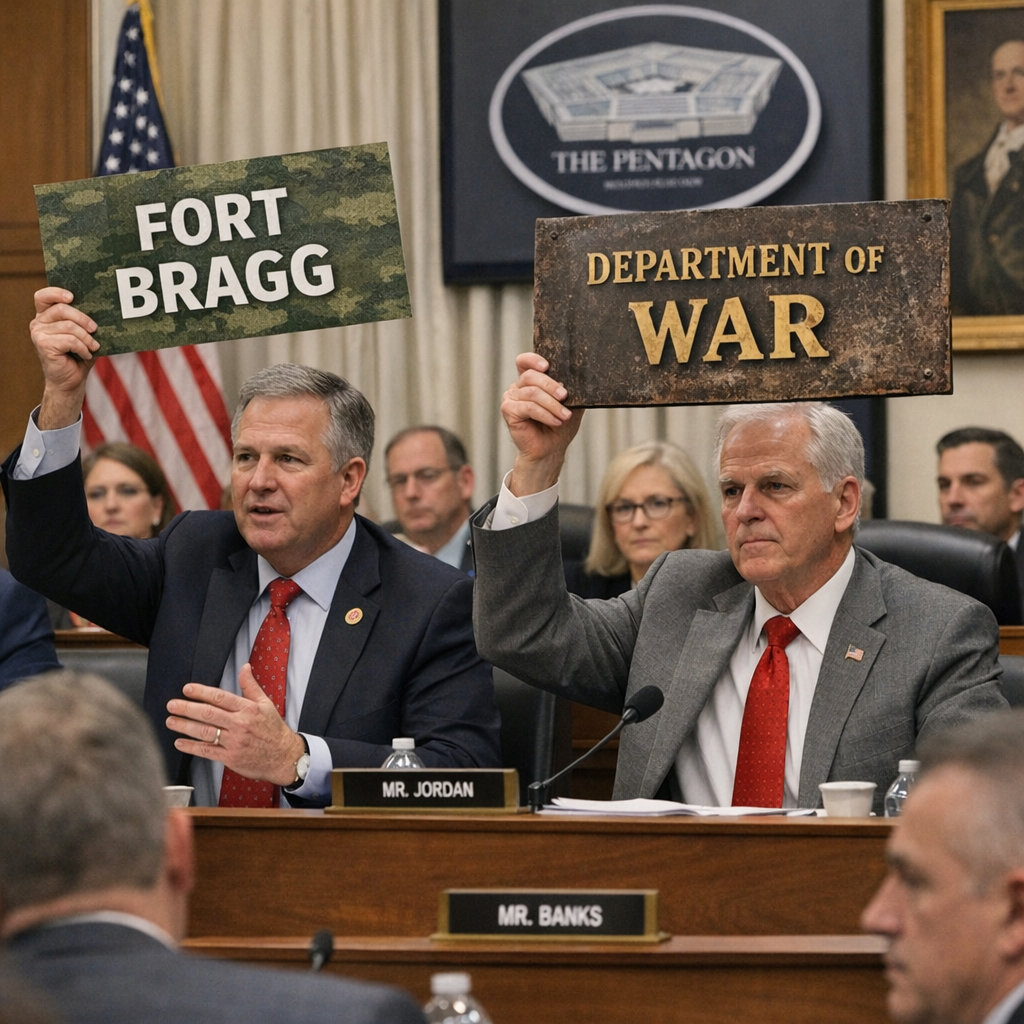
A Republican-led House panel has approved a measure that would reverse recent renaming efforts at U.S. military installations and revive the term “Department of War,” reigniting a politically charged debate over military traditions, historical memory, and the direction of Pentagon policy.
The proposal, advanced during a markup session of the House Armed Services Committee, would restore certain military base names that were changed in recent years as part of a broader effort to remove honors associated with the Confederacy. Lawmakers backing the provision argued that the renaming process was costly, unnecessary, and driven more by political pressure than military need. They framed the move as a corrective step to preserve what they see as longstanding heritage and institutional continuity within the armed forces.
The measure also includes language to symbolically rename the Department of Defense as the “Department of War,” a change supporters say would reflect a more realistic posture toward national security threats. Advocates contend that the current name understates the seriousness of global challenges and risks fostering complacency in defense planning.
Opponents sharply criticized both provisions, describing them as regressive and divisive. Democratic lawmakers and some military advocacy groups argue that reversing base renamings would undo years of work aimed at making the armed services more inclusive and reflective of modern values. They warn that restoring names linked to Confederate figures could harm morale among service members, particularly those from minority backgrounds, and damage the military’s public image.
Critics also questioned the practicality and intent behind renaming the Department of Defense, calling it a symbolic gesture with little operational value. Some argued that the proposal risks sending an unnecessarily aggressive signal internationally while doing nothing to address substantive defense challenges such as readiness, recruitment, and emerging technological threats.
The debate reflects broader cultural and political divides that have increasingly shaped defense policy discussions in Washington. Renaming military installations became a flashpoint during recent years, culminating in a bipartisan Naming Commission that recommended new names for bases previously honoring Confederate officers. Implementation of those recommendations was completed under congressional mandate despite initial resistance from some lawmakers.
The House panel’s vote does not guarantee the provisions will become law. The measure would still need to pass the full House and be reconciled with the Senate’s version of the annual National Defense Authorization Act, where similar proposals face uncertain prospects. The White House has also signaled opposition to efforts that would reverse existing naming decisions.
As reported in “House panel votes to reinstate non-Confederate base names and adopt Department of War” by Military Times, the issue is likely to remain a point of contention throughout the legislative process. The outcome will ultimately depend on negotiations between the House and Senate and the willingness of congressional leaders to prioritize or discard the provisions in final defense legislation.
The dispute underscores the continued intersection of military policy with broader cultural debates, as lawmakers grapple with how to balance tradition, symbolism, and the evolving identity of the U.S. armed forces.