Germany Weighs F-35 Expansion and European Alternatives as FCAS Future Grows Uncertain
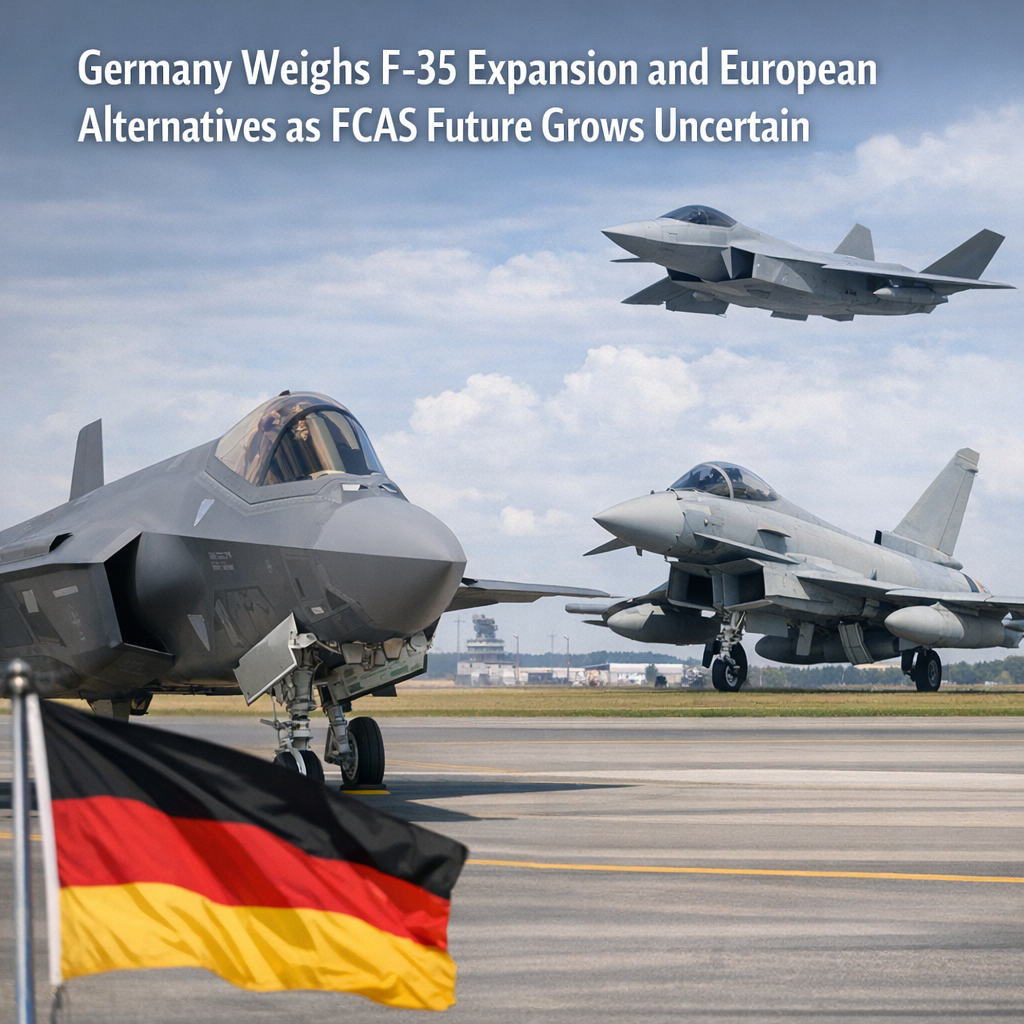
Germany is reassessing its next steps in combat aviation following mounting uncertainty around the future of the multinational Future Combat Air System (FCAS), a flagship European defense project long intended to deliver a next-generation fighter jet. As reported by Defense News in its article “After FCAS demise, Germany’s options include ordering more F-35 warplanes”, policymakers in Berlin are now weighing whether to deepen their reliance on U.S.-built aircraft, expand existing fleets, or pursue alternative European collaborations.
FCAS, jointly developed by Germany, France, and Spain, has faced persistent delays, industrial disputes, and political disagreements over workshare and intellectual property rights. While the program has not been formally canceled, its timetable has slipped significantly, and confidence in its viability has eroded. That uncertainty is forcing Germany to consider nearer-term solutions to ensure its air force remains operationally credible, particularly as NATO emphasizes deterrence in the wake of Russia’s war against Ukraine.
One of the most immediate options under discussion is expanding Germany’s planned purchase of Lockheed Martin’s F-35 fighter jets. Berlin has already committed to acquiring the aircraft to replace its aging Tornado fleet, particularly for the nuclear-sharing mission under NATO. Increasing that order could provide a relatively low-risk path to maintaining advanced capabilities, given the F-35’s established production line and interoperability with allied forces.
However, further reliance on U.S. systems carries strategic and political implications. Germany and its European partners have long promoted the idea of “strategic autonomy”, seeking to reduce dependence on non-European defense suppliers. A larger F-35 fleet could deepen transatlantic integration but at the cost of diminishing Europe’s independent industrial base in high-end combat aviation.
Alternatives under consideration include extending the service life of the Eurofighter Typhoon, potentially with upgrades, or exploring new cooperative programs with other European nations. Yet these paths also present challenges. Upgrading existing platforms may not fully address the technological gap expected against future adversaries, while launching a new multinational program would likely encounter many of the same coordination hurdles that have plagued FCAS.
The broader debate reflects a tension between immediate operational needs and long-term industrial ambitions. Germany’s air force faces pressing timelines as older aircraft approach retirement, leaving limited room for delays. At the same time, abandoning or sidelining FCAS would represent a significant setback for Europe’s efforts to maintain a competitive aerospace sector.
As Defense News notes, Berlin has not made a final decision, and officials continue to frame FCAS as a living project. Still, contingency planning has accelerated, underscoring a growing recognition that the program may not deliver on its original schedule, if at all. In the coming months, Germany’s choices will likely shape not only its own military posture but also the future trajectory of European defense cooperation.