GCAP Multibillion-Dollar Deal Advances Trilateral Push for Sixth-Generation Fighter
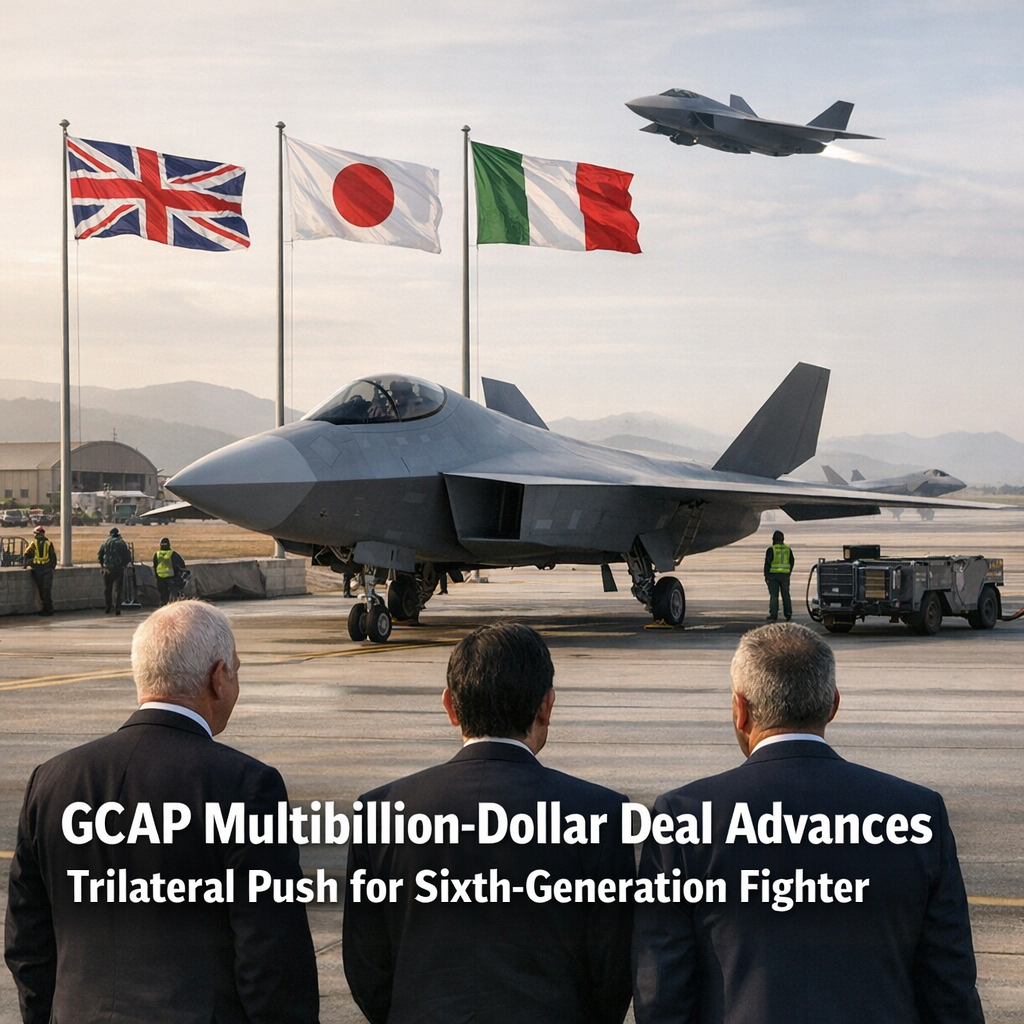
A multibillion-dollar contract underpinning the next phase of development for the Global Combat Air Programme (GCAP) highlights both the ambition and complexity of one of the world’s most closely watched next-generation fighter initiatives. As reported in “Multibillion-dollar contract secures major step forward for GCAP fighter jet” by Defense News, the agreement marks a critical step toward delivering a sixth-generation aircraft through a trilateral partnership between the United Kingdom, Japan and Italy.
The contract formalizes arrangements among the core industry participants tasked with designing and building the future combat system, reinforcing a collaborative structure that merges distinct national aerospace capabilities. The program aims to produce an advanced stealth fighter by the mid-2030s, replacing aging fleets while ensuring interoperability across allied air forces.
At the center of the effort are major defense contractors from each partner nation, including BAE Systems, Leonardo, and Mitsubishi Heavy Industries, working to integrate cutting-edge technologies spanning sensors, data fusion, propulsion and uncrewed teaming. The scale of the contract reflects both the technological ambition and the long-term strategic importance of the program, which is intended not only to deliver a new aircraft but also to reshape how air combat capability is developed and shared across borders.
The GCAP initiative has emerged as a cornerstone of defense cooperation among the three countries, each of which faces evolving security challenges in its respective region. For the United Kingdom and Italy, the program offers a pathway to sustain and modernize their combat aviation industries, while Japan sees the partnership as essential to rapidly advancing its own fighter capabilities amid increasing regional tensions.
The agreement also signals a shift toward more integrated multinational procurement models. Rather than pursuing parallel or competing programs, the partners are pooling resources and industrial expertise to avoid duplication and manage escalating development costs. This approach, however, comes with significant coordination challenges, including aligning national requirements, managing industrial workshare, and navigating export considerations.
Industry officials and government representatives have described the contract as a foundational milestone that enables detailed design work to accelerate. It is expected to support thousands of jobs across the participating countries and anchor long-term investment in aerospace innovation. More about the program’s structure and goals can be found via the UK government’s GCAP overview.
Despite this progress, the program still faces hurdles typical of large-scale defense projects, including cost control, technological risk and schedule discipline. The complexity of integrating advanced systems into a single platform, while ensuring affordability and operational reliability, will test both the industrial partners and the governments overseeing the effort. These challenges are common in sixth-generation fighter development, which pushes the boundaries of current aerospace engineering.
As highlighted by Defense News, the newly secured contract underscores momentum behind GCAP but also serves as a reminder of the stakes involved. Success would position the partner nations at the forefront of next-generation air combat technology. Failure or delays, by contrast, could have significant implications for their defense readiness and industrial competitiveness.
For now, the agreement represents a tangible step forward in transforming a high-level strategic vision into a realizable platform, one that could shape the future of allied airpower for decades to come.