Poland and Spain Unite to Expand Europe’s Aerial Refueling Power Through Joint Tanker Acquisition
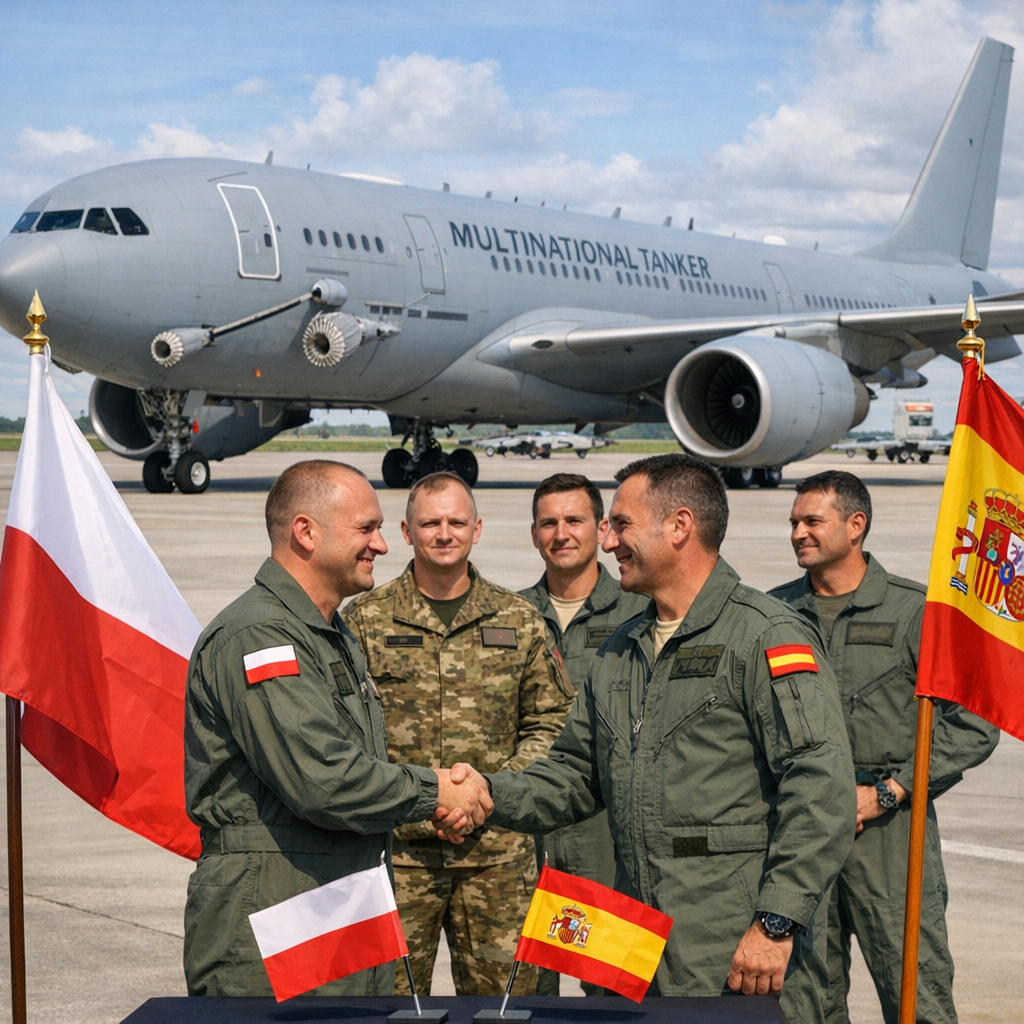
Poland and Spain are moving to significantly expand their air-to-air refueling capabilities through a joint procurement effort that could reshape Europe’s tanker capacity, underscoring a broader push by NATO members to strengthen logistical self-sufficiency amid heightened security concerns.
According to the article “Poland teams up with Spain to double tanker aircraft purchase,” published by Defense News, the two countries are coordinating on plans to increase their acquisition of multirole tanker transport aircraft, potentially doubling earlier purchase expectations. The collaboration reflects a growing trend among European nations to pool resources in order to accelerate modernization and reduce costs in high-demand capability areas.
Air-to-air refueling has become a critical priority for European militaries, particularly since Russia’s full-scale invasion of Ukraine highlighted gaps in readiness and sustainment. Tanker aircraft enable extended-range air operations, rapid deployment, and sustained patrols, all of which are essential for both deterrence and crisis response. Despite these needs, Europe has historically relied heavily on NATO and U.S. support for refueling capabilities.
Poland, which has embarked on one of the most ambitious military modernization programs in Europe, is seeking to close key capability gaps as it expands its fleet of advanced combat aircraft, including F-35s and FA-50s. Spain, meanwhile, has been investing in its own aerial refueling and transport capacity, including the acquisition of Airbus A330 Multi Role Tanker Transport (MRTT) aircraft.
By joining forces, the two countries aim to achieve economies of scale and streamline procurement processes, potentially securing better pricing and faster delivery timelines from manufacturers. The initiative may also align with broader European frameworks encouraging joint defense procurement, such as efforts supported by the European Defence Agency, which have gained momentum in recent years as governments look to reduce fragmentation in military spending.
The Defense News report indicates that the collaboration could result in a larger combined fleet that enhances interoperability between the two air forces while contributing to NATO’s collective capabilities. Shared training, maintenance, and operational standards could further amplify the benefits of the arrangement.
The move comes as European allies face mounting pressure to increase defense spending and demonstrate greater autonomy within the alliance. Air refueling, while less visible than combat platforms, remains a foundational capability for modern air power, enabling everything from strategic deterrence missions to humanitarian operations.
If finalized, the Poland-Spain partnership could serve as a template for future multinational procurement initiatives, particularly in areas where high acquisition costs and complex logistics have traditionally limited national programs. As Defense News noted, the effort reflects a pragmatic approach to capability development at a time when demand for rapid readiness is intensifying across the continent.