NATO Boosts Strategic Airlift to Strengthen Rapid Deployment and Collective Defense
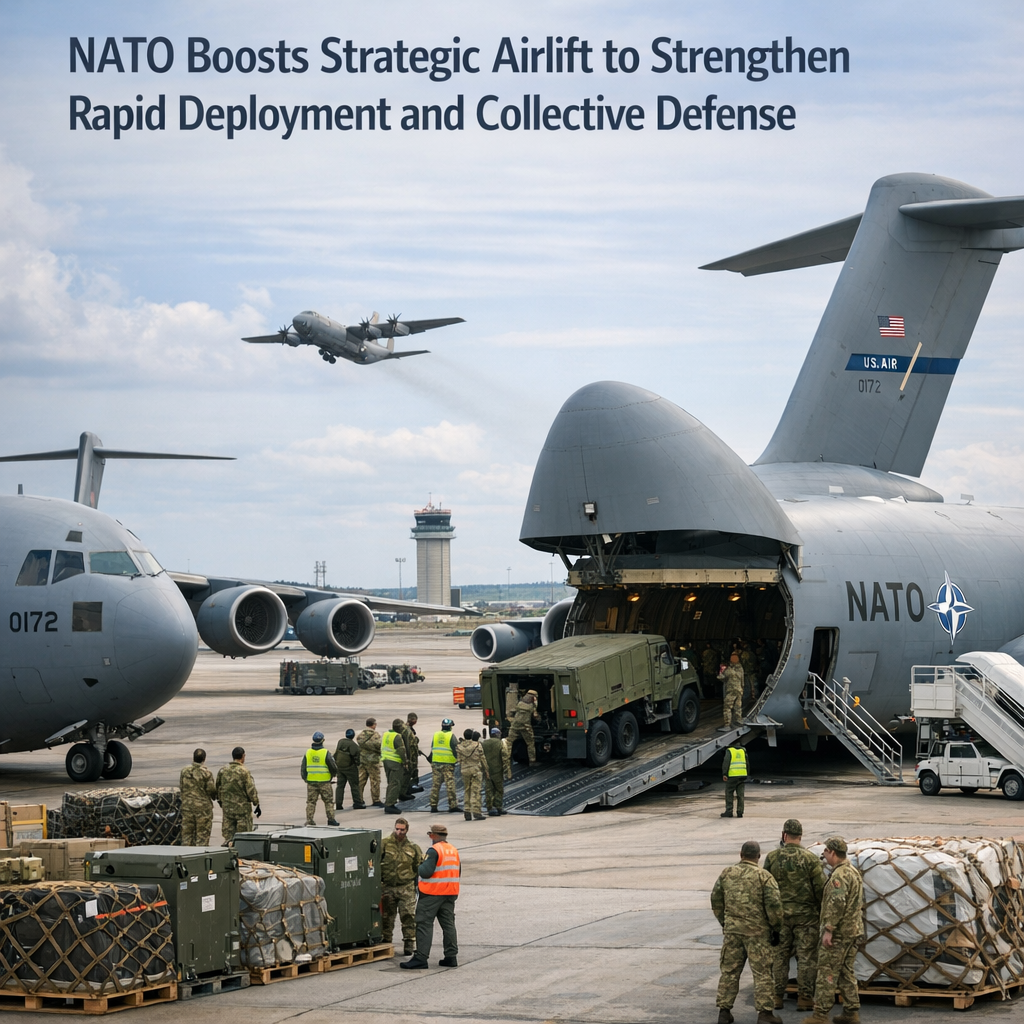
NATO members have agreed to expand their shared strategic airlift capabilities, underscoring a renewed emphasis on rapid deployment and collective logistics amid a more volatile security environment. The move, detailed in the article “NATO Allies expand strategic airlift capacity” published on NATO’s official website, reflects allied concerns about readiness, interoperability and the ability to move forces quickly across long distances.
According to NATO, participating countries will enhance the capacity of the Strategic Airlift Capability (SAC) program, a multinational initiative that provides participating nations with access to heavy airlift assets. The program currently operates a fleet of C-17 Globemaster III aircraft based in Pápa, Hungary, which are used for a wide range of missions, including troop transportation, humanitarian assistance and disaster relief.
Officials say the expansion will increase flight hours and improve availability, enabling allies to respond more effectively to crises. The decision comes as NATO continues to adapt its force posture following Russia’s ongoing war in Ukraine and rising instability in other regions. Strategic airlift has become a critical enabler for deterrence and defense, allowing rapid reinforcement of NATO’s eastern flank and supporting operations beyond Europe.
The NATO article emphasizes that the enhancement is not limited to capacity alone but also includes efforts to improve coordination and efficiency among participating nations. By pooling resources, smaller allies that might not otherwise afford such capabilities gain access to advanced transport assets, reinforcing the alliance’s principle of collective burden-sharing.
Defense analysts note that logistical capability is increasingly central to military effectiveness. While much attention is often paid to combat systems, the ability to sustain operations and move personnel and equipment at scale can determine the tempo and success of military campaigns. Expanding strategic airlift capacity signals NATO’s recognition that modern deterrence depends as much on mobility and resilience as on firepower.
The initiative also reflects broader trends within NATO toward multinational cooperation in high-cost capability areas. As defense budgets face competing pressures, shared programs allow allies to maintain critical capabilities without duplicating investments. The SAC program, often cited as a model of such cooperation, is likely to play an expanded role in future alliance planning.
In its report, NATO highlights that the enhanced airlift capacity will support not only military operations but also humanitarian missions, an area where the alliance has frequently deployed its assets in response to natural disasters and global emergencies. This dual-use function reinforces NATO’s broader strategic narrative of security provision beyond traditional defense roles.
The expansion marks another step in NATO’s ongoing effort to adapt to a changing security landscape. As highlighted in “NATO Allies expand strategic airlift capacity” on NATO’s website, the alliance is placing renewed emphasis on the practical enablers of collective defense, seeking to ensure that commitments made by member states can be rapidly translated into action when required.