Erdoğan Pushes for Turkey’s Central Role in Europe’s Evolving Defense Strategy
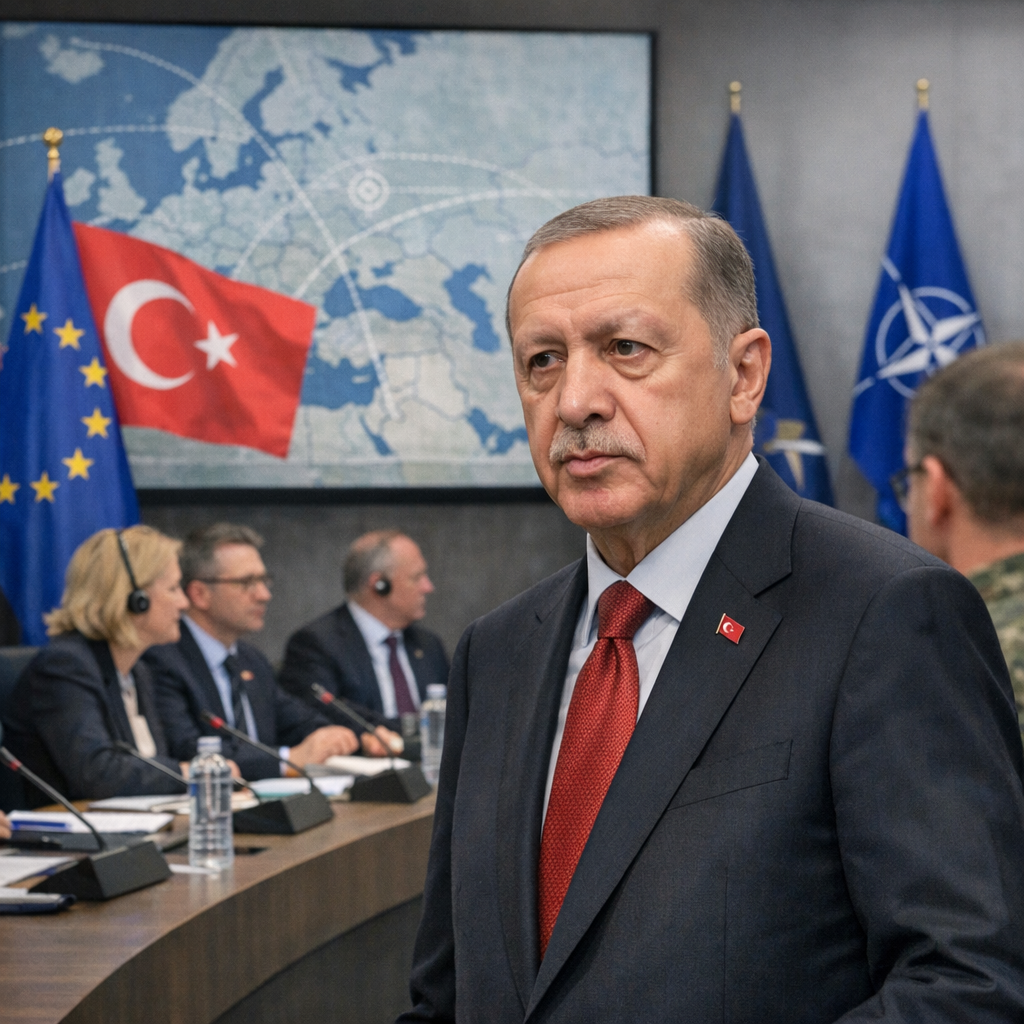
Turkey’s President Recep Tayyip Erdoğan has renewed calls for his country’s full integration into Europe’s defense architecture, arguing that Ankara’s strategic importance makes it indispensable to the continent’s long-term security planning. The remarks, reported in “Turkey’s Erdogan calls for full integration into European defense framework” by i24NEWS, come at a time of heightened geopolitical tension and shifting alliances across Europe and the broader transatlantic sphere.
Speaking amid ongoing discussions about Europe’s defense autonomy and its relationship with NATO, Erdoğan stressed that excluding Turkey from emerging frameworks would weaken collective security rather than strengthen it. He framed Turkey not merely as a regional actor, but as a central pillar in addressing threats ranging from instability in the Middle East to the war in Ukraine.
Turkey, a long-standing NATO member with the alliance’s second-largest military, has often positioned itself as a bridge between Europe and more volatile neighboring regions. Erdoğan’s comments reflect a broader effort by Ankara to leverage that role into deeper institutional ties with European initiatives, even as its relationship with the European Union remains strained over democratic backsliding, human rights concerns, and stalled accession talks.
According to the i24NEWS report, Erdoğan emphasized that Europe’s evolving defense mechanisms should be inclusive and pragmatic, suggesting that political disagreements should not override strategic necessity. He argued that Turkey’s defense industry, operational experience, and geographic positioning offer tangible benefits that Europe cannot easily replicate.
The call comes as European nations increasingly debate how to balance reliance on NATO, particularly the United States, with the ambition of building more independent defense capabilities. France and other EU members have pushed for stronger internal coordination, including initiatives such as EU defense cooperation frameworks, while Eastern European countries have tended to prioritize NATO’s existing framework in response to Russian aggression.
Turkey’s role in these discussions remains complex. While it has contributed to NATO missions and supported Ukraine militarily, Ankara has also maintained diplomatic and economic ties with Moscow, positioning itself as a mediator in certain contexts, including grain deal negotiations covered by Reuters. This dual-track approach has at times frustrated Western allies and complicated efforts to present a unified front.
Erdoğan’s appeal for integration can also be seen as part of a broader recalibration of Turkey’s foreign policy, as it seeks to mend ties with Western partners after years of tension. Recent diplomatic overtures toward EU states and renewed engagement with NATO allies suggest a pragmatic shift, driven in part by economic pressures at home and the changing security landscape abroad.
However, significant obstacles remain. European leaders have been cautious about deepening defense cooperation with Turkey without parallel progress on political reforms and alignment with EU norms. Concerns about rule of law, press freedom, and judicial independence—highlighted in reports by organizations like Freedom House—continue to loom over any discussion of closer integration.
Still, Erdoğan’s message underscores a central dilemma facing Europe: whether strategic imperatives should outweigh political differences in shaping defense policy. As the continent grapples with ongoing conflict on its eastern flank and uncertainty about future transatlantic commitments, the question of Turkey’s place in Europe’s security architecture is likely to remain a subject of intense debate.