GWOT Memorial Planners Weigh Design Changes Amid Ongoing Debate Over How to Honor Post-9/11 Service
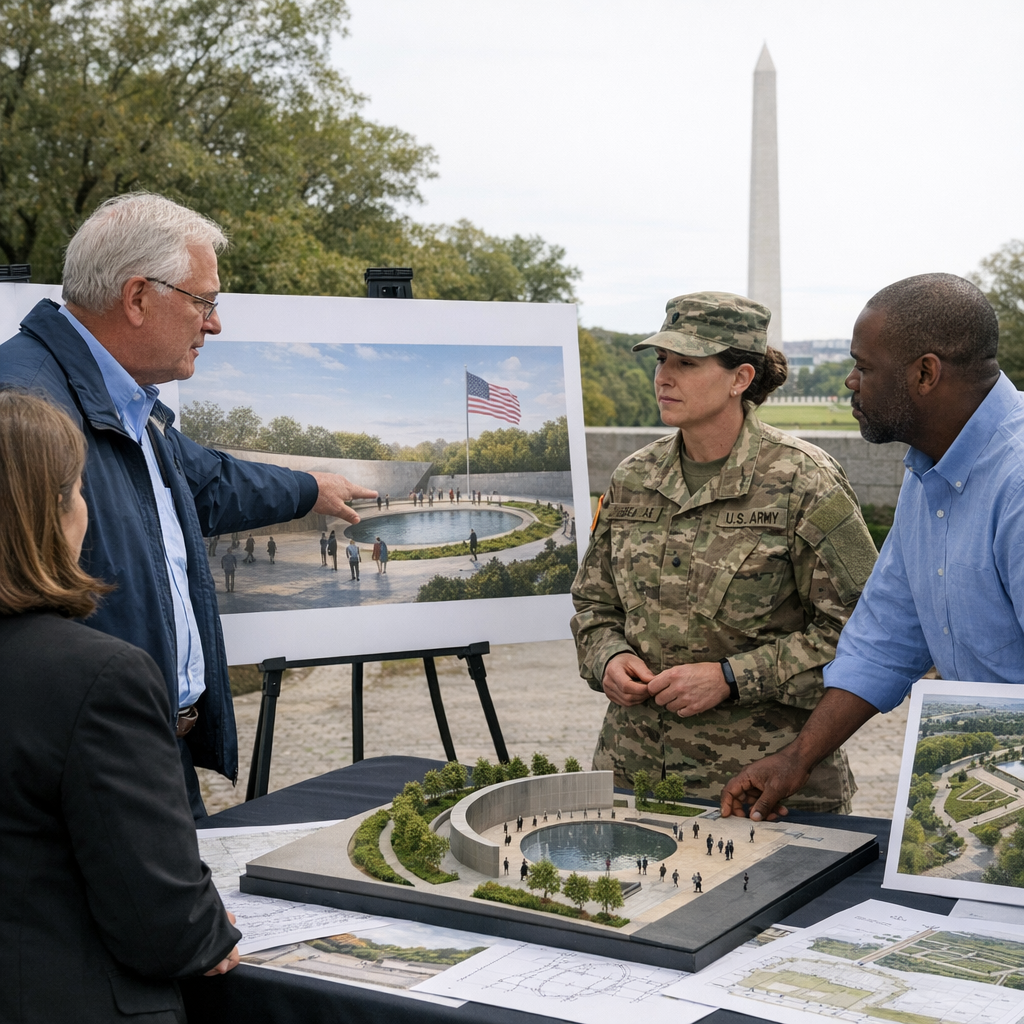
A group overseeing the development of a national memorial to veterans of the Global War on Terrorism signaled it may be willing to revise elements of the project’s design, reflecting ongoing debate about how best to commemorate a conflict that remains both recent and evolving.
According to reporting in “GWOT memorial group open to design changes – Defense News Weekly (full episode 6/30/26)”, published by Military Times, officials connected to the Global War on Terrorism Memorial Foundation acknowledged that feedback from veterans, families, and the public has prompted renewed consideration of the memorial’s artistic and symbolic direction. The project, authorized by Congress in 2017 through the Global War on Terrorism War Memorial Act, aims to honor service members who have participated in counterterrorism operations since September 11, 2001.
The discussion around potential design changes highlights the inherent difficulty of memorializing a war that does not have a clearly defined endpoint and spans multiple theaters, missions, and generations of service members. Advocates for revisions argue that the current design concepts may not fully capture the breadth of experiences associated with the conflict, including the roles of post-9/11 veterans, the contributions of allied forces, and the long-term costs of the war, often described broadly by the U.S. Department of Defense’s Global War on Terrorism overview.
Foundation representatives indicated that while no final decisions have been made, they are open to adjustments if doing so results in a more inclusive and resonant tribute. That openness appears to be shaped in part by public commentary and feedback from the veteran community, which has been closely engaged in the planning process.
At the center of the debate is how to balance symbolic abstraction with clear recognition of service and sacrifice. Some stakeholders have pushed for a more traditional memorial approach that emphasizes names, units, or specific operations, while others support a broader, more interpretive design intended to reflect the ongoing and global nature of the conflict. The foundation must also navigate federal approval processes, including coordination with planning and design commissions such as the National Capital Planning Commission that oversee projects in Washington, D.C.
The Military Times report notes that this willingness to revisit aspects of the design does not indicate a wholesale restart of the project but rather an effort to refine it before moving further into the approval and construction phases. That approach reflects lessons learned from past memorial efforts, where public response has sometimes led to late-stage changes or prolonged controversy, as seen in projects like the Vietnam Veterans Memorial.
The Global War on Terrorism Memorial is expected to be located in or near the nation’s capital, though final site approval remains part of the broader regulatory process. Project leaders have emphasized that the memorial’s ultimate goal is to provide a space for reflection that acknowledges both the service of military personnel and the broader impact of the conflict on American society.
As discussions continue, the evolving design process underscores a broader question confronting policymakers and veterans alike: how to commemorate a war that is still shaping lives, policy, and national identity. The outcome will likely influence not only the physical form of the memorial but also how future generations understand and interpret the legacy of the post-9/11 era.