GWOT Memorial Planners Signal Openness to Design Changes Amid Ongoing Debate
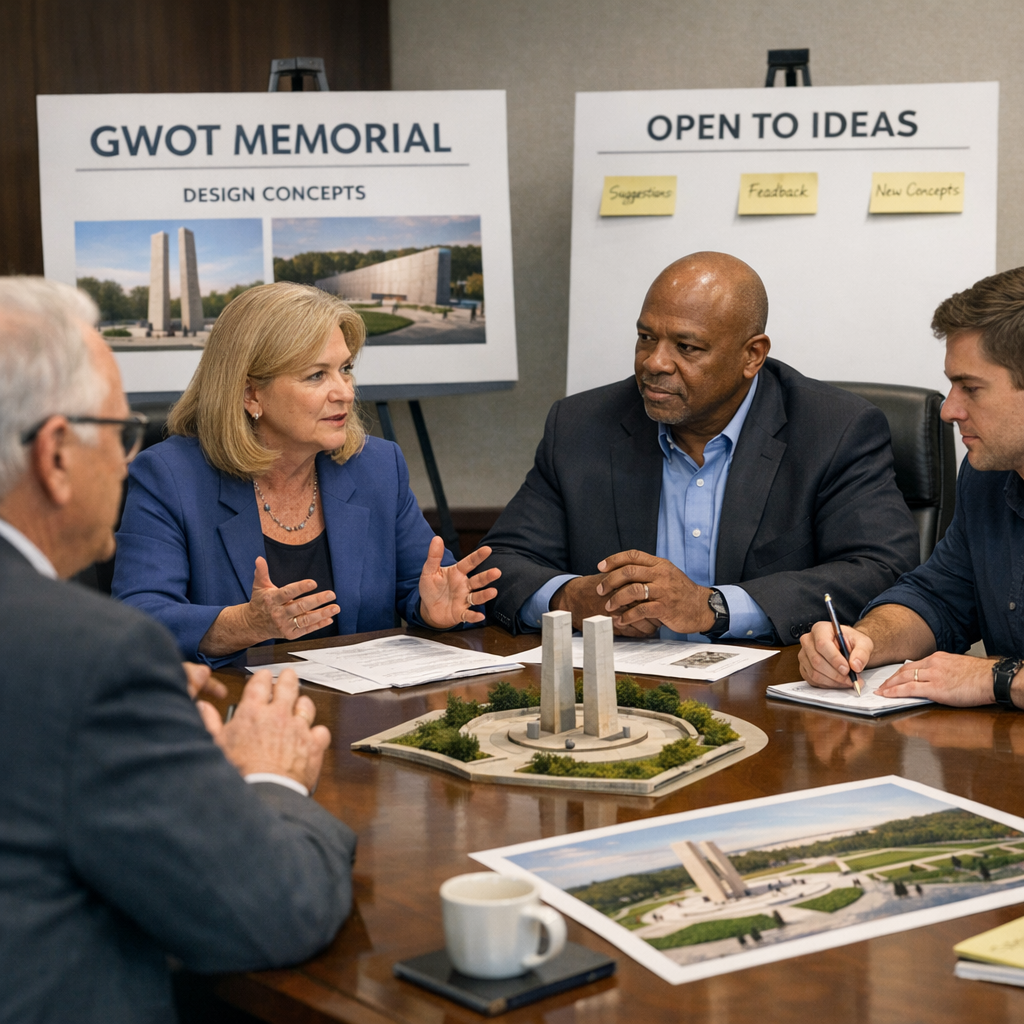
Organizers behind the planned Global War on Terrorism (GWOT) Memorial signaled a willingness to revisit elements of the project’s design, reflecting ongoing public debate about how best to commemorate more than two decades of conflict. The discussion was highlighted in “GWOT Memorial group open to design changes – Defense News Weekly (full episode 6.30.26),” published by Defense News.
The memorial, authorized by Congress and intended for construction in Washington, D.C., aims to honor service members who participated in operations spanning from Afghanistan and Iraq to a broader array of counterterrorism missions worldwide. Yet as the design process has progressed, it has prompted a mix of support and criticism from veterans, policymakers, architects, and the public.
According to remarks featured in the Defense News segment, representatives of the GWOT Memorial Foundation acknowledged that no single design can fully capture the complexity and scale of the post-9/11 conflicts. They indicated that feedback—particularly from veterans and Gold Star families—has become an increasingly important factor shaping next steps.
Critics of earlier concepts have raised concerns ranging from aesthetic choices to thematic emphasis. Some have argued that proposed designs risk oversimplifying a set of wars that evolved over years, with shifting objectives and outcomes. Others have questioned whether the memorial adequately reflects the service and sacrifice of those who served in less visible roles, including special operations forces and support personnel.
In response, the foundation appears to be positioning flexibility as a guiding principle. Officials suggested that adjustments could be made to ensure that the final structure better resonates with the diverse experiences of those involved. While specific revisions have not been publicly detailed, the openness to change marks a notable shift from earlier stages of the process, when design trajectories appeared more fixed.
The debate underscores broader challenges inherent in memorializing recent history. Unlike monuments commemorating conflicts with clearer endpoints, the GWOT encompasses a still-evolving legacy, shaped by ongoing geopolitical dynamics and differing assessments of the wars’ outcomes. As outlined by the U.S. Department of Defense, these operations span multiple regions and missions, complicating efforts to define a single narrative. As a result, efforts to create a unifying national tribute have had to navigate competing interpretations of meaning and memory.
The Defense News report also highlighted the role of public engagement in refining the project. Community input sessions and consultations with veteran organizations and groups such as Tragedy Assistance Program for Survivors (TAPS) have surfaced a range of perspectives, from calls for greater personalization—such as the inclusion of names—to appeals for symbolic designs that reflect themes of resilience and service without prescribing a singular narrative.
Despite the ongoing debate, there remains broad consensus on the need for a national memorial. Advocates argue that the scale and duration of the GWOT, which has spanned nearly a quarter century, warrant formal recognition comparable to earlier conflicts commemorated in the nation’s capital. Planning and approval processes are guided in part by frameworks such as the National Park Service’s commemorative works guidelines. For many veterans and families, the memorial represents not only remembrance but also acknowledgment of a generation’s service.
Funding and site selection continue to be key components of the project’s trajectory. While congressional authorization provides a framework, the foundation must still secure necessary resources and approvals to advance construction. Any potential design changes could affect timelines, though proponents maintain that ensuring the memorial’s integrity justifies a deliberate approach.
As discussions continue, the willingness of organizers to reconsider design elements may help bridge divides among stakeholders. Whether that flexibility ultimately produces a widely accepted tribute remains uncertain, but it reflects an understanding that memorials, particularly for recent conflicts, must evolve through dialogue as much as through design.