DC Protester Who Played Star Wars Theme at Federal Troops Reaches Settlement With U.S. Government
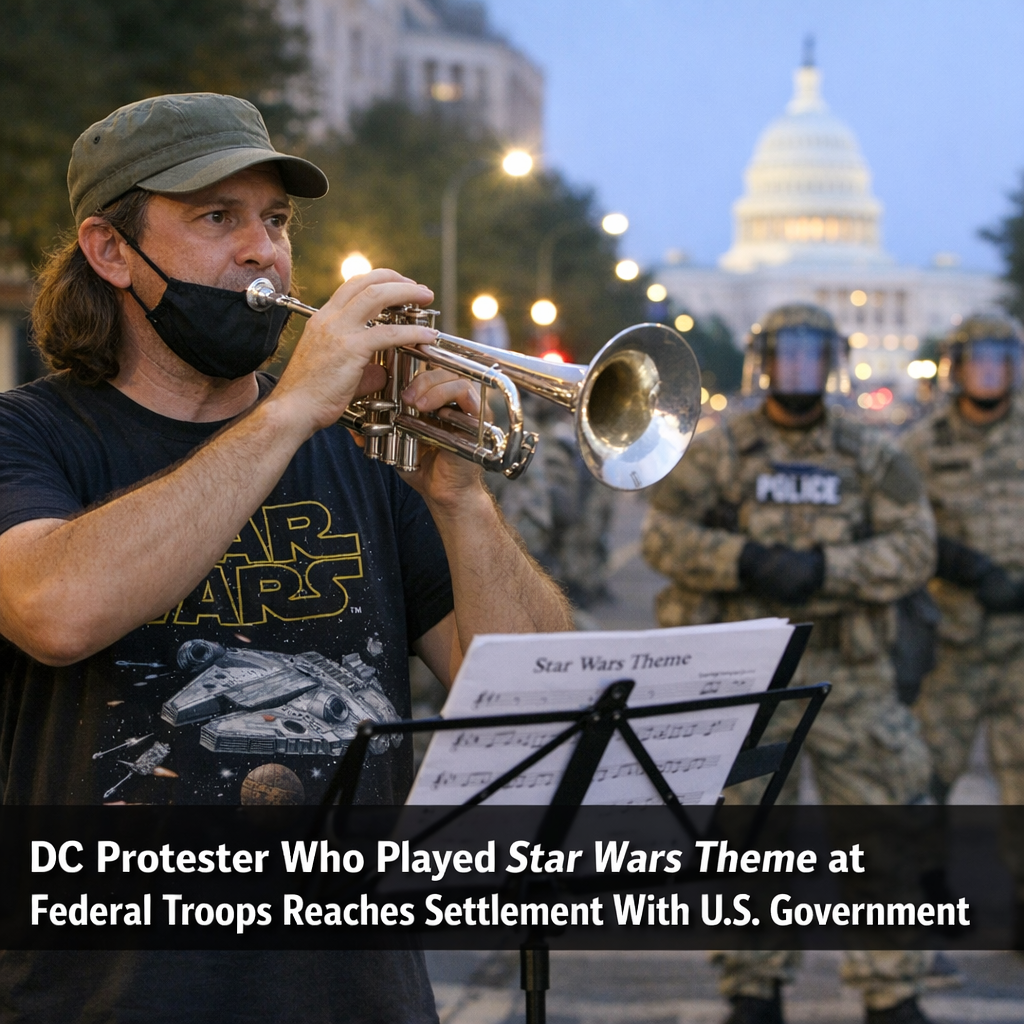
A Washington, D.C., resident who drew national attention for playing the “Imperial March” from Star Wars at federal troops during a tense protest has reached a financial settlement with the U.S. government, closing a case that raised questions about the limits of free expression and the government’s use of force in domestic operations.
The case stems from a 2020 incident near Lafayette Square, where federal law enforcement officers moved to disperse demonstrators amid nationwide protests against police violence. Among those present was a local resident who used a portable speaker to play the iconic theme associated with cinematic authoritarianism as officers advanced. The moment, captured on video and widely shared online, became emblematic of public defiance during that period, which unfolded near Lafayette Square.
According to reporting by Military Times in the article titled “DC resident who played the Imperial March at federal troops receives settlement”, the individual later filed a lawsuit alleging violations of constitutional rights, including claims tied to freedom of expression under the First Amendment and unlawful use of force. The suit argued that the actions of federal officers during the clearing of the area were disproportionate and infringed upon protected speech.
Details of the settlement have not been fully disclosed publicly, but it resolves the legal dispute without an admission of wrongdoing by the government. Such outcomes are common in civil rights cases involving federal agencies, where settlements can limit prolonged litigation while compensating plaintiffs for alleged harm, as discussed by organizations like the ACLU.
Legal experts say the case highlights ongoing tensions surrounding protest policing and the role of expressive conduct. While music played in a public space may appear symbolic or even humorous, courts have consistently recognized nonverbal expression as protected when it conveys a clear message, a principle reinforced in Supreme Court precedent on expressive conduct.
The broader context of the Lafayette Square clearing has remained a subject of scrutiny in the years since the protests. Government watchdogs and independent investigations, including findings from the DOI Office of Inspector General, questioned planning, coordination, and the justification for the operation, though conclusions have varied. Civil litigation from individuals present that day has continued to work its way through the courts, with some cases resulting in settlements and others still pending.
For civil liberties advocates, the resolution underscores the legal system’s role in addressing alleged overreach by authorities, even in moments of heightened national tension. At the same time, law enforcement officials have emphasized the challenges of maintaining public order during large-scale demonstrations, particularly when federal property and personnel are involved.
The settlement adds a closing chapter to one of the more visually striking and widely shared moments from the 2020 protests, one in which a piece of popular culture became a form of political commentary. While the financial terms may remain largely out of public view, the case continues to resonate in ongoing debates about protest rights, symbolism, and the boundaries of government response.