Australia’s Armored Buildup Reveals the Hidden Cost of Fuel, Ammo, and Logistics
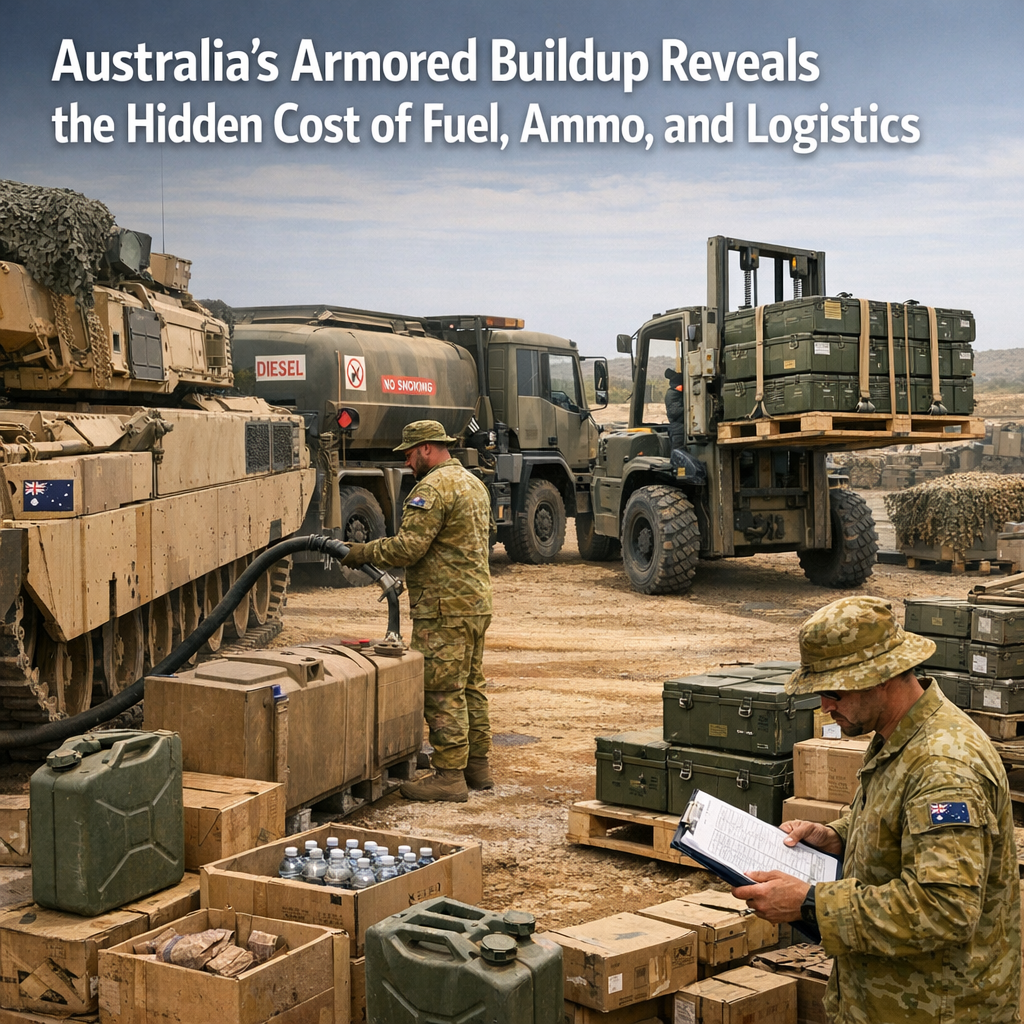
Australia’s push to expand the combat power of one of its army brigades is exposing a less visible but critical challenge: the growing logistical burden that accompanies modern armored capability. As reported by Defense News in its article “As one Australian Army brigade bulks up with armor, its fuel and ammo needs spike,” the effort to field heavier vehicles and more lethal systems is driving a sharp increase in demand for fuel, ammunition, and sustainment infrastructure.
The article underscores a basic but often underappreciated reality of military modernization: enhanced firepower and protection come at the cost of significantly more complex and resource-intensive logistics. The Australian Army’s structure and modernization efforts toward a more heavily mechanized force, including the introduction of infantry fighting vehicles and upgraded armored platforms, is transforming the operational profile of its brigades. While these changes promise greater combat effectiveness, they also impose new strains on supply chains that must support high consumption rates in dispersed and potentially contested environments.
Fuel consumption, in particular, has emerged as a central concern. Heavier armored vehicles require substantially more fuel than the lighter platforms they are replacing, and their operational tempo in high-intensity scenarios further amplifies demand. According to Defense News, sustaining such forces across Australia’s vast geography—or in expeditionary deployments across the Indo-Pacific—poses significant logistical challenges. Fuel convoys, storage capacity, and distribution networks must all be expanded and hardened against potential disruption, a challenge echoed in broader military logistics doctrine emphasizing sustainment as a critical enabler of combat power.
Ammunition demand is also rising sharply. Modern combat systems are designed to deliver high volumes of precise and often sophisticated munitions, but maintaining adequate stockpiles and ensuring rapid resupply in combat conditions requires careful planning and investment. The article highlights how increased firepower at the brigade level translates into a need for more resilient and responsive supply chains, including forward-positioned stocks and improved transport capabilities, similar to trends identified in defense logistics research by RAND Corporation.
The shift is prompting the Australian Army to rethink not only how it equips its forces but also how it sustains them. Logistics units, long considered a supporting element, are gaining renewed prominence as planners recognize that operational effectiveness will hinge on the ability to keep armored formations supplied under challenging conditions. This includes adapting to scenarios in which supply lines may be stretched, contested, or disrupted by adversaries with advanced capabilities.
Defense News notes that Australian defense planners are increasingly focused on integrating logistics into broader strategic considerations, including force posture and regional engagement. The Indo-Pacific region presents unique logistical hurdles, from long distances and limited infrastructure in some areas to the need for interoperability with allies and partners. Ensuring that armored units can operate effectively in such an environment requires coordination not only within the Australian Defence Force but also with allied logistics networks.
The expansion of armored capability is part of a wider effort by Australia to enhance its military readiness amid shifting regional security dynamics. However, as the Defense News report makes clear, the success of this effort will depend as much on sustaining those capabilities as on acquiring them. Without adequate investment in fuel supply, ammunition stockpiles, and logistical resilience, the operational advantages of heavier, more powerful forces could be difficult to realize in practice.
Ultimately, the experience of this brigade illustrates a broader lesson for modern militaries: advances in combat capability inevitably bring corresponding demands in sustainment. As Australia continues to modernize its army, balancing these elements will be essential to ensuring that its forces are not only better equipped, but also fully supported in the complex operational environments they are likely to face.