Susan Collins Emerges as Key Architect of US Defense Strategy Amid Global Tensions
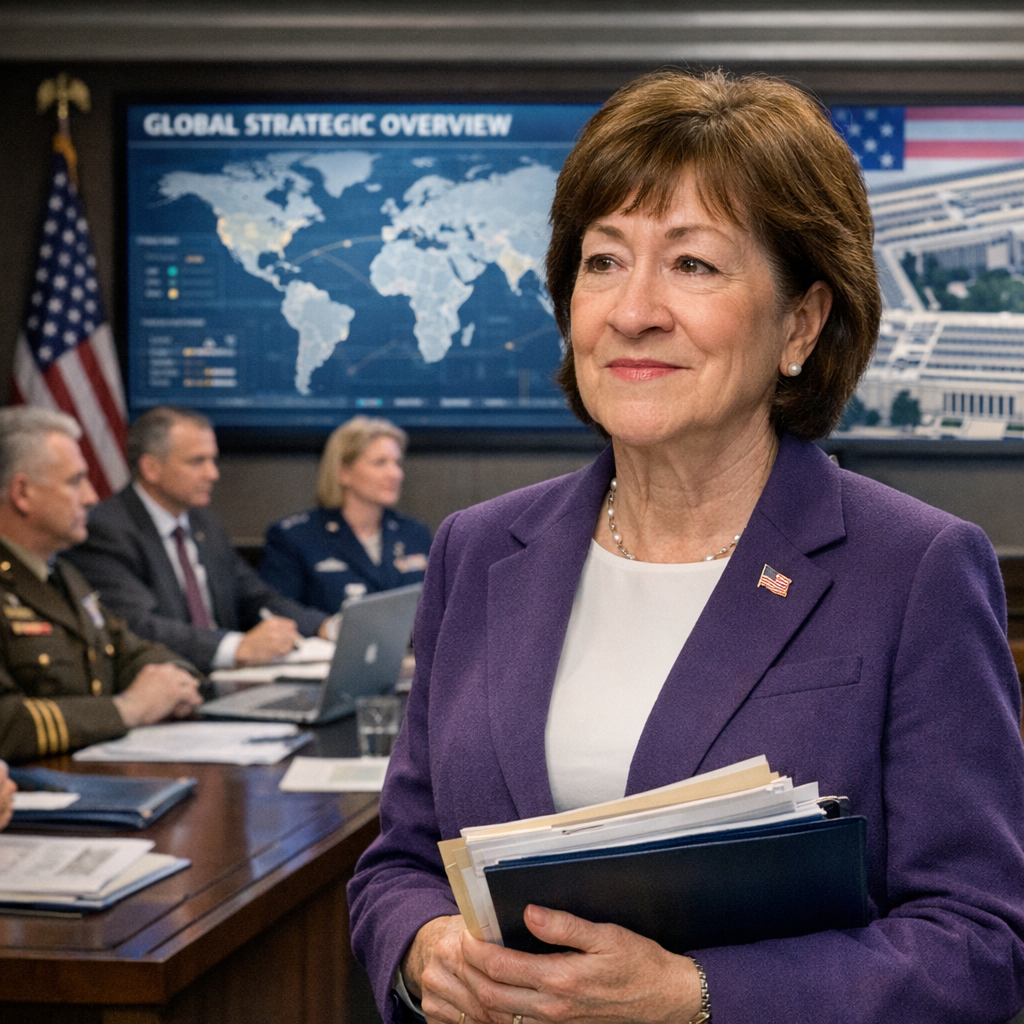
A recent opinion column published by Fox News argues that Senator Susan Collins of Maine is playing a pivotal role in advancing U.S. national defense priorities at a moment of heightened global tension. The piece, titled “Morning Glory: Senator Susan Collins, nation’s national defense”, presents Collins as a key Republican voice shaping military readiness and long-term defense investment through her position in Congress.
The column emphasizes Collins’ influence as vice chair of the Senate Appropriations Committee and a senior member of its defense subcommittee, where funding decisions for the Pentagon are negotiated in detail. According to the author, her approach combines fiscal oversight with sustained support for military modernization, particularly in areas such as naval shipbuilding and workforce development tied to defense manufacturing.
The Fox News opinion highlights Collins’ advocacy for increasing the size and capability of the U.S. Navy, noting the strategic importance of shipyards in her home state of Maine. It frames her efforts as part of a broader push to counter rising geopolitical threats, especially from China, whose naval expansion has accelerated in recent years, as documented in reports from the U.S. Department of Defense. The column portrays Collins as attentive to both national security needs and the economic implications of defense spending for regional industries.
In addition, the article points to Collins’ role in bipartisan negotiations, suggesting that her reputation as a pragmatic lawmaker allows her to bridge divides on contentious budgetary issues. This, the author argues, is particularly significant in the context of defense appropriations, where delays or political stalemates can have immediate operational consequences for the military, including impacts outlined by the Congressional Budget Office.
While the Fox News piece adopts a favorable tone toward Collins, it also reflects a wider debate in Washington over defense priorities, spending levels, and strategic direction. Lawmakers from both parties continue to wrestle with how to balance immediate security concerns with long-term fiscal pressures, as well as how to allocate resources across emerging domains such as cyber warfare and artificial intelligence, areas discussed by institutions like the Center for Strategic and International Studies.
Collins’ defenders, as reflected in the column, see her as an example of steady leadership in this environment, combining institutional experience with a focus on maintaining U.S. military strength. Critics, however, have at times questioned whether current spending trajectories are sustainable or sufficiently responsive to evolving threats.
The discussion surrounding Collins in the Fox News article underscores the broader significance of congressional leadership in shaping defense policy. As global competition intensifies and national security challenges grow more complex, the role of appropriators like Collins remains central to determining how the United States prepares for future conflicts.