Iran Intensifies Crackdown as Female Singer Reportedly Punished and Protest Executions Continue
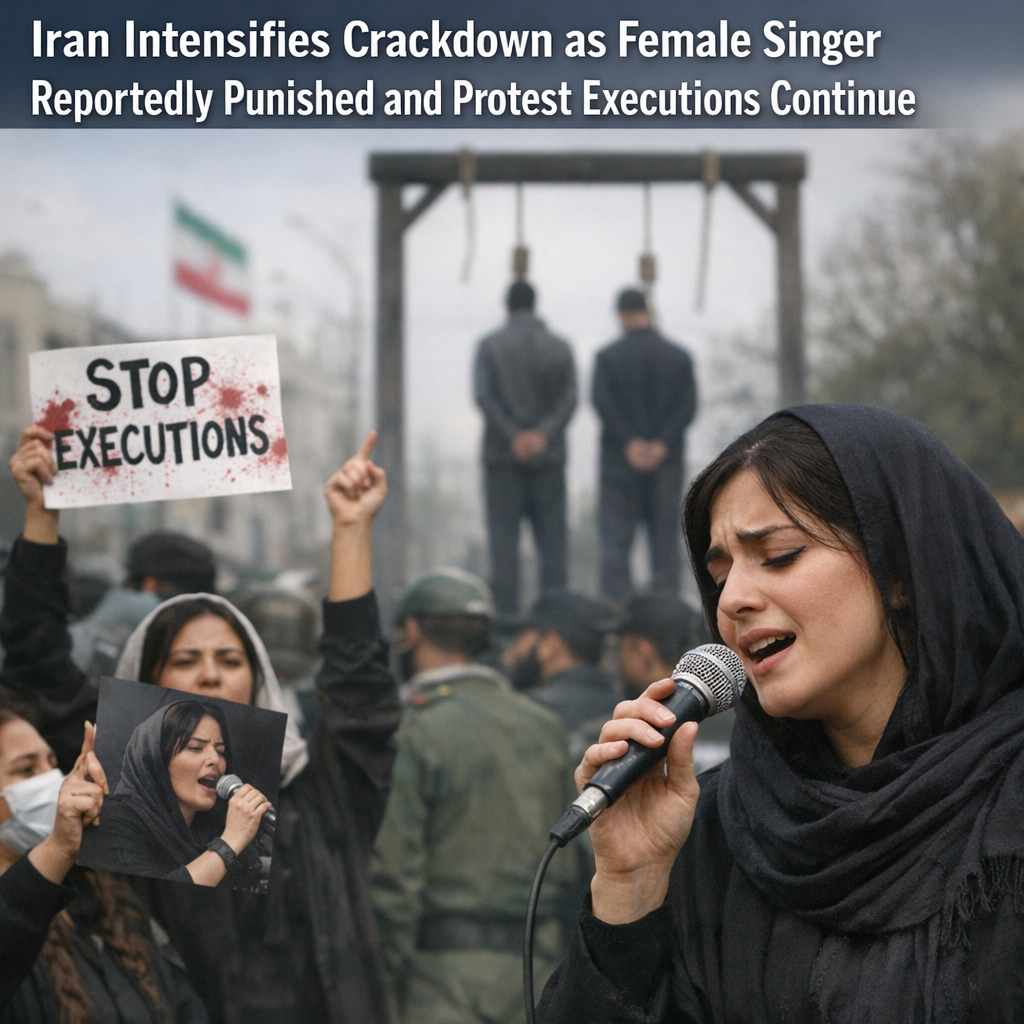
A report published by The Daily Wire, titled “Iranian Regime Whips Female Singer For YouTube Concert As Mullahs Execute Protesters,” alleges that Iranian authorities have punished a female musician in connection with an online performance, in a broader context of intensifying repression following anti-government protests.
According to the Daily Wire’s account, the singer was subjected to corporal punishment after releasing or participating in a musical performance distributed via YouTube, an act that authorities reportedly deemed in violation of the country’s strict regulations governing women’s public expression. Under Iran’s interpretation of Islamic law, female solo singing in public or for mixed-gender audiences is heavily restricted, and enforcement mechanisms have historically included arrest, fines, and other judicial penalties.
The report situates the incident within a wider crackdown that has unfolded since nationwide protests erupted in recent years, particularly those sparked by the death of Mahsa Amini in 2022 while in police custody. Demonstrations have continued intermittently, fueled by grievances over political repression, economic hardship, and gender-based restrictions. Human rights organizations have documented a pattern of arrests, trials lacking due process, and executions tied to protest-related charges.
The Daily Wire article further claims that Iranian authorities have continued to carry out executions of individuals accused of involvement in protest activities. While Iranian officials have framed such cases as matters of national security and criminal law, international observers and advocacy groups have repeatedly criticized the proceedings as opaque and disproportionate, raising concerns about coerced confessions and limited access to legal representation.
Independent verification of specific incidents involving individual performers can be difficult, as Iran restricts foreign media access and tightly controls domestic reporting. Nonetheless, numerous watchdog organizations, including Amnesty International and Human Rights Watch, have documented cases in which artists, filmmakers, and musicians faced legal consequences for work deemed incompatible with state-imposed cultural norms.
The reported punishment of a singer for an online performance highlights the extent to which authorities monitor digital platforms and enforce cultural policies beyond traditional public venues. It also underscores the risks faced by artists who attempt to bypass domestic restrictions by sharing their work with audiences abroad.
Iranian officials have not uniformly commented on every individual case cited in external reports, but they have consistently defended the country’s legal framework as rooted in religious and cultural values. Critics, both داخل the country and internationally, argue that such measures amount to systematic suppression of basic freedoms, particularly for women.
As scrutiny of Iran’s human rights record continues, incidents involving artists and protesters alike remain central to ongoing debates over governance, civil liberties, and the role of international pressure.