NATO Ministers Advance Defence Planning and Readiness Ahead of Ankara Summit
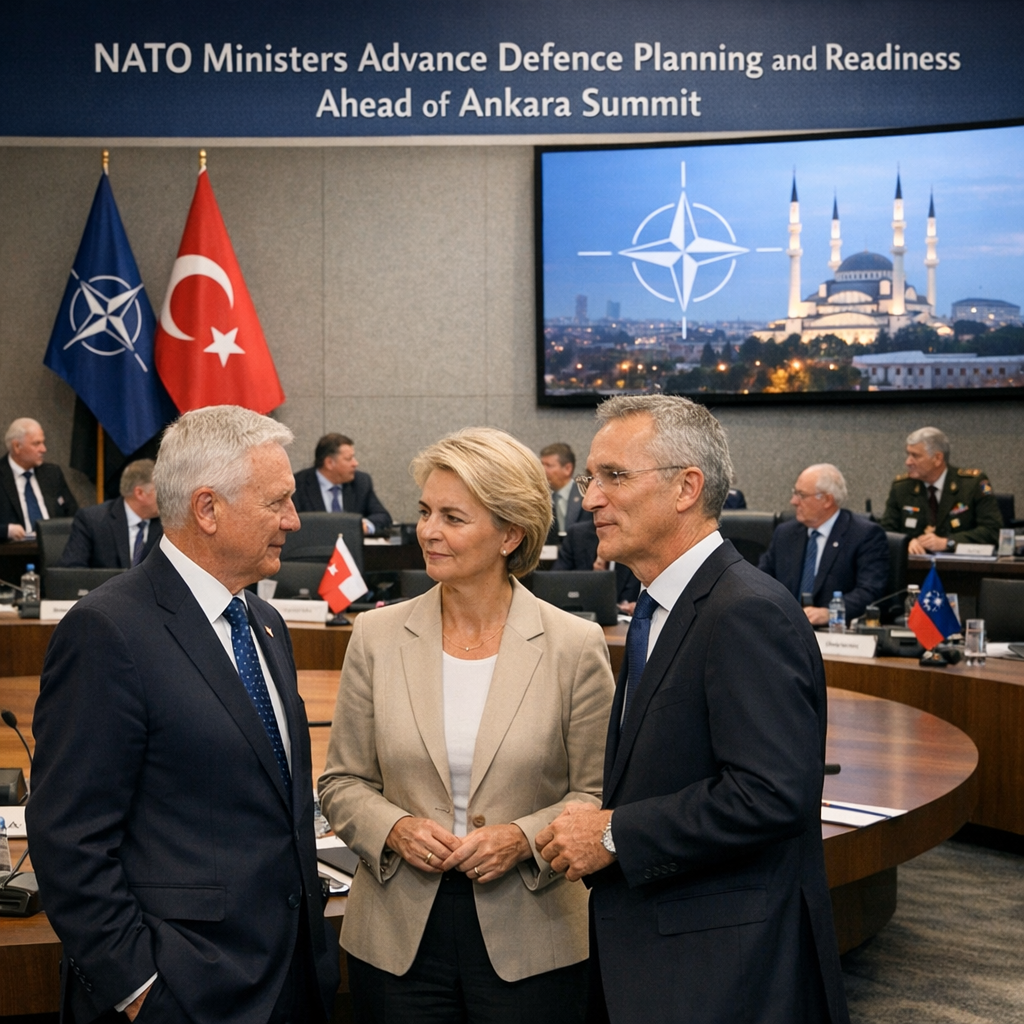
NATO defence ministers signaled incremental but tangible progress toward a new phase of alliance planning, as they concluded high-level discussions ahead of next week’s summit in Ankara. The developments were outlined in an official NATO publication titled “NATO defence ministers make good progress ahead of the Ankara Summit,” released on the organization’s website on 18 June 2026.
According to that account, ministers focused on sharpening NATO’s collective defence posture, with particular emphasis on aligning capability targets and ensuring that allies can meet increasingly demanding operational requirements. The talks come at a time when NATO continues to adapt to a more volatile security environment marked by persistent tensions along its eastern flank and growing concerns over global strategic competition.
A central outcome of the ministerial meeting was agreement on advancing updated defence planning goals designed to improve readiness and interoperability across allied forces. Officials described these efforts as necessary to ensure that NATO can respond quickly and cohesively to a wide range of threats, from large-scale state-based conflict to emerging security challenges such as cyberattacks and hybrid warfare.
The discussions also underscored continued commitments to increased defence spending and capability development. While progress has been uneven among allies, NATO officials highlighted that momentum is building toward meeting agreed benchmarks. Defence ministers reiterated the need for sustained investment not only in personnel and equipment but also in technological innovation, particularly in areas such as missile defence, artificial intelligence, and advanced surveillance systems.
Another key element of the talks involved strengthening deterrence and forward defence measures. Ministers reviewed the status of multinational battlegroups deployed in Eastern Europe and assessed options for reinforcing them. The aim is to ensure that NATO’s presence remains credible and scalable, capable of deterring aggression while maintaining flexibility in crisis response.
The NATO statement also pointed to growing cooperation with partner countries, emphasizing that security challenges increasingly transcend geographic and political boundaries. Ministers discussed deepening ties with partners in the Indo-Pacific and reinforcing support for countries facing sustained external pressure.
While officials characterized progress as “good,” the underlying tone of the meeting reflected the complexity of aligning 32 member states with differing threat perceptions and domestic constraints. The Ankara summit is expected to test whether this progress can be translated into concrete policy decisions and long-term commitments.
The NATO website’s report suggests cautious optimism among alliance leaders, who see the upcoming summit as an opportunity to consolidate recent gains while setting a clearer direction for the years ahead. Whether that optimism is warranted will depend on the ability of member states to move beyond consensus statements and deliver measurable improvements in capability and cohesion.
As preparations continue, the Ankara summit is shaping up to be a significant moment for NATO, one that may define how the alliance positions itself in an increasingly uncertain global security landscape.