Trump Criticizes Beirut Strike as Potential Threat to Emerging Iran Deal Amid Rising Regional Tensions
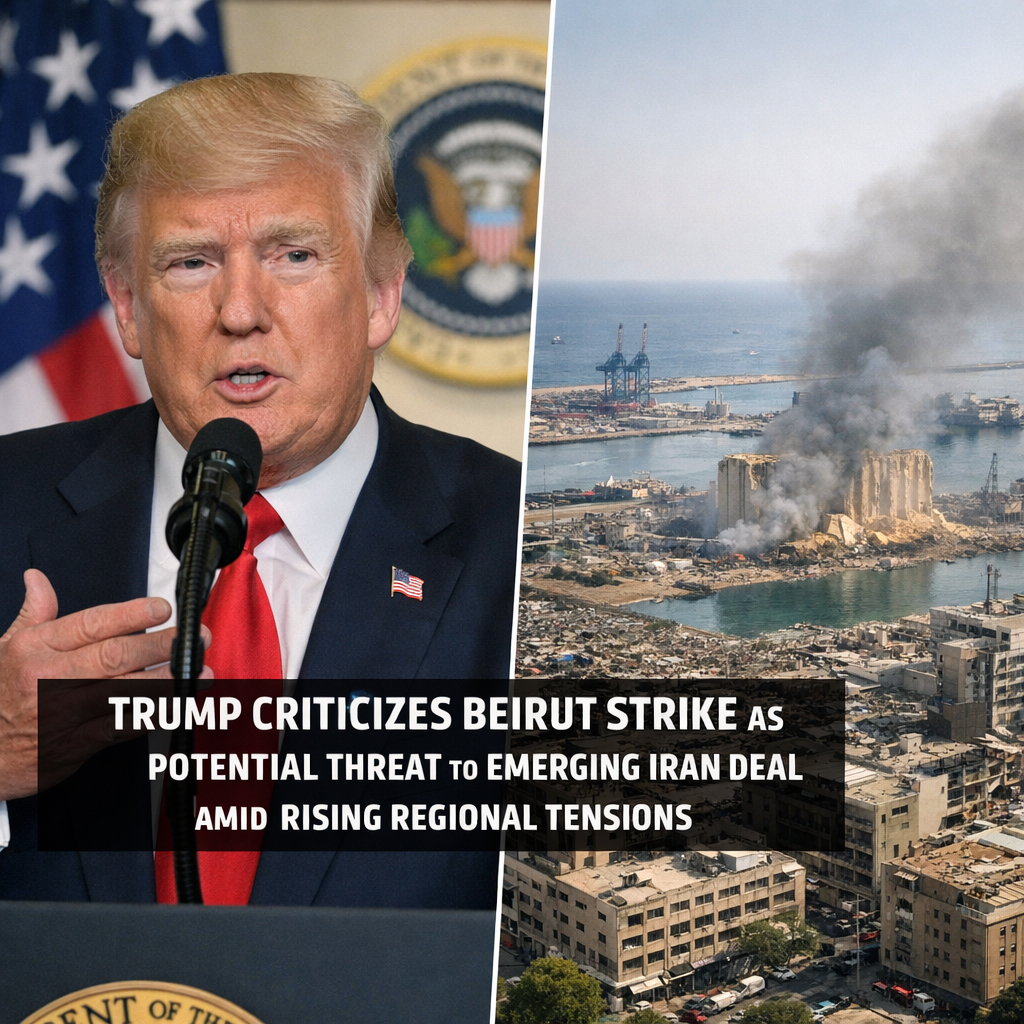
A recent report by i24NEWS titled “Israel’s strike in Beirut shouldn’t have happened, we are close to an Iran deal, Trump says” highlights renewed tensions in the Middle East, as well as the reemergence of former U.S. President Donald Trump’s voice in shaping the discourse around Iran and regional security.
According to the i24NEWS article, Trump publicly criticized an Israeli strike in Beirut, suggesting the operation risked undermining delicate diplomatic efforts that he claims are nearing a breakthrough with Iran. His remarks, which frame the strike as ill-timed, underscore a recurring fault line between military action and diplomatic negotiation in addressing Iran’s regional influence and nuclear ambitions, a topic frequently examined by organizations like the International Atomic Energy Agency (IAEA).
The reported strike in Beirut, attributed to Israel, is part of a broader pattern of operations targeting Iranian-linked assets and personnel across the region. Israel has long maintained a policy of preemptive action to disrupt Iran’s military entrenchment, particularly in Lebanon and Syria, where Tehran-backed groups such as Hezbollah wield significant influence, as outlined in analyses by the Council on Foreign Relations. Israeli officials have not always publicly acknowledged such operations, but they are widely understood to be part of an ongoing shadow conflict.
Trump’s comments introduce a political dimension that extends beyond the immediate tactical considerations of the strike. By arguing that a deal with Iran may be within reach, he implicitly raises questions about whether military actions by regional actors could complicate or derail diplomatic efforts. While he did not provide specific details about the status or nature of any prospective agreement, his remarks reflect a broader debate in U.S. policy circles over the balance between pressure and negotiation in dealing with Tehran, a topic frequently covered by the U.S. Department of State.
The timing of the statement is notable, as tensions across the Middle East remain elevated amid ongoing conflicts and shifting alliances. Iran continues to expand its regional footprint, while negotiations over its nuclear program have seen periodic progress and setbacks, as reported by Reuters Middle East coverage. The possibility of renewed talks or informal understandings has been the subject of speculation, but no comprehensive agreement has been confirmed.
Trump’s criticism of the Beirut strike also touches on the historically complex relationship between the United States and Israel when it comes to Iran policy. While his administration was marked by strong support for Israel and a hardline stance on Iran, including the withdrawal from the 2015 nuclear deal, documented by BBC News, his latest comments suggest a nuanced view in which unilateral military actions could be seen as counterproductive under certain circumstances.
The i24NEWS report underscores the ongoing interplay between military operations and diplomatic initiatives in a region where both approaches carry significant risks. For Israel, preemptive strikes are viewed as essential to national security. For proponents of diplomacy, such actions may threaten fragile negotiations and heighten the risk of broader escalation.
As the situation evolves, the question remains whether competing strategies—coercion through force and engagement through negotiation—can be reconciled or will continue to operate at cross purposes. Trump’s remarks, as reported by i24NEWS, illustrate how even the prospect of a diplomatic breakthrough can become entangled in the realities of conflict on the ground.