GAO Urges Stronger Coordination in SOCOM Acquisitions to Prevent Delays and Overlap
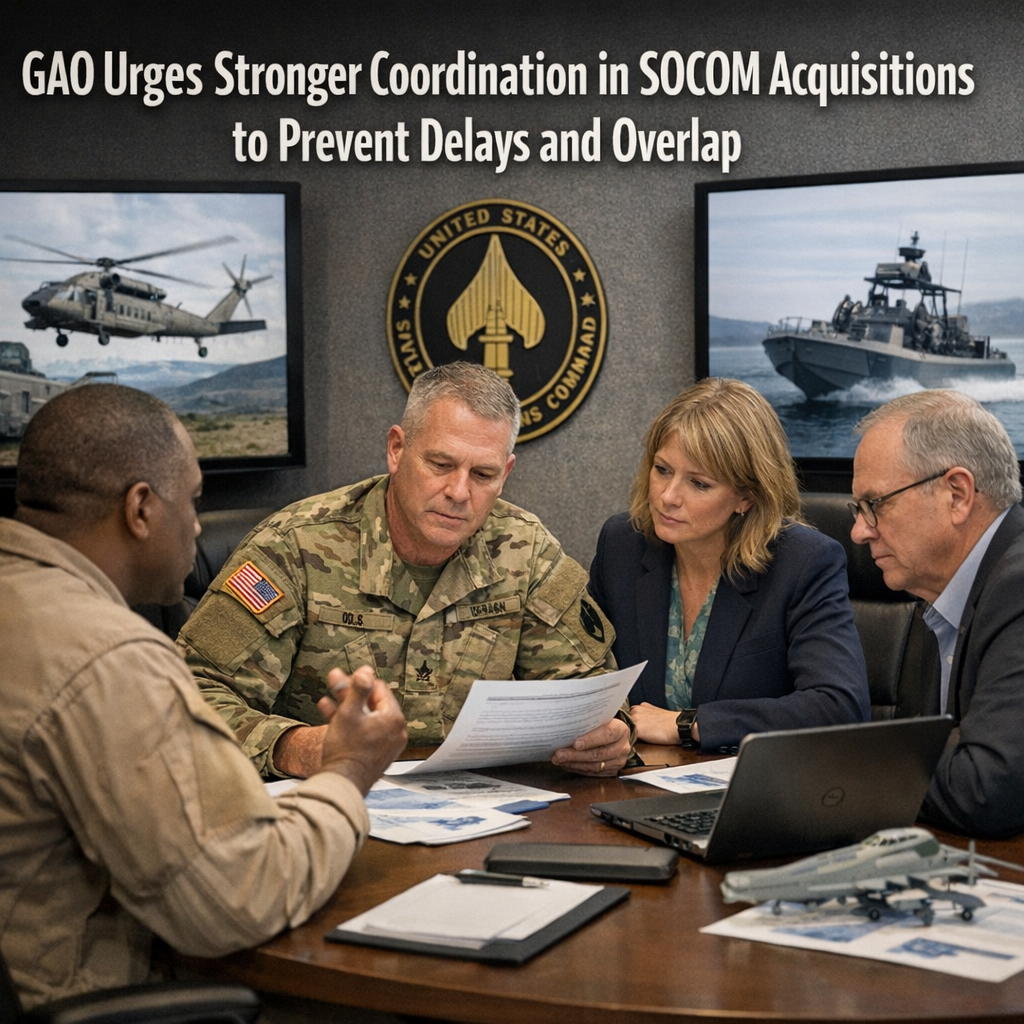
A recent report from a federal watchdog is calling for stronger coordination and oversight in U.S. Special Operations Command (SOCOM) acquisition efforts, warning that fragmented collaboration risks undermining the effectiveness and efficiency of key programs.
According to “Better collaboration needed on SOCOM programs, says government watchdog,” published by Breaking Defense, the Government Accountability Office (GAO) found that gaps in communication and coordination between SOCOM and military service branches are complicating efforts to develop and field specialized capabilities. The report highlights longstanding structural challenges in balancing SOCOM’s unique operational needs with the broader priorities and processes of the Department of Defense.
SOCOM, which is responsible for equipping elite U.S. special operations forces, often relies on close partnerships with the Army, Navy, Air Force, and Marine Corps to develop and sustain its systems. However, GAO investigators concluded that unclear roles and inconsistent collaboration mechanisms can lead to duplication of effort, scheduling delays, and inefficiencies in resource allocation.
The watchdog pointed to specific acquisition programs where insufficient alignment between SOCOM and the services created avoidable complications. In some cases, overlapping responsibilities blurred accountability, while in others, differing requirements or timelines hindered progress. The GAO emphasized that these issues are not merely administrative but can have operational consequences if critical capabilities are delayed or fail to meet mission needs.
Breaking Defense reported that the GAO recommended strengthening formal collaboration frameworks, including clearer delineation of responsibilities and improved communication processes. By establishing more consistent coordination practices, SOCOM and its partner services could reduce friction and better synchronize development efforts, particularly within the broader context of defense acquisition systems.
Defense officials acknowledged the challenges outlined in the report, noting that SOCOM’s hybrid role—operating both as a combatant command and a service-like acquisition entity—inevitably creates complexity. While some coordination mechanisms already exist, officials indicated there is room for improvement, particularly as emerging technologies and evolving mission requirements place additional strain on existing systems.
The findings come at a time when SOCOM is navigating increasingly diverse operational demands, from counterterrorism missions to competition with near-peer adversaries. These evolving priorities require rapid innovation and the ability to integrate advanced technologies, making efficient collaboration across the defense enterprise more critical than ever, especially in areas related to advanced defense research and technology development.
The GAO’s report ultimately underscores a broader challenge within the Pentagon: reconciling specialized operational needs with large-scale institutional processes. As SOCOM continues to modernize its capabilities, the effectiveness of its partnerships with the military services will likely play a decisive role in determining how quickly and successfully those efforts translate into operational advantage.