Trump signals reduced Israeli influence over future US-Iran nuclear deal and a more unilateral Washington approach
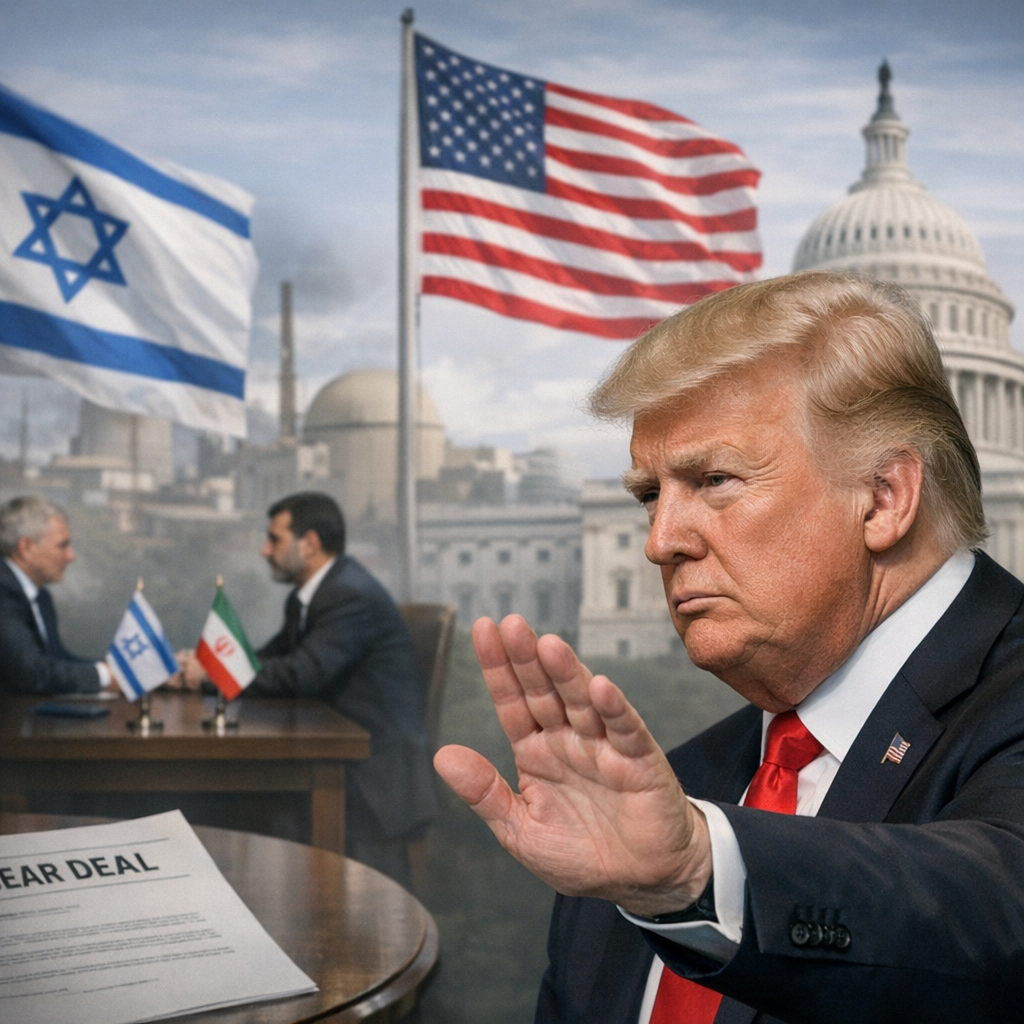
U.S. presidential candidate Donald Trump has asserted that Israel would have limited leverage over any future American agreement with Iran, stating that Israeli Prime Minister Benjamin Netanyahu would be compelled to accept the terms negotiated by Washington. The remarks, reported by i24NEWS in its article titled “‘I call the shots’: Trump says Netanyahu will have no choice but to accept whatever deal US makes with Iran,” underscore a stark vision of U.S.-Israel dynamics in the context of renewed nuclear diplomacy with Tehran.
Speaking about his approach to foreign policy, Trump emphasized a unilateral decision-making framework in which the United States would determine the contours of any potential agreement with Iran, regardless of Israeli objections. His comments reflect an apparent departure from the close policy coordination that has historically characterized relations between Washington and Jerusalem, particularly on the Iran nuclear issue.
Trump suggested that his administration, if returned to power, would negotiate from a position of strength and impose terms on Iran while expecting allies, including Israel, to fall in line. By framing the relationship in hierarchical terms, he signaled that U.S. strategic priorities would take precedence over Israeli concerns, even on issues that Jerusalem considers existential threats.
The remarks revive longstanding tensions surrounding the Iran nuclear question, which has repeatedly tested U.S.-Israel relations across administrations. Netanyahu has consistently opposed international agreements that he argues fail to adequately constrain Iran’s nuclear ambitions or regional activities, a position frequently reported by outlets such as Reuters coverage of Netanyahu’s stance on Iran deals. During previous negotiations, including the 2015 Joint Comprehensive Plan of Action, Israeli leaders publicly criticized U.S. policy, warning that insufficient safeguards could embolden Tehran.
Trump’s stance also reflects his broader foreign policy rhetoric, which has often emphasized dealmaking authority and centralized control. During his presidency, he withdrew the United States from the 2015 nuclear agreement, a move documented by the U.S. State Department, and imposed sweeping sanctions on Iran, aligning closely with Israeli positions at the time. However, his recent comments suggest a more transactional posture in which even close allies would have limited input.
Analysts note that such statements could carry implications beyond the immediate question of Iran policy. They may signal a recalibration of alliance management, raising questions about how consultation and coordination would function under a renewed Trump administration. For Israel, which relies heavily on U.S. diplomatic backing and security cooperation, outlined in analyses by the Council on Foreign Relations, the prospect of diminished influence over critical negotiations could be a significant concern.
The remarks come amid ongoing uncertainty over the future of Iran’s nuclear program and the possibility of renewed diplomacy, with technical assessments frequently provided by the International Atomic Energy Agency. While current efforts to revive or replace the 2015 agreement have faced persistent obstacles, the issue remains central to regional security debates.
By asserting that the United States would “call the shots,” Trump has placed himself at the center of that debate once again, highlighting both the enduring importance of the Iran file and the evolving nature of U.S. leadership on the global stage.