Pentagon Begins Fielding Swarms of Low-Cost Drones in Push for Battlefield Adaptation
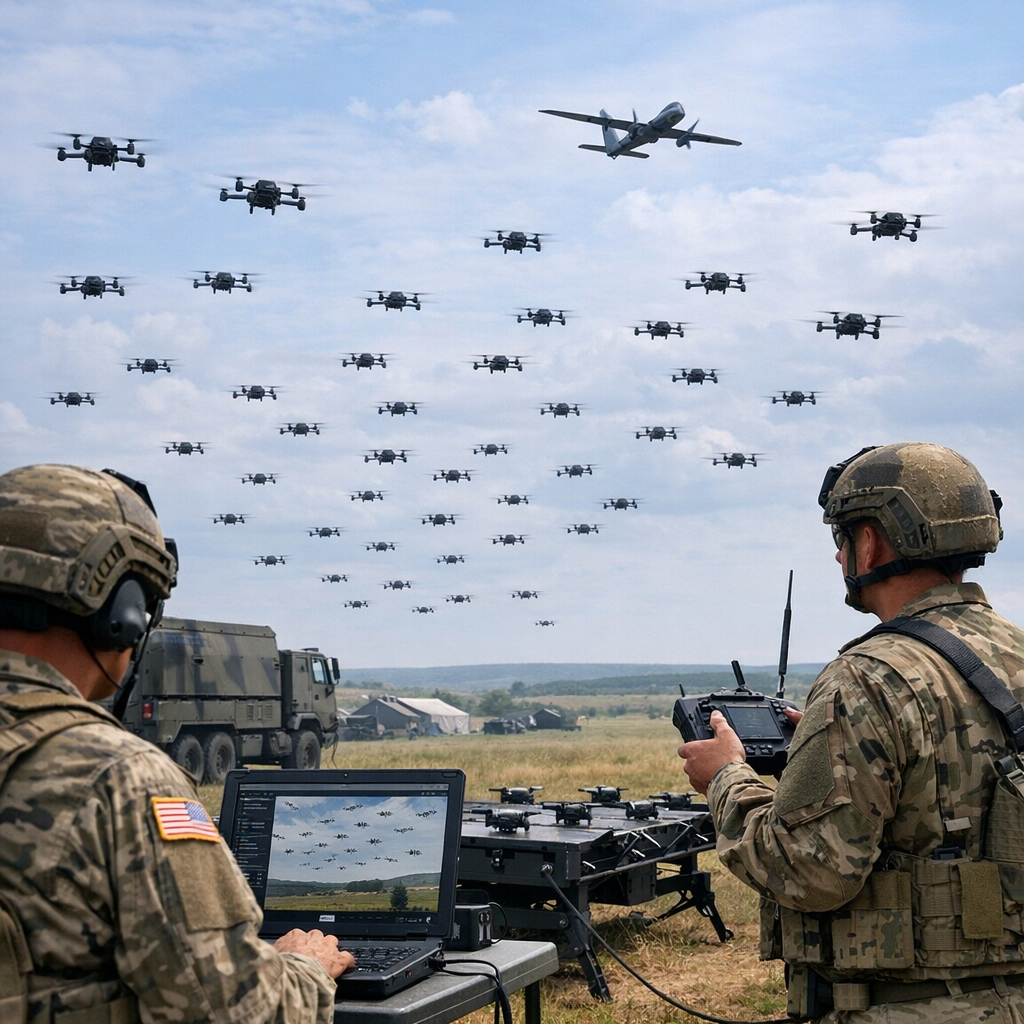
The Pentagon has begun taking delivery of small unmanned aerial systems as part of a broader effort to accelerate battlefield adoption of low-cost drones, reflecting a strategic shift shaped heavily by recent conflicts and rapid technological change. The development was first reported in Under drone dominance push, Pentagon begins receiving small drones, published by Breaking Defense, which detailed the Department of Defense’s initial steps toward scaling up its drone inventory.
According to the report, the deliveries mark an early milestone in a wider initiative to expand the availability of small, attritable drones across U.S. military units. Defense officials have increasingly emphasized the need for large quantities of relatively inexpensive systems capable of surveillance, reconnaissance, and, in some cases, strike missions. The move reflects lessons drawn from conflicts such as Ukraine, where mass deployment of small drones has reshaped tactical operations.
The Pentagon’s push comes amid concerns that traditional acquisition processes are too slow and costly to keep pace with evolving threats. By contrast, small drones can be produced quickly, iterated upon rapidly, and deployed in large numbers, offering commanders greater operational flexibility. Officials have sought to streamline procurement pathways and work more closely with commercial manufacturers, many of whom are already producing dual-use technologies adaptable to military needs.
Breaking Defense reported that the incoming drones are expected to be distributed across multiple branches, with an emphasis on enabling front-line units to experiment with and integrate the systems into training and operational planning. This decentralized approach reflects a broader cultural shift within the military, encouraging innovation at lower echelons rather than relying solely on top-down program development, a concept echoed in defense innovation research from RAND.
Still, questions remain about how quickly the Pentagon can scale production and integrate these systems effectively. Analysts have pointed to potential bottlenecks in supply chains, regulatory hurdles, and the challenge of ensuring interoperability among a diverse array of platforms. There are also concerns about counter-drone defenses, as adversaries are developing increasingly sophisticated methods to detect and neutralize small unmanned systems, as outlined by CNAS research on countering drone proliferation.
The initiative is part of a larger strategic emphasis on what some officials have described as achieving “drone dominance,” a concept that prioritizes both quantity and adaptability. Rather than relying exclusively on high-end, expensive platforms, the approach seeks to saturate the battlefield with resilient, expendable systems that can complicate enemy defenses and provide persistent situational awareness, consistent with DARPA’s work on attritable and reusable unmanned systems.
As the Pentagon begins to field these drones, the effort is likely to serve as a test case for broader reforms in defense acquisition and innovation. The extent to which the military can translate early deliveries into sustained operational advantage will depend not only on production capacity but also on how effectively it integrates new technologies into doctrine, training, and command structures.
The initial deliveries may be modest in scale, but they signal a clear shift in priorities—one that reflects the growing centrality of unmanned systems in modern warfare and the urgency with which the United States is seeking to adapt.