House Advances Plan to Lower Fuel Costs for U.S. Service Members Amid Inflation Concerns
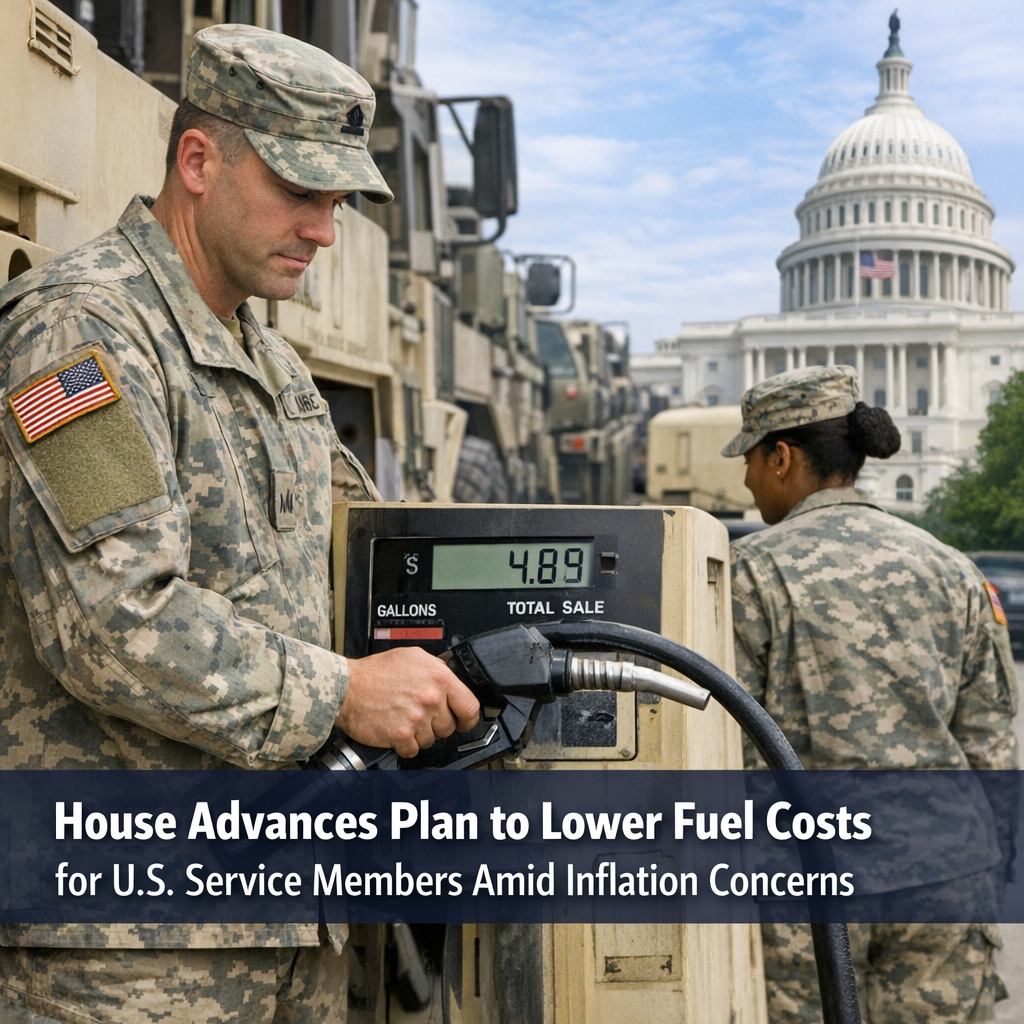
Legislation aimed at easing fuel costs for U.S. service members took a step forward in the House this week, reflecting growing concern among lawmakers about the financial pressures facing troops amid persistent inflation.
According to reporting by Military Times in its article “House advances measure to give troops a discount on gas,” the proposal would establish a program enabling active-duty personnel to receive discounted gasoline through partnerships with fuel retailers. Lawmakers backing the measure argue that transportation costs, particularly for those stationed in high-cost regions or required to commute long distances, have become an increasingly burdensome expense for military families.
The bill, which advanced through the House with bipartisan support, directs the Department of Defense to work with private-sector partners to negotiate reduced fuel prices for eligible service members. While details on the structure of the discounts remain under development, proponents envision a system similar to existing military discount programs, potentially integrated into widely used payment or identification platforms.
Supporters of the measure say it addresses a practical, everyday challenge rather than offering abstract benefits. With many junior enlisted personnel earning modest salaries, fluctuations in fuel prices—tracked nationally by sources like the U.S. Energy Information Administration—can have an outsized impact on household budgets. Legislators emphasized that frequent relocations, limited housing options, and long commutes to bases often leave troops with few alternatives to driving.
Critics, however, have raised questions about implementation and long-term effectiveness. Some policymakers have expressed concern that reliance on voluntary agreements with fuel companies may lead to uneven access or limited savings, particularly in rural or overseas locations. Others have suggested that broader compensation reforms, such as those reviewed by the Quadrennial Review of Military Compensation, may provide more consistent financial relief.
The proposal’s advancement comes as Congress continues to debate a range of quality-of-life initiatives for service members, including housing allowances, childcare accessibility, and pay adjustments. Recent Pentagon assessments and analyses from organizations like the Congressional Budget Office have highlighted financial strain as a factor affecting morale and retention, especially among younger troops.
If enacted, the fuel discount program would mark a relatively novel approach to military benefits by leveraging private-sector pricing incentives rather than direct government subsidies. Its ultimate impact, however, will depend on participation from fuel providers and the specifics of how discounts are administered.
The measure now moves forward in the legislative process, where it will face further scrutiny as lawmakers weigh its costs, logistics, and potential role in addressing the broader financial challenges faced by U.S. service members.