Nike Faces Rising Rivalry in China Running Market
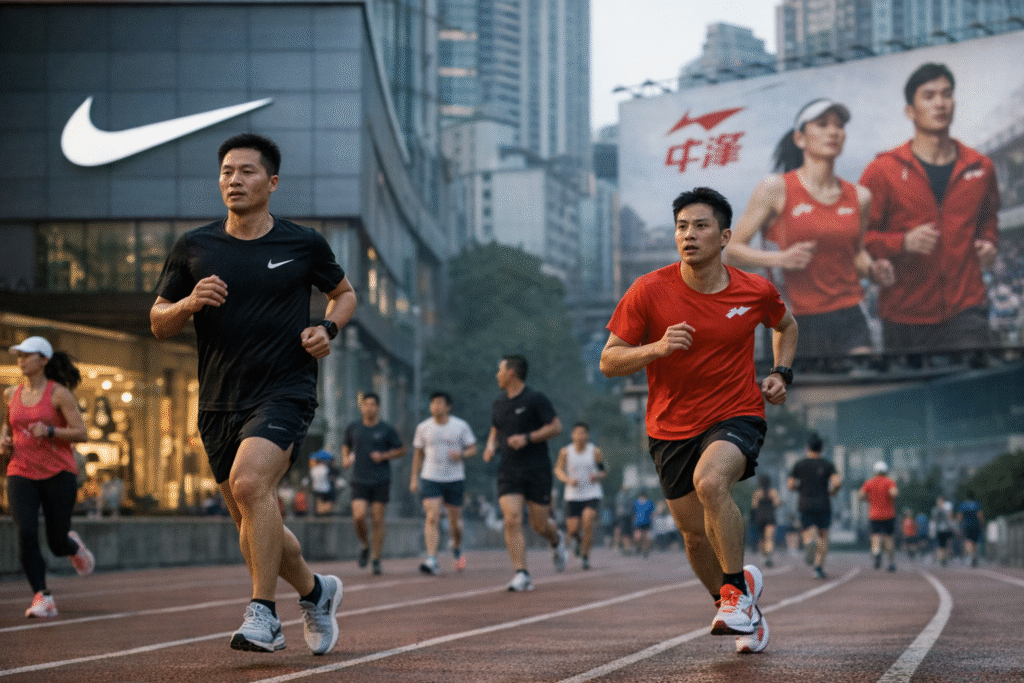
Nike is facing intensifying competitive pressure in China’s running shoe market, as domestic brands gain traction with consumers and challenge the company’s long-standing dominance in one of its most important international regions. The Wall Street Journal’s article “Nike Faces Rising Competition in China’s Running Shoe Market” highlights a shifting landscape in which local companies are proving increasingly adept at capturing both market share and cultural relevance.
For years, Nike benefited from strong brand recognition in China, bolstered by heavy marketing investments and a reputation for performance innovation. However, the current environment reflects a more complex dynamic. Chinese athletic brands such as Anta, Li-Ning, and Xtep have expanded aggressively, combining competitive pricing with product designs that resonate more closely with local tastes and preferences. These companies are also accelerating technological development, narrowing the performance gap that once distinguished global brands.
The Journal reports that Nike’s growth in China has slowed as consumers become more selective in their spending and more open to domestic alternatives. This shift is occurring against a backdrop of broader economic caution in China, where discretionary spending has become less predictable. In such an environment, value and brand affinity are playing a larger role in purchasing decisions, often to the advantage of local competitors.
In addition to pricing and consumer sentiment, domestic brands are leveraging faster supply chains and localized marketing strategies. They are drawing on Chinese cultural elements and collaborating with local influencers in ways that feel more immediate and authentic to younger audiences. Nike, while still influential, faces challenges in matching that level of agility at scale.
The competitive threat is especially pronounced in the performance running segment, which Nike has traditionally dominated globally. Chinese companies have increased investment in research and development, producing advanced cushioning technologies and performance materials that are earning credibility among serious runners. As a result, the differentiation that once justified Nike’s premium pricing has narrowed.
Despite these challenges, Nike retains significant strengths, including its global innovation pipeline, elite athlete endorsements, and established retail presence. The company continues to invest in digital channels and direct-to-consumer strategies in China, seeking to maintain relevance and deepen engagement with its customer base.
The Wall Street Journal article underscores that Nike’s experience in China reflects a broader trend affecting multinational brands: success now requires not only global scale but also localized responsiveness. As domestic players grow more sophisticated, the balance of power in key consumer markets is becoming less predictable, forcing international companies to rethink how they compete.
Nike’s ability to adapt in China will likely serve as a bellwether for how global brands navigate increasingly competitive and culturally nuanced markets in the years ahead.