German Town Faces Uncertain Future After US Exit
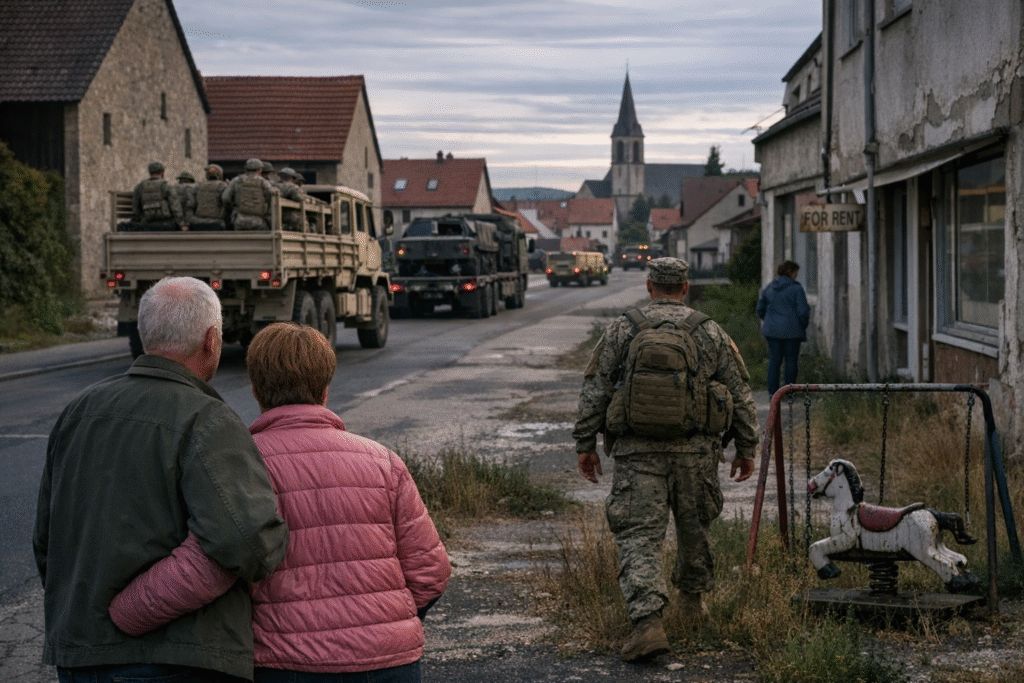
A small German community long shaped by the rhythms of an American military presence is confronting an uncertain future as U.S. forces prepare to depart, raising concerns about economic stability, identity, and the durability of transatlantic ties at the local level.
The shift, detailed in Defense News’ article “A small town in Germany braces for end to decades of life with US troops,” reflects a broader realignment of U.S. military posture in Europe. While strategic planners in Washington and NATO capitals weigh deterrence and force distribution across the continent, towns that have hosted American units for generations are focused on far more immediate questions: jobs, schools, housing markets and the fate of businesses that depend on a steady flow of U.S. personnel and their families.
For decades, the presence of American troops has been woven into daily life. Local economies grew around bases, with restaurants, shops, and service providers tailoring their offerings to U.S. tastes. Cultural exchange followed, creating a hybrid civic atmosphere where American holidays, sports, and consumer habits became familiar alongside German traditions. The base often functioned as both an economic engine and a social bridge, linking residents to a broader international community.
The anticipated withdrawal underscores how deeply embedded that presence has been. Municipal leaders are now weighing redevelopment plans for base infrastructure, which can range from housing and schools to training grounds and logistics facilities. Converting these spaces into viable civilian uses poses logistical and financial challenges, requiring coordination among local, state, and federal authorities. Previous base closures in Germany have shown mixed outcomes: some regions have successfully repurposed military land into business parks or residential zones, while others have struggled with prolonged vacancies and declining revenues.
Local business owners are particularly exposed. Many depend on American customers for a significant share of their income, and some have already begun scaling back operations or reconsidering long-term investments. Property owners face similar uncertainty as demand for rental housing may drop sharply once troops and their families depart. At the same time, residents express concern that younger people may leave in search of opportunities elsewhere, accelerating demographic shifts already affecting rural parts of Germany.
The human dimension of the transition is equally significant. Relationships formed over decades—through schools, sports clubs, and community events—are not easily replaced. For many residents, the departure represents not just an economic loss but also the end of a distinctive social fabric shaped by daily interaction with Americans. Former and current service members, for their part, often describe these towns as among the most welcoming postings in Europe, adding a layer of emotional complexity to the drawdown.
German officials have emphasized the importance of managing the transition carefully, pointing to the need for targeted investment and long-term planning. Some policymakers see an opportunity to reimagine affected areas, particularly in sectors such as renewable energy, technology, or logistics. However, such transformations typically take years, and there is concern about a near-term gap between the departure of U.S. forces and the arrival of new economic drivers.
At the national level, the change also raises questions about the evolving U.S. military footprint in Europe. Although recent years have seen renewed emphasis on deterrence, particularly in NATO’s eastern regions, adjustments in force posture can have uneven local consequences. Communities in western Europe that once played central roles in Cold War-era basing strategies are now navigating a new strategic landscape in which their relevance is less assured.
As the timeline for withdrawal becomes clearer, the town at the center of the Defense News report is entering a period of transition that will test its resilience. The challenge lies in preserving economic vitality and community cohesion while adapting to a future no longer anchored by a long-standing American presence. For residents, the coming months and years will determine whether the end of one era can become the foundation for another.