NATO Chiefs Visit KFOR to Reinforce Stability
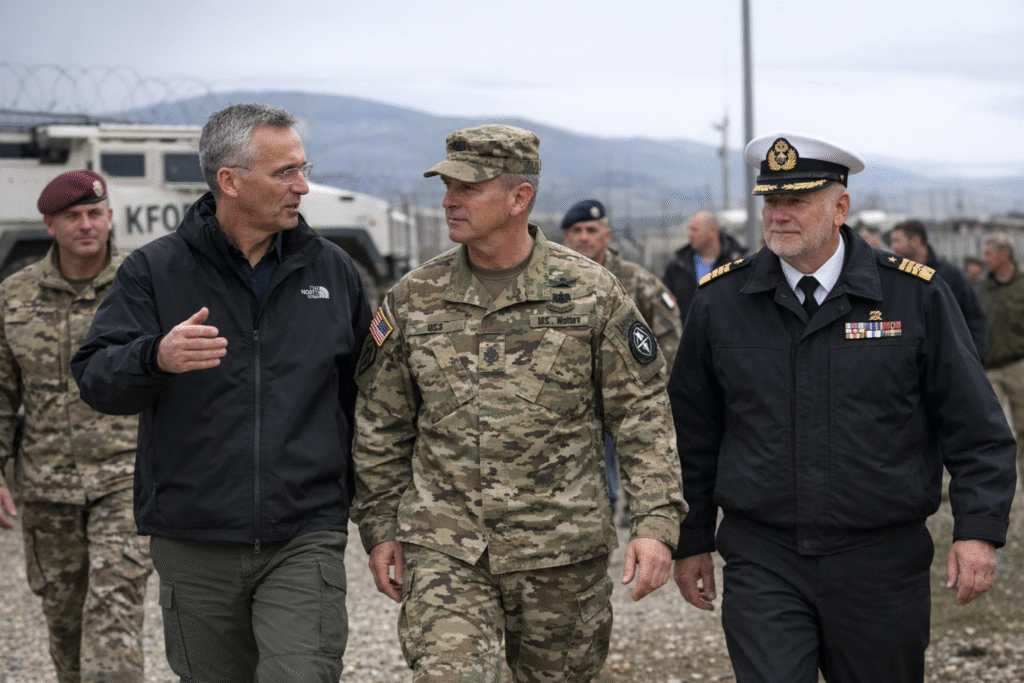
Senior NATO military officials visited the alliance’s Kosovo Force (KFOR) this week in a show of continued commitment to stability in the Western Balkans, according to a report published on NATO’s official website titled “NATO Military Committee visited KFOR.”
The visit, led by members of NATO’s Military Committee, underscored the alliance’s ongoing role in maintaining security in Kosovo and supporting dialogue between Belgrade and Pristina. During their time on the ground, the delegation received operational briefings from KFOR leadership and met with personnel deployed as part of the peacekeeping mission, which remains one of NATO’s longest-running operations.
Officials emphasized that KFOR continues to play a critical role in ensuring a safe and secure environment and preserving freedom of movement for all communities in Kosovo. The Military Committee delegation highlighted the importance of vigilance amid persistent political tensions in the region, noting that NATO’s presence is a stabilizing factor amid periodic flare-ups.
The visit also served as an opportunity for senior military leadership to assess evolving security dynamics firsthand. Discussions reportedly focused on regional stability, inter-ethnic relations, and coordination with international partners, including the European Union Rule of Law Mission in Kosovo (EULEX). NATO officials reiterated that close cooperation among international actors remains essential to preventing escalation and supporting long-term peace.
KFOR leadership briefed the delegation on recent developments, including operational readiness and responses to incidents that have tested the mission’s capacity in recent months. While the security situation is described as generally calm, NATO officials acknowledged that it remains fragile, requiring sustained engagement and rapid response capabilities.
The NATO Military Committee, which provides strategic military advice to the alliance’s political leadership, uses such visits to align operational realities with broader strategic priorities. The delegation’s presence in Kosovo reflects an effort to ensure that NATO’s posture remains responsive to changing conditions on the ground.
NATO’s report stressed that the alliance remains committed to its mandate under United Nations Security Council Resolution 1244, which authorizes KFOR to maintain a safe and secure environment in Kosovo. Officials also reiterated support for the EU-facilitated dialogue between Serbia and Kosovo as the primary avenue for resolving political disputes.
The visit comes at a time of heightened attention to European security more broadly, with NATO seeking to reinforce its role across multiple regions. In this context, Kosovo remains a focal point for crisis prevention and regional stability efforts in Southeast Europe.
Through engagements like this, NATO aims to demonstrate both resolve and adaptability, signaling that, despite shifting global challenges, its commitment to peace and security in the Western Balkans remains unchanged.