U.S.-Iran Debate Deepens Political Divides
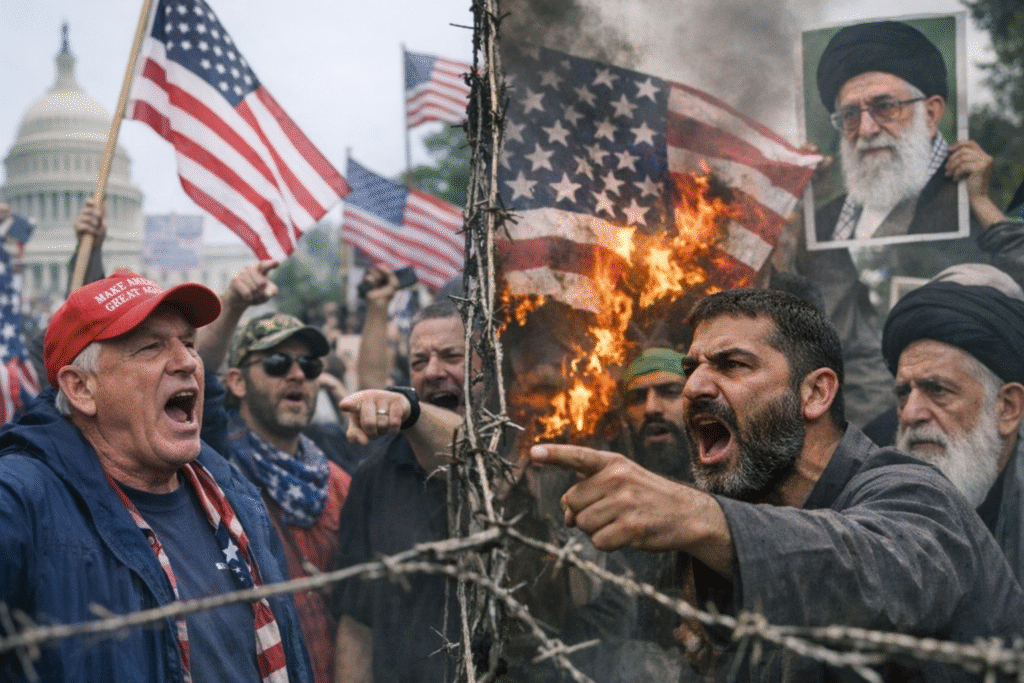
A recent opinion piece published by The Daily Wire, titled “If You Can’t Root for the U.S. Against Iran, What Exactly Are You Rooting For,” has added to the ongoing debate over American foreign policy and domestic political divisions regarding Iran. The article frames support for the United States in its geopolitical rivalry with Iran as a baseline expectation, arguing that failing to do so raises broader questions about political allegiance and national identity.
The Daily Wire column situates its argument within the context of longstanding tensions between Washington and Tehran, emphasizing Iran’s history of hostility toward the United States and its allies. It points to Iran’s regional activities, including support for proxy groups and its adversarial rhetoric, as evidence that the conflict is not merely theoretical but grounded in tangible security concerns.
Central to the piece is the contention that domestic disagreement over U.S. policy toward Iran has evolved into something more fundamental. Rather than focusing solely on differing strategies—such as diplomacy versus military deterrence—the article suggests that some critics of U.S. actions risk appearing indifferent or even sympathetic to an adversarial state. It frames this as a departure from what it characterizes as a traditional bipartisan consensus on prioritizing American interests in foreign conflicts.
The argument reflects a broader trend in political discourse, where foreign policy debates increasingly intersect with questions of identity and loyalty. In recent years, polarization in the United States has extended into areas once marked by relative unity, including national security. While skepticism of government decisions has long been a feature of American political life, critics of this perspective argue that conflating dissent with disloyalty can oversimplify complex policy disagreements.
Analysts note that public opinion on Iran has never been monolithic. Americans have differed on issues such as the 2015 nuclear agreement, the use of economic sanctions, and the potential for military confrontation. These divisions often reflect deeper ideological differences about the U.S. role in the world, ranging from interventionist to more restrained approaches.
The Daily Wire article’s framing underscores the tension between these viewpoints, emphasizing a clear moral and strategic divide. However, some foreign policy experts caution that binary interpretations may overlook the nuanced considerations involved in dealing with Iran, including regional stability, humanitarian concerns, and the potential consequences of escalation.
As debates over U.S. policy toward Iran continue, the discussion highlighted by The Daily Wire illustrates how foreign policy can become a litmus test for broader political and cultural divisions within the country.