US Blockade in Gulf Squeezes Iran Oil Revenue
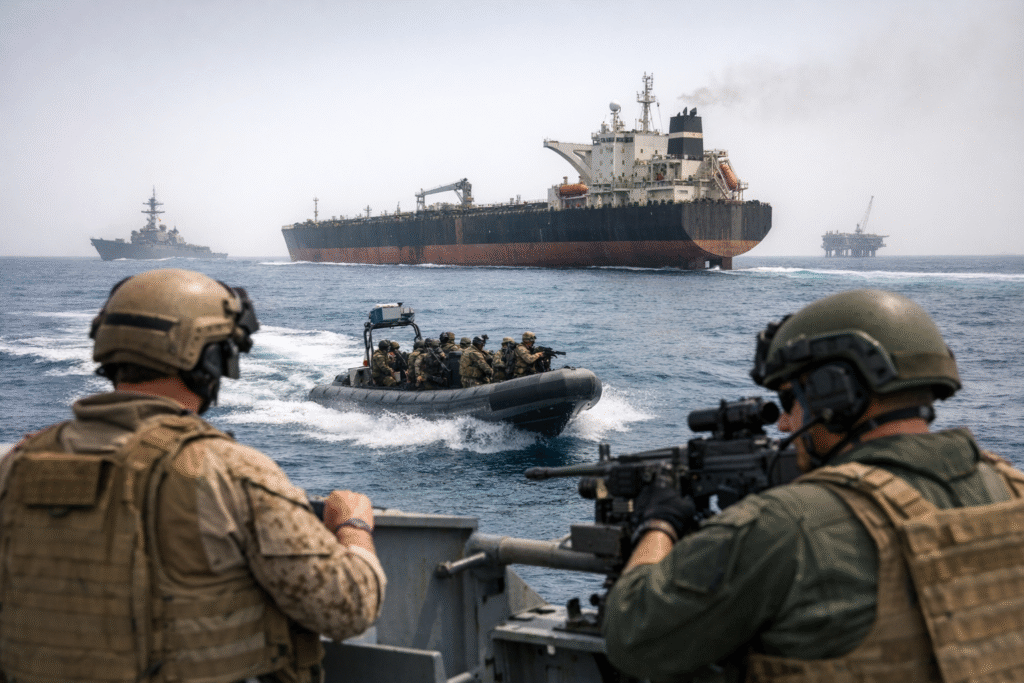
U.S. Central Command says no commercial vessels have successfully breached a U.S.-enforced maritime blockade in the Persian Gulf, a development that officials argue is placing mounting economic pressure on Iran by constraining its oil exports.
According to reporting by the Washington Free Beacon in its article “No Ships Have Broken Through U.S. Blockade in Persian Gulf, CENTCOM Says, Threatening to Deprive Islamic Republic of Billions in Oil Revenue,” military officials describe the effort as a sustained campaign to disrupt Tehran’s ability to generate revenue through illicit or sanctions-defying oil shipments. The blockade, part of a broader U.S. strategy to counter Iran’s regional influence and nuclear ambitions, has targeted shipping routes that Iranian vessels and affiliated networks have historically used to move crude oil to international markets.
CENTCOM officials cited in the report say the absence of successful transits underscores both the scale of U.S. naval presence in the region and the effectiveness of coordinated monitoring and interdiction efforts. These include surveillance operations, maritime patrols, and collaboration with allied forces aimed at identifying and deterring ships suspected of carrying sanctioned Iranian oil.
The economic implications for Iran could be significant. Oil exports remain a central pillar of the country’s revenue, and restrictions on its ability to sell crude oil internationally have long been a focal point of U.S. sanctions policy. By tightening maritime enforcement, U.S. officials appear to be seeking to further limit Tehran’s financial resources at a time of ongoing geopolitical tension.
However, the situation remains fluid. Iran has previously relied on a network of intermediaries, ship-to-ship transfers, and flags of convenience to obscure the origin of its oil shipments. Analysts suggest that while a complete halt to exports would be difficult to sustain over the long term, intensified enforcement can raise costs and complicate logistics for Iranian traders and their international partners.
The developments come amid broader security concerns in the region, where maritime traffic through the Persian Gulf and Strait of Hormuz is vital to global energy markets. U.S. officials have emphasized that their actions are intended to enforce existing sanctions and maintain stability, though the increased military presence carries the risk of further escalation in already strained U.S.-Iran relations.
The Washington Free Beacon article portrays the blockade as a significant escalation in enforcement, with officials framing it as a decisive measure to curtail Iran’s access to oil revenue. Whether the strategy will produce lasting economic or political effects remains uncertain, but it underscores the continued centrality of maritime control in the broader contest between Washington and Tehran.