Trump Escalates Clash With Pope Over Ideology
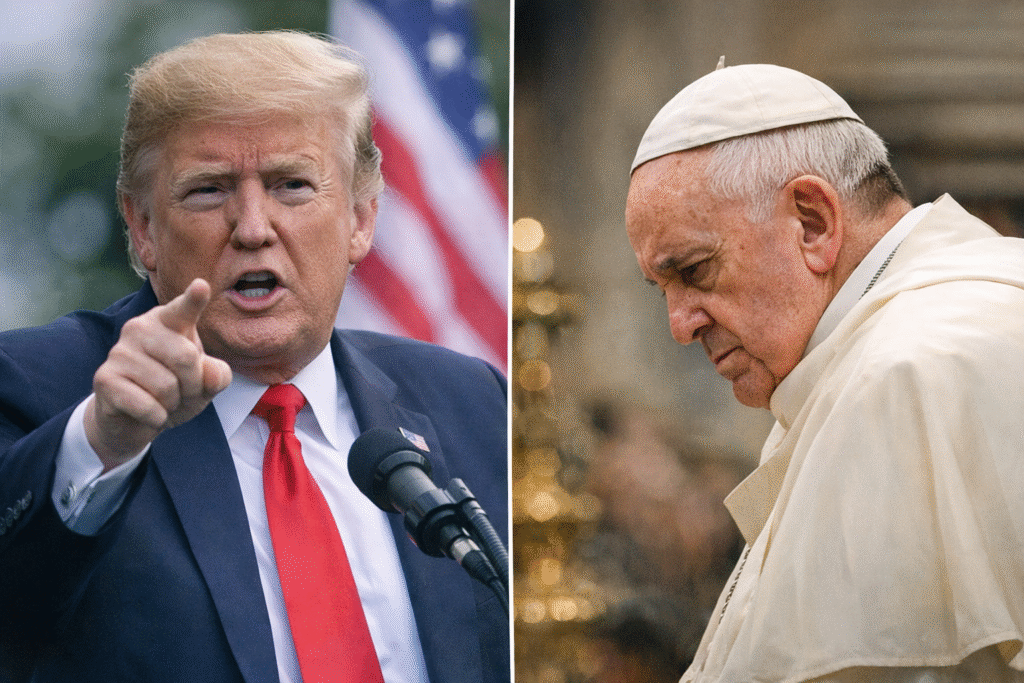
Former President Donald Trump escalated his criticism of Pope Leo, accusing the pontiff of aligning with what he described as “radical left” positions, according to reporting by The Wall Street Journal in its article “Trump Criticizes Pope Leo, Accuses Him of Catering to ‘Radical Left.’” The remarks mark a notable intensification of tensions between a leading political figure in the United States and the head of the Catholic Church, underscoring the growing intersection of politics, religion, and ideological division.
Trump’s comments were directed at recent statements and actions by Pope Leo that emphasize social justice, migration, and economic inequality—issues the Vatican has increasingly highlighted in recent years. The former president suggested that such positions reflect a broader ideological shift within the Church, one that he argues is out of step with more conservative adherents.
The criticism reflects a familiar pattern in Trump’s political rhetoric, which frequently frames global institutions and prominent figures through the lens of domestic political conflict. By characterizing the pope’s stance as politically motivated, Trump effectively situates the Vatican within the same ideological battleground that defines much of contemporary American discourse.
Vatican officials have not responded directly to the remarks, but the Church has consistently maintained that its positions are rooted in longstanding theological principles rather than partisan politics. Pope Leo’s emphasis on the plight of migrants and the moral obligations of wealthier nations has drawn both praise and criticism across political lines, particularly in countries grappling with immigration policy debates.
The episode highlights a broader tension between nationalist political movements and transnational religious leadership. While Catholic teaching on social welfare and compassion for migrants predates current political divisions, its application in modern contexts has increasingly been interpreted through partisan frameworks.
As the 2024 U.S. election cycle continues to reverberate through global conversations, Trump’s critique of Pope Leo signals how religious figures may become more frequent targets in political disputes. The exchange also reflects the enduring influence of the Catholic Church in shaping public discourse, even as its positions are contested in increasingly polarized environments.