Pentagon Weighs $200B Iran Operation Funding
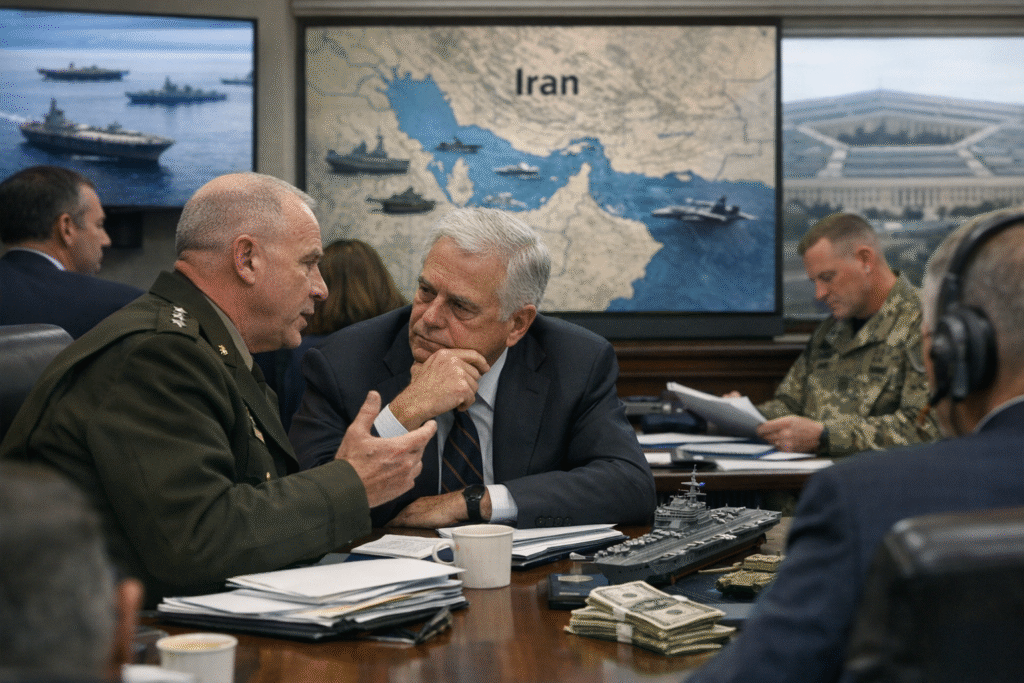
U.S. Defense Secretary Pete Hegseth has acknowledged that a potential $200 billion funding request tied to prospective military operations involving Iran remains under consideration, while cautioning that the figure is not final and could shift significantly as planning evolves. The remarks, reported in “Hegseth confirms potential $200 billion request for Iran operations, but figure could move” by Breaking Defense, underscore the scale and uncertainty surrounding ongoing Pentagon deliberations.
Speaking amid heightened tensions in the Middle East, Hegseth framed the reported figure as an early estimate rather than a formal budget submission. Defense officials are still assessing operational requirements, force posture, logistics, and potential allied contributions, all of which could alter the overall cost. The Pentagon has not yet provided detailed public justification for the figure, and internal discussions continue over how to structure any eventual funding request to Congress.
The reported scope of the potential funding highlights the breadth of planning underway. Large-scale contingency operations would likely encompass air and naval deployments, missile defense, intelligence support, and sustained logistical networks across multiple theaters. Analysts note that the $200 billion figure, while provisional, would place any such campaign among the more costly U.S. military undertakings of recent decades, particularly if extended over multiple fiscal years.
Hegseth’s comments also reflect a broader effort by defense leadership to manage expectations on Capitol Hill. Lawmakers from both parties have signaled that any request of this magnitude would face intense scrutiny, particularly given existing fiscal pressures and competing defense priorities, including modernization programs and commitments in Europe and the Indo-Pacific.
The uncertainty surrounding the estimate is partly driven by unresolved strategic questions. U.S. officials are still weighing the extent of Iranian involvement in regional conflicts, the potential for escalation, and the role of regional partners. These variables complicate budget planning, as different operational scenarios carry markedly different cost structures.
Breaking Defense reported that defense planners are considering a range of contingencies rather than a single defined campaign, contributing to the fluid nature of the estimate. As a result, the $200 billion figure is better understood as a planning benchmark than a fixed request.
For now, Pentagon officials appear intent on preserving flexibility while signaling the seriousness of potential commitments. Any formal budget request would likely emerge only after further interagency consultations and engagement with congressional leaders, who will ultimately determine the scale and conditions of any approved funding.
The discussion reflects a familiar pattern in U.S. defense planning, where early cost projections often evolve significantly before reaching the legislative stage. In this case, the combination of geopolitical uncertainty and operational complexity suggests that the final figure—if a request is made—may differ substantially from initial projections.