US Marines Divert Iranian Tanker Amid Tensions
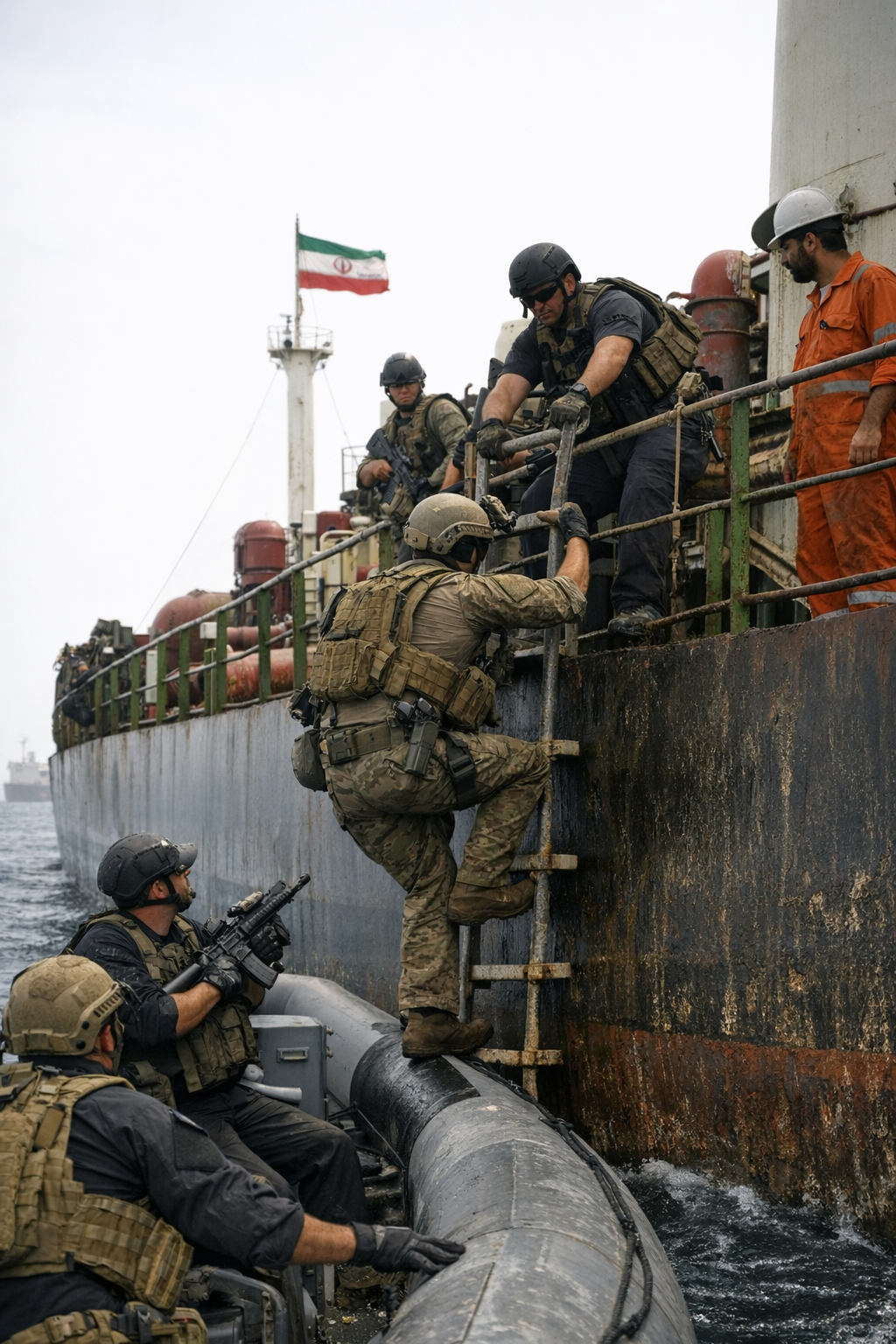
U.S. Marines recently intercepted and redirected an ایرانی-flagged tanker in a contested maritime zone, escalating tensions tied to an ongoing blockade that has heightened strategic anxieties in the region. The development was first detailed in Military Times under the headline “US Marines board and redirect Iranian-flagged tanker amid ongoing blockade,” which outlined the circumstances surrounding the operation and its broader implications.
According to reporting by Military Times, Marine forces carried out a boarding of the tanker as part of enforcement measures linked to the blockade, which has drawn international scrutiny. The vessel was subsequently redirected, though officials have not publicly disclosed the precise destination or the full scope of its cargo. U.S. defense authorities characterized the action as a lawful interdiction aimed at maintaining maritime security and ensuring compliance with international regulations tied to the blockade.
The incident occurred in a region where shipping lanes remain under heightened surveillance, with both commercial and military vessels navigating an increasingly volatile environment. Analysts note that operations of this kind reflect a broader effort by U.S. and allied forces to assert control and deter activities they view as destabilizing. However, such actions also carry the risk of miscalculation, particularly when they involve vessels flagged to nations with fraught diplomatic relations with Washington.
Iranian officials have yet to fully detail their response, but past encounters suggest that Tehran may view the seizure or diversion of its flagged vessels as a provocative act. Maritime confrontations between U.S. forces and Iranian-linked shipping have periodically intensified over the past several years, often tied to disputes over sanctions enforcement, regional proxy conflicts, and freedom of navigation.
Military Times reported that U.S. officials framed the operation as measured and deliberate, emphasizing rules of engagement designed to limit escalation. Nonetheless, the incident underscores the persistent fragility of maritime security in the area and the complex interplay between enforcement actions and geopolitical signaling.
Shipping industry observers are closely watching the fallout, noting that even isolated interventions can disrupt commercial traffic and increase insurance costs for vessels transiting nearby waters. The redirection of a tanker, particularly one tied to a major regional exporter, may also carry implications for energy markets if it signals tighter enforcement or a willingness to interdict shipments more aggressively.
As the situation develops, the boarding of the Iranian-flagged tanker stands as a reminder of how quickly localized enforcement actions can reverberate across diplomatic, military, and economic domains, reinforcing the already delicate balance in one of the world’s most strategically vital maritime corridors.