Digital Tools for 80 Percent Operational Readiness
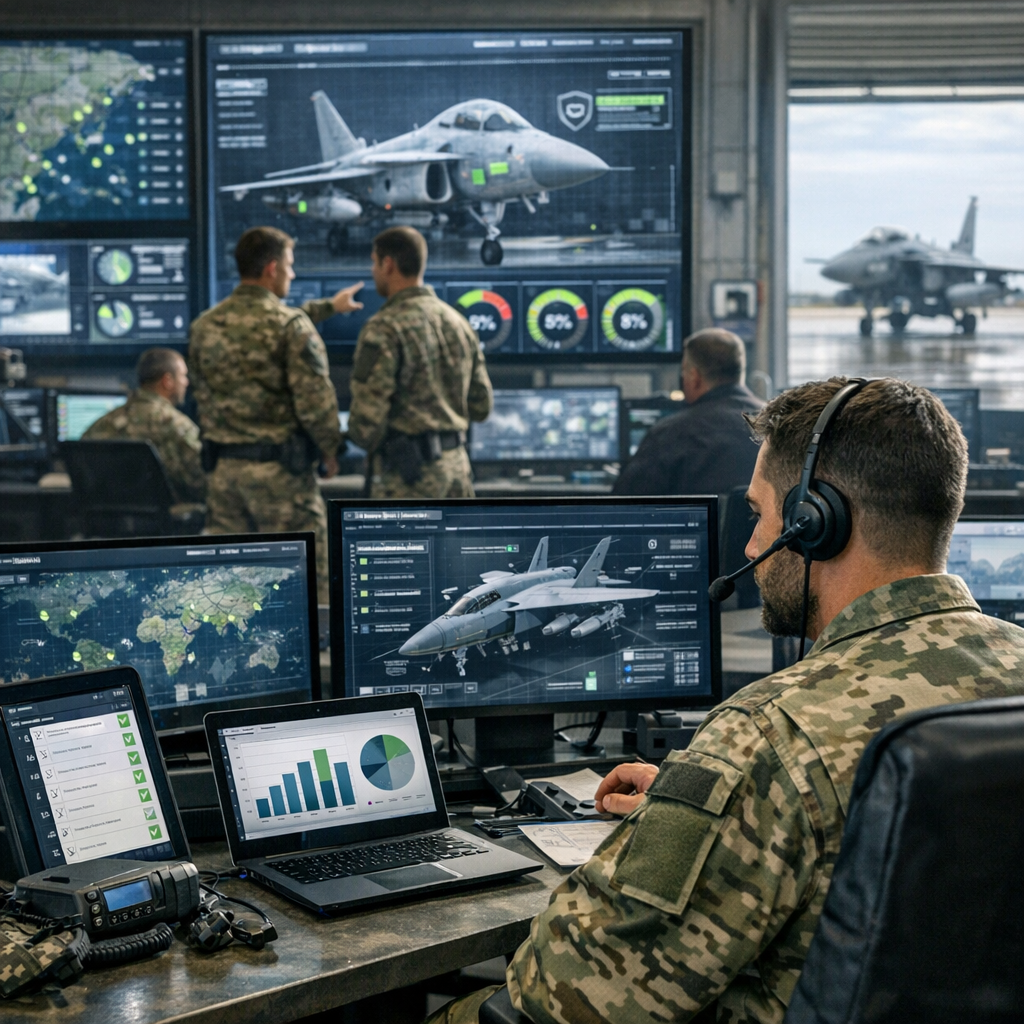
The United States military is currently confronting a pivotal challenge in its pursuit of operational excellence: the requirement to maintain an 80 percent mission-capable rate across its most critical combat platforms. As highlighted in a recent report by DefenseScoop titled “80 Percent Readiness Requires 21st Century Tools,” achieving and sustaining this high level of readiness is no longer possible through traditional maintenance and logistical frameworks. Instead, it demands a comprehensive shift toward advanced digital infrastructure and data-driven decision-making.
For decades, military readiness was often managed through manual processes, legacy spreadsheets, and reactive maintenance schedules. While these methods sufficed during periods of relative stability or low-intensity conflict, they are proving inadequate in an era defined by Great Power Competition. The complexity of modern hardware, combined with the necessity for rapid deployment, has rendered 20th-century management techniques obsolete. According to the analysis provided by DefenseScoop, the transition to 21st-century tools is not merely a technological upgrade but a strategic imperative.
Central to this transformation is the integration of predictive maintenance powered by artificial intelligence and machine learning. By utilizing sophisticated sensors and real-time data analytics, maintenance crews can identify potential component failures before they occur. This proactive approach reduces the time assets spend in hangars or dry docks, directly contributing to the 80 percent readiness goal. Furthermore, these tools allow for a more efficient supply chain, ensuring that spare parts are positioned where they are most likely to be needed, thereby mitigating the logistical bottlenecks that have historically plagued large-scale military operations.
The DefenseScoop report emphasizes that the barrier to this evolution is often more cultural than technical. The Department of Defense must navigate the “valley of death” between pilot programs and full-scale implementation, ensuring that frontline units have seamless access to these digital ecosystems. This requires a fundamental rethinking of how the military acquires software and manages its data, moving away from siloed information toward an integrated network where information flows freely between commanders and maintenance personnel.
Moreover, the fiscal implications are significant. In an environment of constrained defense budgets, the efficiency gained through digital modernization offers a way to maximize the utility of existing fleets without the immediate need for massive new procurement programs. By extending the life and availability of current assets, 21st-century tools provide a cost-effective pathway to maintaining a credible deterrent.
Ultimately, the drive toward 80 percent readiness reflects a broader realization within the defense establishment: the hardware of the future cannot be sustained by the administrative tools of the past. As geopolitical tensions rise, the ability to keep aircraft in the sky and ships at sea will depend less on manual labor and more on the military’s ability to harness the power of its own data. As suggested by the insights in DefenseScoop, the margin for error has thinned, and the adoption of modern technological solutions is now the primary determinant of institutional preparedness.